The most flattering hair color isn’t necessarily your favorite shade on Pinterest — it’s the one that works with your skin’s undertone. Get this right and almost any color family will suit you; get it wrong and even a “safe” shade can wash you out. Here’s how to figure out what actually works for you. For more on this, see our nails guide. If you want to go further, fashion & outfits covers it in detail.
Key takeaways
- Check the veins on your wrist: green means warm undertone, blue/purple means cool undertone.
- Warm undertones glow in golden blonde, copper, and chestnut; cool undertones shine in ash blonde, burgundy, and cool brown.
- Neutral undertones can wear almost any shade — the main thing to watch is contrast level.
In this article
- Step 1: Figure Out Your Undertone
- Best Shades for Warm Undertones
- Best Shades for Cool Undertones
- Best Shades for Neutral Undertones
- Beyond Undertone: Other Things to Consider
- Bringing It to Your Colorist
- Testing a Color Before You Commit
- Frequently Asked Questions
- When to Go Bold vs. When to Stay Close to Natural
- What to Avoid Regardless of Undertone
- Semi-Permanent vs. Permanent: Which to Choose
- How Lighting Changes How Color Looks
- Maintaining Vibrancy Between Salon Visits
- When to Trust a Professional Over a Photo
- Considering Your Whole Look, Not Just Hair
- Growing Out a Color You No Longer Love
Step 1: Figure Out Your Undertone
Look at the veins on the inside of your wrist in natural light. If they look green, you likely have a warm undertone. If they look blue or purple, you likely have a cool undertone. If you genuinely can’t tell, or they look both, you probably have a neutral undertone — good news, since neutral undertones can wear the widest range of colors. Related reading: weddings. If you want to go further, celebrations & parties covers it in detail.
Another quick check: silver jewelry that looks better on you than gold usually signals cool undertones, and the reverse usually signals warm. You will find more ideas in relationships & dating.
Best Shades for Warm Undertones
- Golden blonde or honey blonde — avoid ash tones, which can look flat against warm skin.
- Copper and auburn — these red-orange shades practically glow against warm undertones.
- Chestnut or caramel brown — browns with red or gold undertones rather than ash.
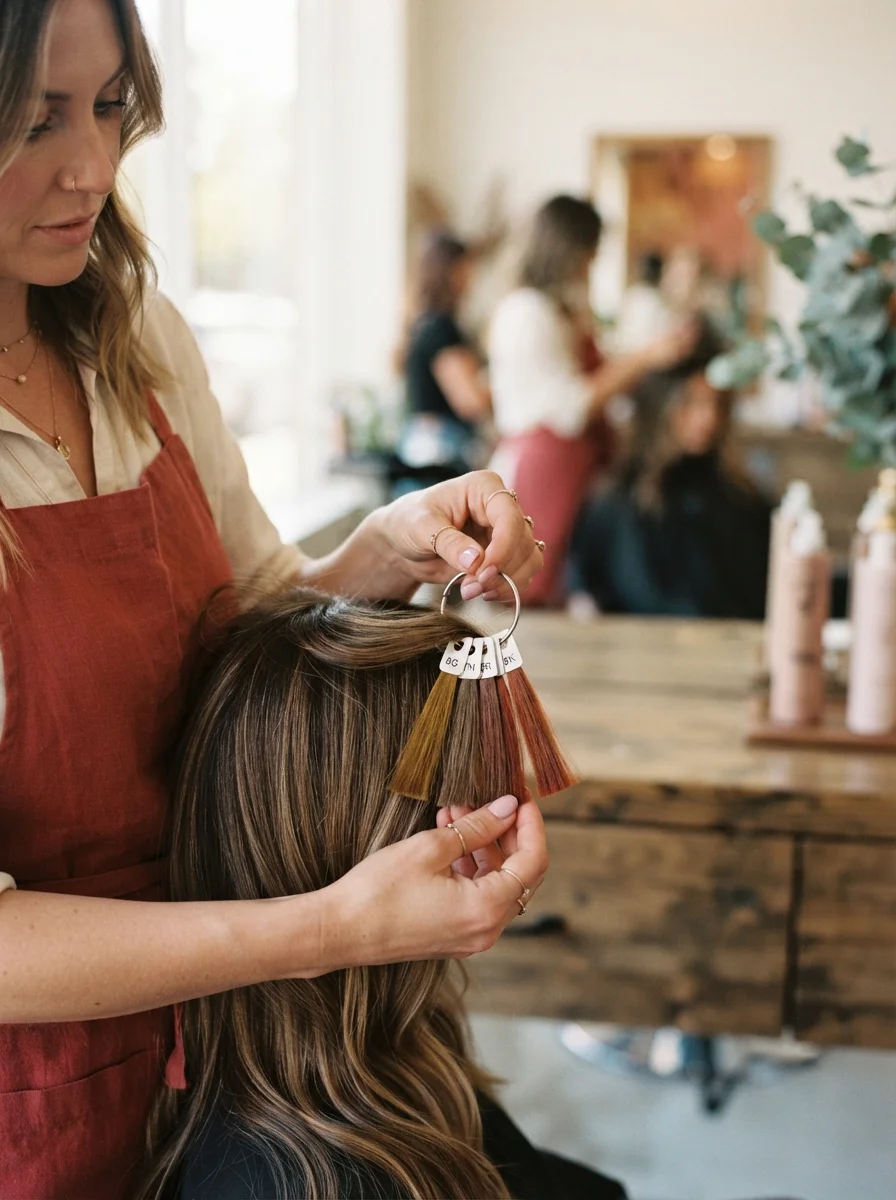
Best Shades for Cool Undertones
- Ash blonde or platinum — the cooler, the better for this undertone.
- Cool chocolate brown — a brown with a slight blue or violet base rather than red.
- Burgundy or plum — jewel tones with blue undertones complement cool skin beautifully.
Best Shades for Neutral Undertones
Lucky you — you can wear nearly anything, from warm caramel to cool ash brown, because your skin doesn’t fight strongly against either direction. The main thing to watch is contrast: very fair neutral skin can look washed out under very dark, flat colors, while deeper neutral skin can handle bold, saturated shades beautifully.
Beyond Undertone: Other Things to Consider
- Your natural color. Going more than two to three shades lighter or darker than your natural color in one sitting usually requires professional lightening or toning to avoid brassiness or unevenness.
- Maintenance level. Warm, natural-looking shades tend to grow out more gracefully than high-contrast cool tones, which show regrowth faster.
- Eye color. Warm hair tones tend to brighten brown and hazel eyes, while cool tones can make blue and green eyes pop.
Bringing It to Your Colorist
Save two or three reference photos in different lighting, and mention your undertone finding out loud — a good colorist will factor it into the exact formula they mix, even if the “name” of the color on the swatch looks similar to what you asked for.
Pairing a new color with a low-maintenance routine? Check out our low-maintenance hairstyles that work with any shade or texture.
Testing a Color Before You Commit
If you’re unsure about a shade, ask your colorist for a small test strand behind your ear or at the nape of your neck. It’s a low-commitment way to see how the color actually reads against your skin in daylight before it’s applied all over. Clip-in extensions or temporary color sprays in your target shade are another low-risk way to preview a bigger change.
Frequently Asked Questions
Can my undertone change over time?
Your underlying undertone stays fairly stable throughout life, but how it reads can shift slightly with tanning, seasonal changes, or aging skin — which is part of why colorists often reassess at each visit rather than relying on notes from years ago.
Is box dye ever a good idea?
Box dye can work well for small changes close to your natural color, but for a true undertone-matched shade, especially anything involving lightening, a professional consultation avoids the guesswork and reduces the risk of unwanted brassy or ashy results.
How do I keep color-treated hair from fading fast?
Color-safe shampoo, washing with cooler water, and limiting heat styling all extend how long a fresh color stays vibrant. UV exposure fades color too, so a leave-in product with UV protection helps if you spend a lot of time outdoors. You will find more ideas in hair.
When to Go Bold vs. When to Stay Close to Natural
A dramatic color change can be a lot of fun, but it also comes with more upkeep — more frequent salon visits, more careful product choices, and a bigger commitment if you decide you don’t love it. If you’re testing the waters, starting with face-framing highlights in your ideal undertone family is a lower-commitment way to see how a shade wears on you before going all-over. You will find more ideas in wellness & self-care.
What to Avoid Regardless of Undertone
A few mistakes trip up almost everyone, regardless of undertone: going too far from your natural level (the depth of your color) in a single session, which stresses the hair and often requires multiple salon visits to correct; choosing a color based purely on a celebrity photo without accounting for lighting differences; and skipping a strand test on major color changes, which is the easiest way to avoid an unpleasant surprise.
Semi-Permanent vs. Permanent: Which to Choose
If you’re testing a new undertone-matched shade for the first time, semi-permanent color is a lower-risk way to see how it looks and how it grows out before committing to permanent color. It fades gradually rather than leaving a hard regrowth line, which makes it a genuinely useful trial run — especially for warm-to-cool or cool-to-warm switches, which are the biggest undertone shifts to get right.
How Lighting Changes How Color Looks
The same hair color can look noticeably different under salon lighting, daylight, and indoor evening light. Ask to step outside or near a window before you leave the salon to see your color in natural light, since that’s how most people will see it day-to-day. A color that looks perfect under warm salon lighting can sometimes read differently once you’re back in your normal environment.
Maintaining Vibrancy Between Salon Visits
A color-depositing conditioner in your shade family extends vibrancy between appointments without a full reapplication. This is especially useful for warmer tones like copper and auburn, which tend to fade faster than cooler, ash-based colors — a weekly treatment can noticeably stretch the time between salon visits.
When to Trust a Professional Over a Photo
If your colorist suggests a slightly different shade than the one you brought in as reference, it’s usually because they’re accounting for how that exact tone will read against your specific skin and eye color, not because they’re ignoring your request. A good colorist’s adjustment is typically working in your favor, even when it’s not the exact photo you showed them.
Considering Your Whole Look, Not Just Hair
Hair color doesn’t exist in isolation — it interacts with your makeup, your typical clothing palette, and even your glasses frames if you wear them. If you’re making a significant change, it’s worth thinking through whether your usual makeup shades and go-to clothing colors will still feel cohesive, or whether small adjustments elsewhere will help the new color feel intentional rather than disconnected from the rest of your look. If you want to go further, beauty & makeup covers it in detail.
Growing Out a Color You No Longer Love
If a past color choice doesn’t feel right anymore, you don’t have to correct it all at once. A gradual transition — toning, subtle lowlights, or simply letting it grow while trimming regularly — is often gentler on your hair’s health than an abrupt full correction, even if it takes a bit longer to get where you want to be.
Shop this story
A few products for choosing and maintaining your hair color:
- At-Home Hair Color Kit — A reliable option for trying a new shade at home.
- Color-Safe Shampoo and Conditioner Set — Helps new hair color last longer.
- Root Touch-Up Kit — Keeps color looking fresh between salon visits.
- Purple Toning Shampoo — Neutralizes brassiness in cool-toned color.
As an Amazon Associate, Trendici earns from qualifying purchases.