


When he was a fresh-faced doctoral candidate, one of my university professors was involved in the early stages of civilian GPS application.
His work centred on how to utilise this remarkable tech outside the secretive military domain. I remember him telling us about when, one morning in the 1990s, he had woken up to carry out his usual checks and discovered they were all over the place. Overnight the Americans had shifted the constellation (at this time not yet at its full strength of 24 satellites sitting 13,800 miles above us) to focus on the Persian Gulf.
Normally the orbital configuration ensures only four or so satellites are visible at any time from any point on the earth’s surface. But the US navy wanted to put Tomahawks through the windows of regime buildings in Baghdad, so it clustered everything over the region for maximum accuracy.
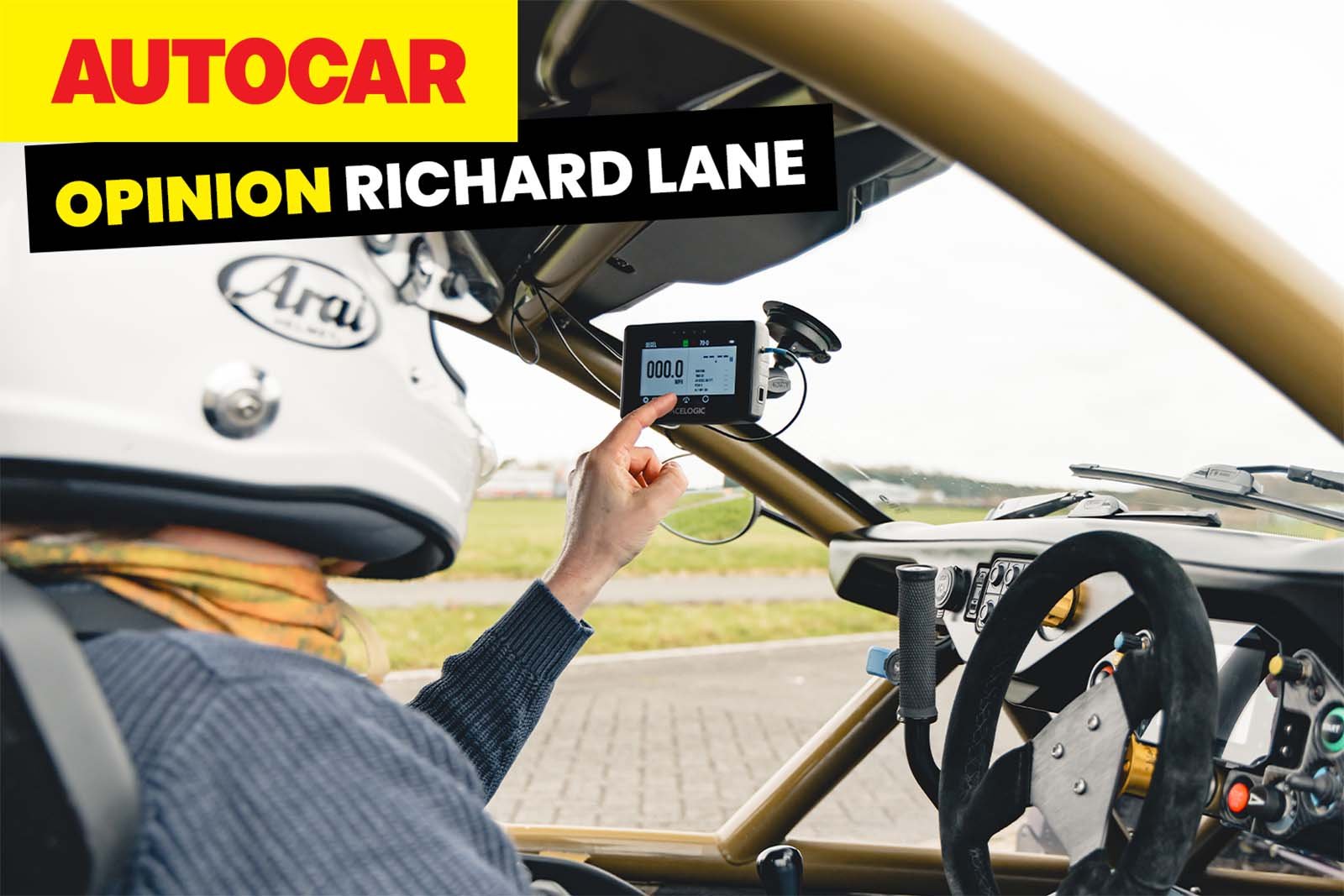
I find it amazing that, 30 years later, I can go to Horiba MIRA proving ground with a logger-monitor barely larger than a hot-crossed bun and a tiny antenna, and it can tell me with tremendous accuracy, in real -time and regardless of what might be happening elsewhere on the planet my speed, heading and -the length of timed runs to two decimal places. All this for a few hundred pounds sterling.
The VBox Touch kit we use to record telemetry relies on a basket of constellations. These include not only GPS but Glonass (the Russian equivalent) and Galileo (EU), and if necessary BeiDou (China). It’s an embarrassment of riches if you only need to know how fast a Jaecoo 7 will fire itself from standstill to 100mph (21.82sec, for the record).
It’s a recent privilege too. The Americans turned off the ‘selective availability’ that degraded civilian GPS accuracy in 2000, but Glonass only became reliable in 2011, Galileo in 2016 and BeiDou as late as 2020.
Go back far enough and the figures in Autocar will have been taken with the famous ‘fifth wheel’, made first for us by Boon and Porter. This required our garage to borrow the test car from the testers the day before it went to MIRA, in order to clamp a towing eye to the rear bumper (a task that became much more complicated with the advent of 5mph bumpers).
To this we’d mount a heavy-duty cycle wheel with a tough hydraulic damper intended to keep the tyre in contact with the road as consistently as possible. It was all rigged up to a speedometer in the cabin and was accurate to about 0.5mph, which was considered high in 1960. From there, hand-timing using a Heuer and a clipboard secured us precious data.
Life as a road tester is a damn sight easier now, though over the years there have been various frustrations. They have, however, mostly been to do with a faulty (and cheaply replaced) antenna unable to secure a reliable signal. Last year I was all set to get the numbers from the Lamborghini Temerario – with six or seven support staff from Italy standing by and a rapidly closing window of dry weather – when the VBox simply would not get a location fix.
