


Apple fans, get ready to unfold something new.
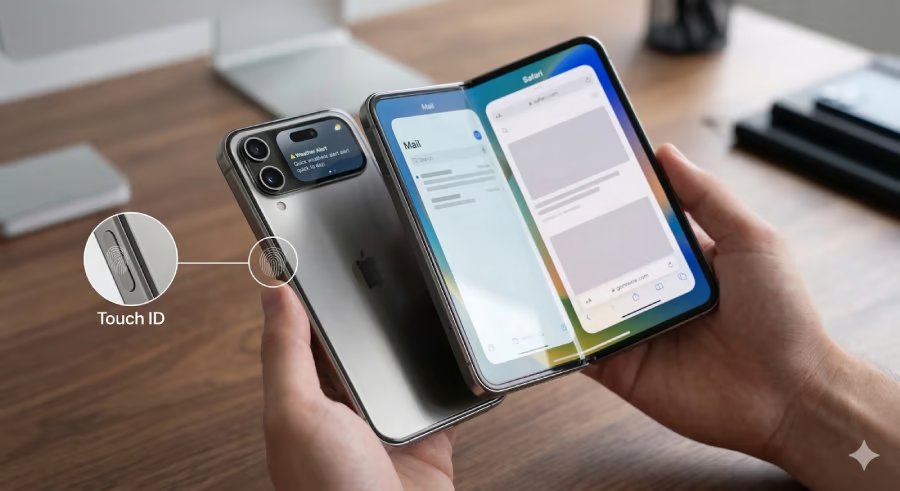
Apple’s long-rumored foldable iPhone is expected to introduce new interface changes that make the device behave more like an iPad when unfolded. According to Bloomberg’s Mark Gurman, the device will feature an updated iOS that allows users to run apps side by side and use layouts similar to those found on the iPad.
Bloomberg reports that developers will also be able to adapt their iPhone apps to take advantage of the larger display and new interface proportions.
The device will still run iOS rather than iPadOS, meaning the multitasking system will remain simpler than on Apple’s tablets. However, users will be able to view two apps simultaneously on the larger internal screen, something current iPhones do not support beyond picture-in-picture video.
A phone that opens into a small tablet
When closed, the foldable device is expected to resemble a typical iPhone with a standard external display. Once opened, however, the internal screen could expand to roughly the size of an iPad mini.
According to Bloomberg, the inner display will use a wider aspect ratio than many foldable phones currently on the market. The wider design is intended to make multitasking easier and improve experiences like watching a video or working across two apps.
Apple is also reportedly designing the outer display to be slightly smaller, closer to the size of a compact iPhone, allowing users to handle quick tasks without unfolding the device.
Durability and the ‘crease’ problem
Apple has notoriously waited seven years since Samsung’s first foldable to enter the market, largely to solve the “crease” issue. While they haven’t achieved a perfectly flat screen, they’ve reportedly developed a new technology that “reduces the crease without eliminating it entirely,” per Bloomberg.
The company has also focused heavily on durability, testing the screen to ensure it can withstand thousands more “opens and shuts” than current market leaders.
Design trade-offs: Goodbye face ID, hello touch ID
To achieve the thinness required for a folding flagship, Apple has had to make some hardware adjustments. The most notable is the retirement of the “notch” or “pill” on the outer screen.
Because the front panel is “too thin to accommodate the Face ID sensor array,” according to Bloomberg, Apple will instead integrate Touch ID into the side power button. This marks the first time a fingerprint sensor has appeared on a new iPhone since 2022.
In place of the usual Face ID hardware, the outer screen will feature a small “hole-punch” cutout for the camera, while still supporting Dynamic Island for alerts and notifications.
Premium specs, premium price
Expect to see this at the very peak of the 2026 lineup, with Bloomberg noting a projected price tag of “roughly $2,000.” To keep the profile slim, Apple is reportedly sticking to a dual-rear camera system, one fewer than the current Pro models. Despite that, the tech giant believes the massive screen and productivity boost justify a top-tier position.
Also read: Apple’s next iMac refresh could bring a bolder color palette, an M5 chip, and hints of a more powerful future desktop lineup.
