A great bridal shower theme does a lot of heavy lifting — it shapes the decor, the menu, the games, and even the invitations, so you’re not making a hundred small decisions from scratch. Here are 20 themes that consistently work, organized by vibe so you can find one that fits the bride. For more on this, see our nails guide. For more on this, see our hair guide. See also: fashion & outfits.
Key takeaways
- Match the theme’s formality to the wedding’s formality for a cohesive lead-up to the big day.
- Combining two theme elements (like a garden brunch with a mocktail bar) often works better than picking just one.
- Most showers run 2-3 hours; brunch and early afternoon slots draw the widest range of guests.
In this article
- Classic & Elegant
- Cozy & Casual
- Destination-Inspired
- Themed & Playful
- Interactive & Activity-Based
- Choosing the Right Theme
- Matching a Theme to the Season
- Frequently Asked Questions
- Involving the Bride in the Decision
- Combining Elements From Multiple Themes
- Setting the Right Formality Level
- Coordinating Theme With Registry and Gifts
- Timing the Day Itself
- Including Guests Who Can’t Attend in Person
- Handling a Mixed-Generation Guest List
- A Simple Planning Timeline
- Remembering What the Day Is Really For
- Sending Invitations That Match the Theme
Classic & Elegant
- Garden brunch. Florals, pastel linens, mimosas, and a menu of quiches and fresh fruit.
- Tea party. Fine china, finger sandwiches, and a proper tiered stand of pastries.
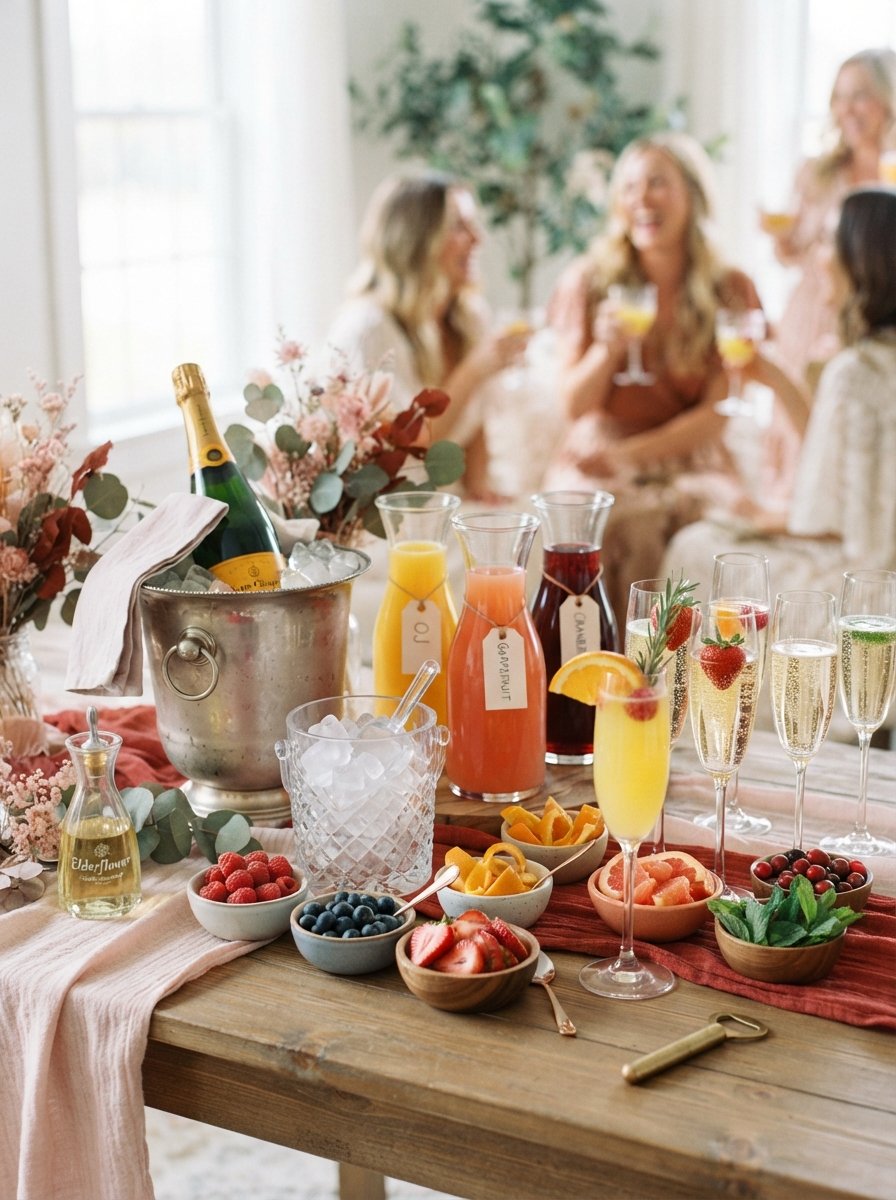
- Champagne & roses. A neutral palette punctuated with blush roses and a build-your-own mimosa bar.
- Timeless white & gold. Simple, sophisticated, and nearly impossible to get wrong.
Cozy & Casual
- Wine and cheese night. A relaxed evening shower with a curated cheese board and a few bottles worth talking about.
- Cookie decorating party. Sugar cookies, icing bars, and a low-key, hands-on activity that doubles as a favor.
- Cozy sweater brunch. Fall-leaning colors, a hot cocoa or cider bar, and blanket seating if the weather allows outdoor space.
- Backyard potluck. Low-pressure, guest-contributed dishes, string lights, and lawn games.
Destination-Inspired
- Tuscan vineyard. Terracotta tones, olive branches, and an Italian-inspired spread.
- Tropical getaway. Bright colors, tropical fruit, and a signature rum cocktail.
- Parisian café. Croissants, macarons, and a “café” backdrop for photos.
- Coastal escape. Blues and whites, light seafood bites, and a relaxed beachy playlist.
Themed & Playful
- Around the world. Each table or food station represents a country the couple has visited or wants to visit.
- Book club bride. Guests bring a favorite book with marriage or love advice written inside for the bride.
- Plant lady shower. Guests bring a small potted plant instead of a card, and decor leans green and earthy.
- Old Hollywood glam. Black, gold, and a dash of sparkle, with a “starlet” photo backdrop.
Interactive & Activity-Based
- Recipe box shower. Guests bring a favorite recipe card for the couple’s new home.
- Advice cards & mocktail bar. A build-your-own mocktail station paired with a card-writing station for marriage advice.
- Flower arranging workshop. A florist-led station where guests build their own take-home bouquet.
- Game night shower. Bridal-themed trivia and classic party games with small prizes.
Choosing the Right Theme
Start with the bride’s personality and the guest list size before the aesthetic — an intimate wine night works beautifully for 10 close friends but falls flat for 40 guests, while a garden brunch scales well either way. If budget is a concern, our guide to planning a bridal shower on a budget breaks down where to splurge and where to save for any of these themes. For more on this, see our beauty & makeup guide.
Matching a Theme to the Season
- Spring: Garden brunch, tea party, or flower arranging workshop take full advantage of blooming florals.
- Summer: Tropical getaway, coastal escape, or backyard potluck make the most of long daylight and outdoor space.
- Fall: Cozy sweater brunch, wine and cheese night, or book club bride lean into warmer, indoor-friendly vibes.
- Winter: Old Hollywood glam, champagne and roses, or a cookie decorating party feel festive without needing outdoor space.
Frequently Asked Questions
Who traditionally hosts a bridal shower?
Historically it was a maid of honor or close family member, though today it’s common for a small group of bridesmaids or family to co-host and split both planning and cost. If you want to go further, celebrations & parties covers it in detail. If you want to go further, relationships & dating covers it in detail.
How far in advance should a bridal shower happen?
Most showers are held one to three months before the wedding — close enough to feel connected to the celebration, far enough to avoid overlapping with wedding week logistics.
Can a theme be too on-the-nose?
Not usually — guests tend to appreciate a clear, well-executed theme more than a vague one. The bigger risk is trying to combine too many themes at once, which can make decor and menu planning harder than it needs to be.
Involving the Bride in the Decision
While a surprise shower can be fun, most brides appreciate at least a little input on the theme, especially around dietary needs, guest list size, and any strong preferences (or dealbreakers). A quick conversation early in planning saves a lot of second-guessing later.
Combining Elements From Multiple Themes
You don’t have to pick just one theme wholesale — many of the most memorable showers borrow a couple of elements from different ideas on this list. A garden brunch with a build-your-own mocktail bar, or a tea party with a recipe box favor, both combine well without feeling scattered, as long as the color palette and overall formality stay consistent.
Setting the Right Formality Level
Before finalizing a theme, think about how formal the actual wedding will be. A shower doesn’t need to match the wedding’s formality exactly, but a very casual backyard potluck can feel like a mismatch ahead of a black-tie wedding, just as an elaborate tea party can feel overly formal ahead of a laid-back backyard ceremony.
Coordinating Theme With Registry and Gifts
Some themes naturally suggest a gifting focus — a recipe box shower pairs well with kitchen registry items, while a lingerie or “stock the bar” shower fits well as a smaller, separate event alongside a more traditional main shower. It’s fine to keep gifting open-ended for most themes, but a light suggestion in the invitation helps guests who aren’t sure what’s appropriate.
Timing the Day Itself
Most bridal showers run two to three hours — long enough for a meal or activity plus gift opening, short enough that guests don’t feel obligated to entertain themselves past a natural end point. Brunch and early afternoon slots tend to draw the widest range of guests, since they don’t conflict with evening plans or require an overnight commitment for out-of-town family.
Including Guests Who Can’t Attend in Person
For family or close friends who can’t make it, a short video call moment during gift opening or a small mailed favor afterward helps them feel included without changing the format of the day itself for everyone who is there in person. If you want to go further, wellness & self-care covers it in detail.
Handling a Mixed-Generation Guest List
Showers that mix generations — grandmothers alongside college roommates — tend to do best with classic, elegant themes rather than very trend-driven ones, since they feel comfortable and familiar across a wider age range. Games and activities work best when they’re easy to opt out of gracefully for guests who’d rather just enjoy the conversation.
A Simple Planning Timeline
Roughly two months out: choose a theme, date, and venue. One month out: send invitations and finalize the menu. Two weeks out: order any specialty decor or favors. One week out: confirm headcount and finalize the day-of schedule. This spacing keeps the planning manageable instead of compressed into a stressful final week.
Remembering What the Day Is Really For
Amid theme boards and logistics, it’s worth keeping sight of the actual purpose: celebrating someone you love as they head into a major life change. A simpler gathering held with genuine warmth will always outshine a picture-perfect one that felt like a production to sit through — guests remember how a day felt far more than how it looked.
Sending Invitations That Match the Theme
Your invitation sets expectations before guests even arrive, so let it reflect the theme — a playful font and bright colors for a tropical getaway, elegant script and muted tones for a tea party. This small detail helps guests dress and show up in the right spirit without you needing to explain the theme separately in a follow-up message.
Shop this story
A few finds to bring these themes to life:
- Bride-to-Be Sash and Banner Set — A festive touch for any bridal shower theme.
- Floral Table Runner — Ties together elegant shower themes.
- Bridal Shower Games Set — Easy entertainment for guests.
- Personalized Bridal Shower Favors — Memorable takeaways matched to your theme.
As an Amazon Associate, Trendici earns from qualifying purchases.