










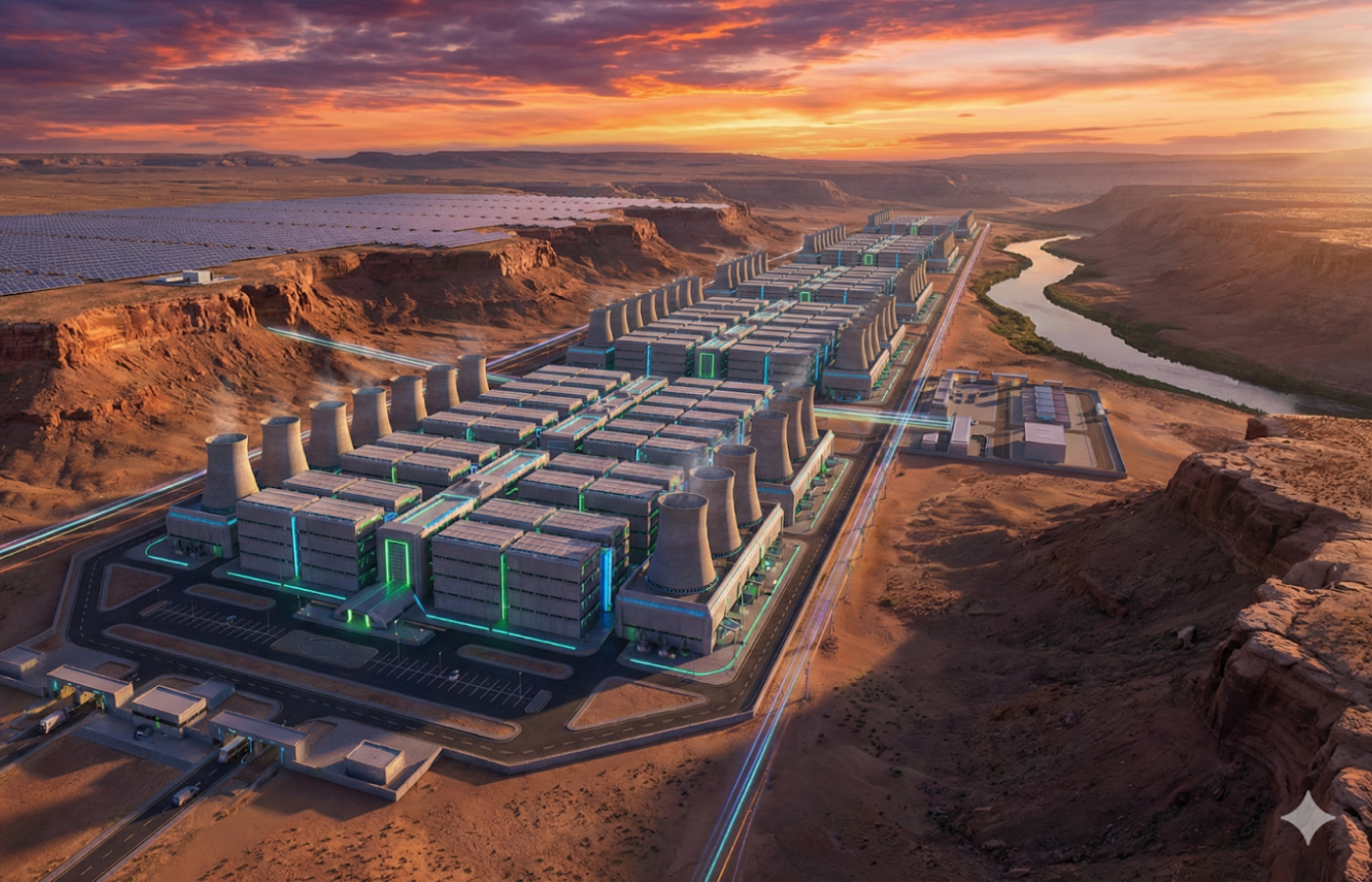
Announcements of new mega data centers have become almost as commonplace as weather forecasts.
Britt Burt, an analyst at Industrial Info Resources, told TechRepublic that more than 70 AI data centers with capacities exceeding 1 GW have been announced in the past year. But an Uptime Institute study indicates that half of all planned data centers either won’t be built or construction will be slower than many expect.
“Proposals for new giant data centers exceeding 100 MW in power demand have reached new extremes in scale, compute, investment and power consumption,” John O’Brien, an analyst at Uptime Intelligence, told TechRepublic.
He added: “While many of these proposals have progressed at speed and are driven forward by experienced developers, tenants and well-resourced investors, a similar number of projects have progressed little, or even stalled, since they were announced.”
O’Brien noted that the uncertainty factor within many of these proposals is rarely well understood. Whether due to conditional tenancy promises, lack of firm power contracts, permitting and planning holdups, equipment supply constraints, financing failures, or community opposition, there is a significant difference between an announced project and an operating data center.
In support of this assertion, O’Brien cited the state of Georgia, where 6 GW of large-load projects were canceled during the three months up to Sep. 30, 2025. But for every project that hits the skids, it seems that another two even larger ones are announced. Further, the trend in terms of project size is for capacity to increase every few months. Whereas GW-plus facility plans were few and far between a year ago, there are now scores of projects in play at that scale.
A major wildcard is whether project materialization is community acceptance or opposition. Hyperscalers, large colocation providers, and data center developers are likely to relocate if they face excessive hostility from local communities. In any case, there are plenty of municipalities and states angling for data center business.
Some are incentivizing development in their regions. Texas and Alaska are among the leaders in courting data centers. But states like Ohio, Pennsylvania, and West Virginia are also getting in on the act. Alberta, Canada, is another area keen to attract AI data centers.
One step back, two steps forward
Despite inevitable delays, cancellations, postponements, and even scope creep, O’Brien remains bullish about the potential for an AI boom. Short of a black swan event, he believes that a large number of massive data centers will spring up across the US and elsewhere in the coming years.
“Some of the capacity plans and timeframes for giant-scale build-outs will be overstated, but this does not appear to detract from the current momentum,” said O’Brien. “Even if many of these new giant data centers are not built, or are smaller than announced, there will still be an unprecedented and rapid increase in the amount of data center capacity and power required over the next 5 years.”
Also read: PowerGen’s shock pivot shows how quickly the energy industry is reorganizing around AI-driven data center demand.


