


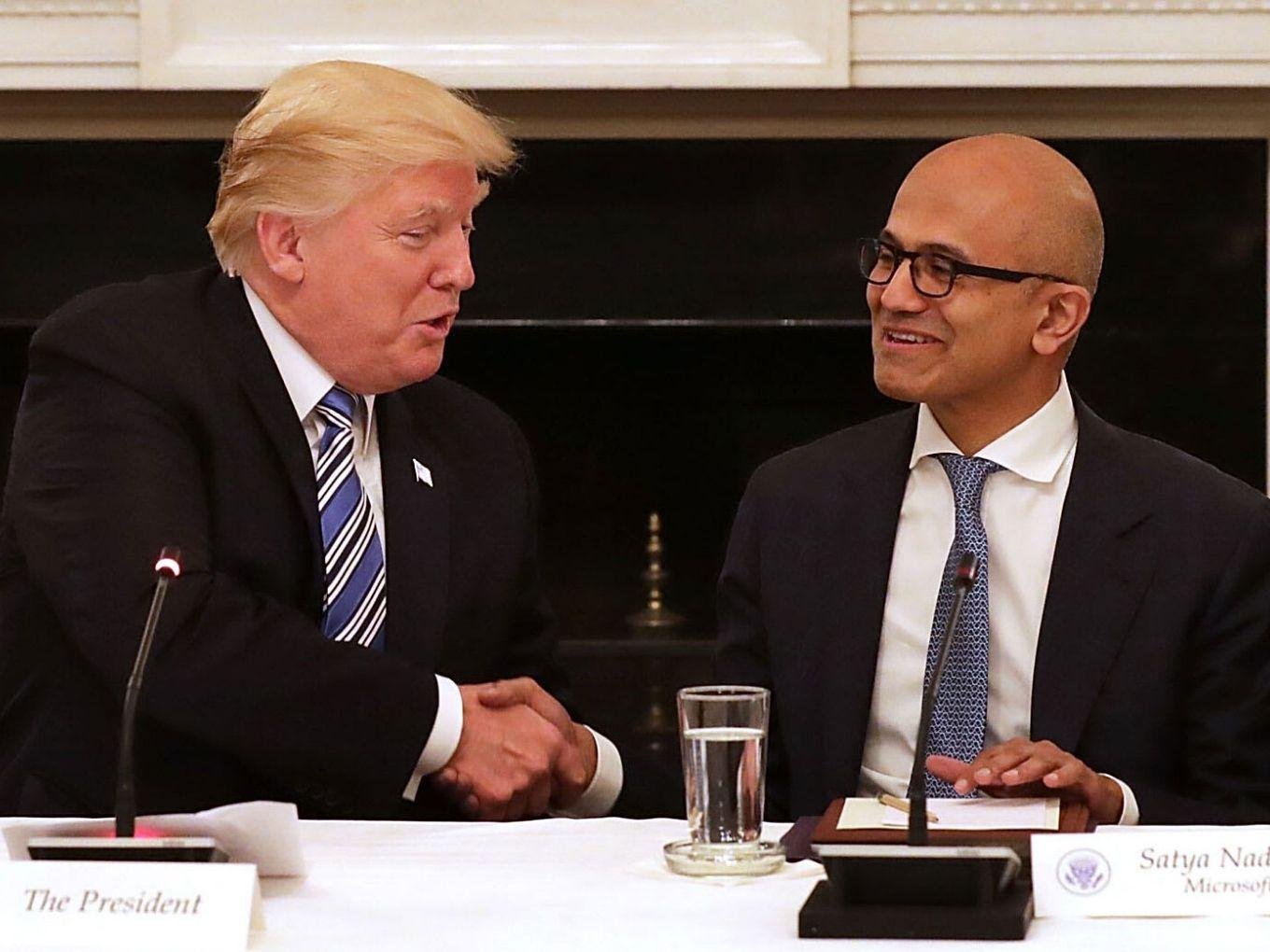
President Donald Trump is putting Big Tech on notice as the AI boom collides with rising electricity bills.
Trump said on Jan. 12 that Microsoft will begin making changes this week to ensure Americans are not stuck with higher utility bills because of the company’s network of AI data centers. In a post on Truth Social, he said data centers are critical to keeping the US ahead in AI but warned that ordinary consumers should not bear the cost of powering them.
“First up is Microsoft, who my team has been working with, and which will make major changes beginning this week to ensure that Americans don’t ‘pick up the tab’ for their POWER consumption, in the form of paying higher Utility bills,” Trump wrote on Truth Social.
He added that more announcements involving other tech companies are coming in the weeks ahead.
Why data centers are under scrutiny
The push comes as electricity prices have risen in parts of the country that host large data center clusters. According to previous reporting, utility bills have risen in states where energy-hungry facilities have expanded rapidly.
Over the past year, Microsoft has planned or built new data centers in places including Wisconsin, Texas, Michigan, and the Atlanta area, as it races to meet demand for AI services. Trump made clear that while the administration supports AI growth, it expects tech companies to cover the costs themselves.
“We are the ‘HOTTEST’ Country in the World, and Number One in AI,” Trump wrote in the same post. “Data Centers are key to that boom… but, the big Technology Companies who build them must ‘pay their own way.’”
Microsoft’s response: ‘Pay our way’
A day after Trump’s comments, Microsoft outlined a broader plan to ease community concerns about electricity, water use, and local taxes.
Brad Smith, Microsoft vice chair and president, said the company will take steps to prevent its data centers from passing electricity costs on to residents.
“I think the bare minimum, as we look to the future, is to give these communities around the country the confidence that when a data center comes, its presence will not raise their electricity prices,” Smith said at an event in Washington, D.C. on Tuesday, according to CNN Business.
As part of the effort, Microsoft said it will seek to pay utility rates high enough to fully cover its power use and help fund grid upgrades where needed, rather than having those costs spread to other customers.
Microsoft has faced vocal opposition in some locations. In Wisconsin, the company withdrew plans for a data center in Caledonia after strong local resistance, even as it continues other projects in the state.
“I just want you to know we are doing everything we can, and I believe we’re succeeding, in managing this issue well, so that you all don’t have to pay more for electricity because of our presence,” Smith said at a September town hall in Wisconsin, cited by CNBC.
Beyond electricity, Microsoft pledged to reduce water use, replenish more water than it consumes, and avoid asking communities for property tax breaks to attract data centers. The company also said it will invest in local job training, including construction and data center operations, and expand AI education programs through schools, libraries, and nonprofits.
AI boom meets energy reality
The pressure comes as the Trump administration pushes aggressively into the global AI race. Earlier in 2025, Trump announced the Stargate Project, a $500 billion joint venture between OpenAI, Oracle, and SoftBank to build massive AI infrastructure. At least one Stargate data center is already under construction in Texas.
Those projects are power-hungry. TechRepublic previously reported that OpenAI’s data center plans alone could require seven gigawatts of electricity. Trump acknowledged the importance of data centers while drawing a firm line on costs.
“I never want Americans to pay higher Electricity bills because of Data Centers,” Trump wrote. “Therefore, my Administration is working with major American Technology Companies to secure their commitment to the American People.”
Related: Will Kevin O’Leary’s AI data center actually get built? The answer is still unclear.
