







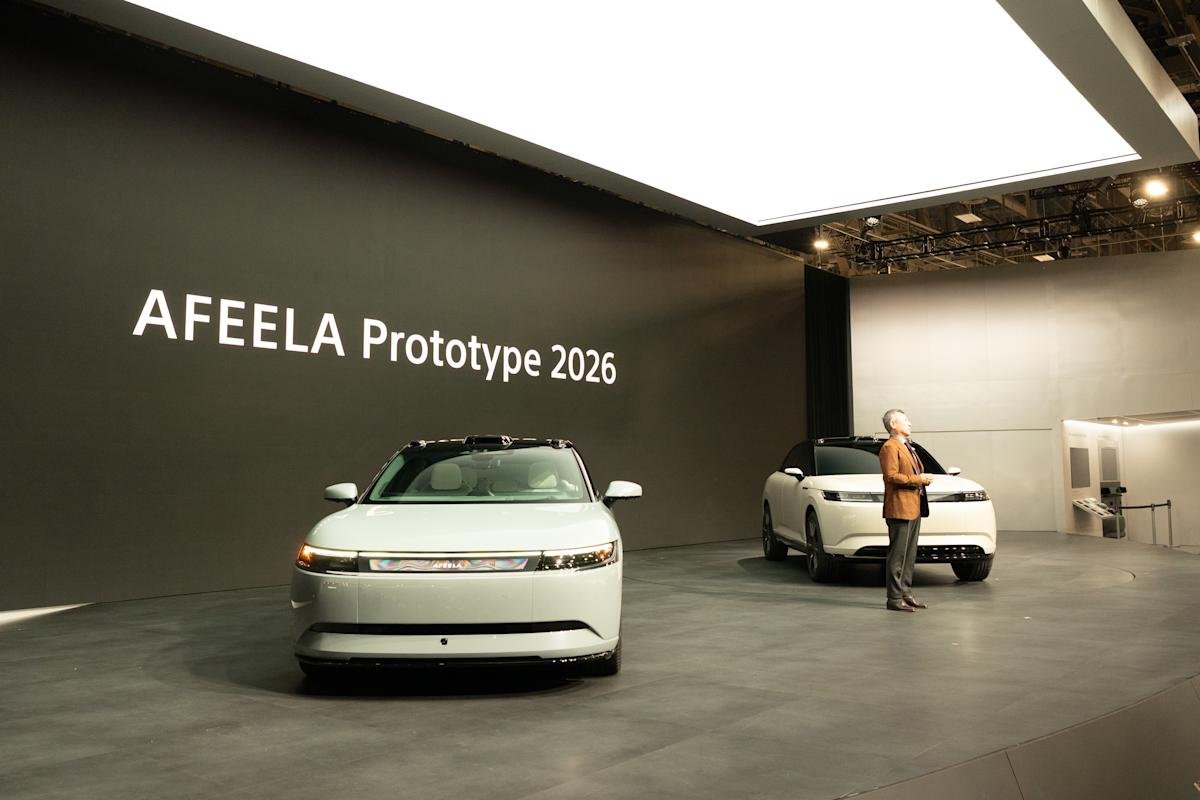
One of the most overly hyped, unfortunately named and curiously positioned cars has been officially killed. It’s the Afeela 1, better known as the PlayStation Car, and it was meant to be an ultimate intersection of personal mobility and digital media. It is, instead, dead, killed by a combination of headwinds that even the most pessimistic of mobility analysts couldn’t have foreseen when it was first revealed six years ago.
That said, the six year interval might have been the biggest blow to the Afeela 1’s chances.
How did we get here?
What was to become the Afeela 1 debuted at CES 2020 as the Sony Vision S, a car that made headlines not so much for the way it looked (it was pretty plain) or the way it was supposed to drive (Sony didn’t really talk feel). It was notable simply because it was a car from a company best known for TVs that looked amazing and video game consoles that were impossible to find.
A few years later, Sony paired up with Honda to show that this wasn’t just a Gran Turismo fantasy made manifest. This was going to be an actual production car. In 2025, it was given a price tag: $100,000, along with a maximum range of about 300 miles. With cars like the Lucid Air already on the road, going 400 miles on a charge and costing less, Afeela 1 looked out of date well before it entered production.
Back then, I said it was already shaping up to be a PS4 in a PS5 era, and a year later, the unveiling of a slightly taller SUV version didn’t exactly shift the fates in the Afeela’s favor.
That incredibly long rollout, teasing a car for six full years, was pretty damning, but that was far from the only factor in the demise of the Afeela 1.
A geopolitical EV catastrophe
The interior display is one of a few interesting aspects of the Afeela 1. (Tim Stevens for Engadget)
Back in 2020, the future was looking electrified. Manufacturers around the world were gearing up for an anticipated European ban on internal combustion by 2035, many of them promising to have fully electrified fleets years ahead of schedule.
Government incentives were generous, free chargers were popping up all over the place, and the global cheerleader for emissions-free motoring, Elon Musk, was still mostly respectable.
In the years that followed, everything fell apart, especially here in the US. Electric cars became a political firestorm, with Trump’s campaign taking every opportunity to decry them. Our federal rebates were scrapped, incentives for charger deployments were terminated and suddenly, the global automotive landscape became mired in a turbulent web of tariffs that shifted with the winds of hot air billowing around Washington.
EVs were now seen as an incredible folly by a considerable percentage of American consumers. The CEO of the world’s largest EV manufacturer goose-stepping along to the beat didn’t help. What was a market ripe for electrified innovation in 2020 turned into a mobility landmine by 2026.
Autonomy when?


Afeela 1 (Tim Stevens for Engadget)
One of the key selling points of the Afeela 1 was to be Sony deploying the full might of its digital empire onto four wheels. PlayStation gaming on the go! High definition movies in the dashboard! Ratchet & Clank on a weird little LCD on your bumper for some reason!
This was exciting stuff back in 2020 because autonomous cars were right around the corner. Waymo was doing incredible things, others were hot on its heels, and a significant chunk of industry analysts were predicting that hands-off, eyes-closed autonomy would be a tick of a box on vehicle configurators in just a few years’ time.
Fast-forward to 2026 and, in many ways, we’re no closer to that dream. Sure, we have a number of hands-off driver assistance systems available today, some more aspirationally named than others, but there are no mass-market, eyes-off autonomy systems on American roads.
That means the inclusion of Sony’s media empire isn’t quite the flex it was. Sure, your kids in the back seat can have a hell of a time, but chances are they already have enough devices to keep them well entertained without you having to drop six figures on a new car from a new company with a funny name.
The intangibles

Afeela 1
Another key strike against the Afeela 1 was that it, quite simply, didn’t look very good. That first Vision concept had a few striking lines about it. But by the time Sony Honda Mobility came about, they’d all been ironed out. A white, featureless sedan is something that’s hard for anyone to get excited about.
Not every car needs to be exciting to behold, but the Afeela 1 didn’t really deliver in other regards. I’ve sat in a few different versions of prototypes, and while they were all nice enough, none held a candle to the sorts of posh appointments you’d expect were you to drop $100,000 on a Mercedes-Benz or a BMW.
Sony was really betting on the car’s media chops to deliver value to its hardcore fans, but there are plenty of amazing-sounding cars on the road today, cars that look better and cost less than the Afeela 1 would have. Sony cachet simply wasn’t enough.
Honda’s cold feet

Honda 0 Series α EV (Honda)
The final death knell of the Afeela 1 came at the hands of Honda. While the Afeela 1 was born of a Sony dream, it was to be produced in partnership with Honda. When I met with Honda CEO Toshihiro Mibe last year, he was already getting cool on the company’s American EV prospects. “The volume initially will probably be less than we had envisioned earlier,” he said.
Since then, Honda took things further, canceling its 0 Series EVs. That struck me as a real shame. Where the Afeela 1 looked anonymous and was set to cost too much, the 0 Series machines were stunning and intended to be affordable. They had a real chance.
Their death effectively ripped the platform right out from under the Afeela 1. It’s conceivable that Sony could take its content, car and characters to a new platform, and indeed, the press release on the cancellation of the Afeela 1 leaves the door open, saying: “SHM will continue discussions with Sony and Honda regarding its future business plans.” But, that seems extremely unlikely to me.
So the Afeela 1 is dead, and so too is the dream of the PlayStation car. If you’ve read my coverage of the thing in the past, you know that I was never bullish on it. Pessimistic is closer to the truth, yet I still feel incredibly bad about this turn of events. I spoke with and interviewed a fair few Sony Honda Mobility employees over the years, and all were extremely excited about what they were building.
And why not? They were trying to do something new, a radically different experience in a wholly new car from a wholly new brand. That’s not something that comes along very often. Sadly, the Afeela 1 will go down in history as a lesson of exactly why that is.


