










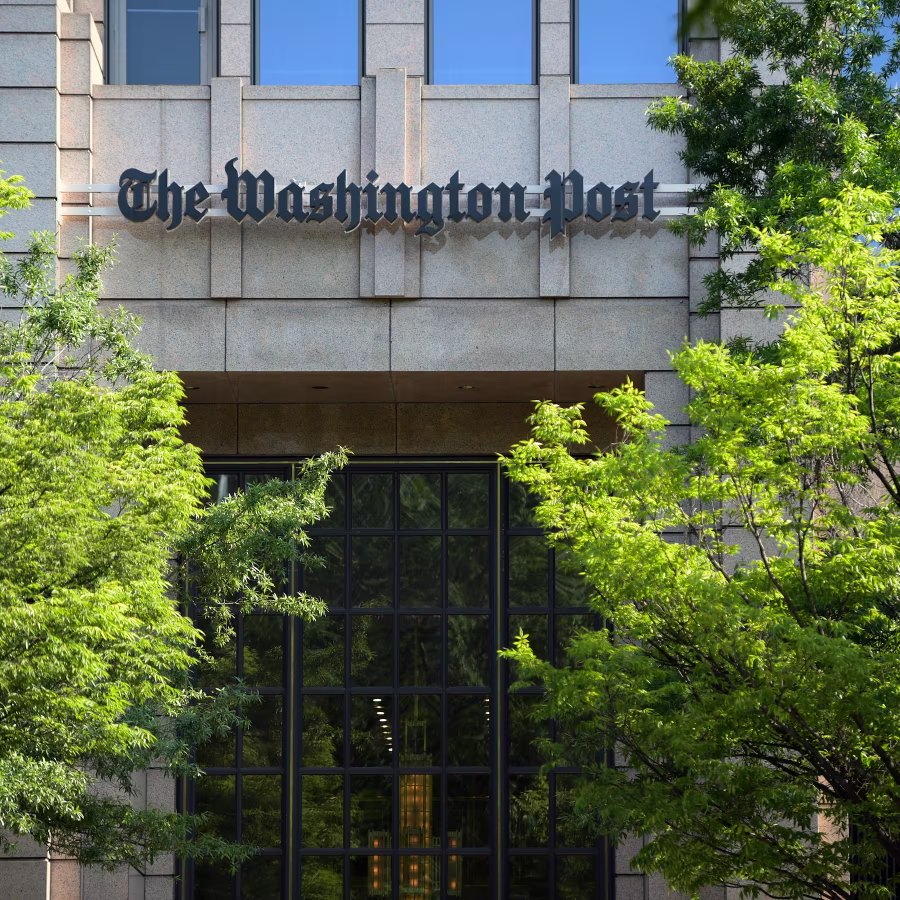
Layoffs have become a grim norm in the media industry. And this week, The Washington Post added its name to the list.
The newspaper giant has begun sweeping layoffs, cutting deeply across its newsroom and business operations as the nearly 150-year-old newspaper struggles to steady its finances and rethink its future in an AI-driven media landscape.
Executive Editor Matt Murray informed staff during an 8:30 a.m. EST Zoom call that the company would move forward with what leadership described as a “significant restructuring.” Employees were told to stay home for the day, and shortly after the meeting, layoff notices began landing in inboxes.
The cuts affect roughly one-third of the Post’s overall workforce, including more than 300 journalists, per multiple reports. According to Reuters, all departments are impacted, though politics and government reporting will remain the paper’s largest desk.
On the staff call, Murray said, “For too long, we’ve operated with a structure that’s too rooted in the days when we were a quasi-monopoly local newspaper.”
The sports department will close “in its current form,” book coverage is ending, and international reporting will be scaled back, though some overseas bureaus will remain open. The metro desk, which covers Washington, D.C., Maryland, and Virginia, is also being sharply reduced.
Leadership has framed the shift not only as cost-cutting, but as an attempt to adapt to rapidly changing reader habits and emerging technologies reshaping the industry.
The AI strategy behind the restructuring
The layoffs come as Will Lewis, the Post’s publisher and CEO, continues to push a new strategy centered on subscriptions, events, and heavier use of AI.
According to reports, Lewis, who joined the Post in early 2024, has emphasized subscriptions, AI tools, and events as part of a plan to return the paper to profitability. The Post has already experimented with AI-powered comments, aggregation, and other newsroom tools.
But those changes are unfolding as generative AI disrupts search traffic and reader habits.
Murray told staff the goal is to make the Post “nimbler” and more aligned with what readers actually consume, a message echoed in company statements that frame the cuts as a reset for a more technology-driven future.
‘Mistakes they did not cause’
Many point to the financial tailspin caused by owner Jeff Bezos’ decision in late 2024 to block the paper’s endorsement of Kamala Harris, which triggered more than 200,000 subscription cancellations.
“This is a tragic day for American journalism, the city of Washington, and the country as a whole,” said Jeff Stein, the Post’s chief economics correspondent, according to Axios. “I’m grieving for reporters I love… They are being punished for mistakes they did not cause.”
The Washington Post Guild echoed this sentiment, directly challenging the billionaire owner’s commitment.
“If Jeff Bezos is no longer willing to invest in the mission that has defined this paper for generations and serve the millions who depend on Post journalism, then The Post deserves a steward that will,” the union stated via X.
The Post’s layoffs are not unique. They mirror broader struggles across the media industry, where legacy outlets are cutting staff amid falling ad revenue, fragmented audiences, and rising competition from AI-powered platforms. But the scale and speed of the Washington Post’s retrenchment stand out, especially as rivals like The New York Times and The Wall Street Journal continue to grow their digital subscriber bases.
For more on today’s broader layoffs trend, see how Amazon plans to cut about 2,200 jobs in Washington state as part of its own workforce shift.


