


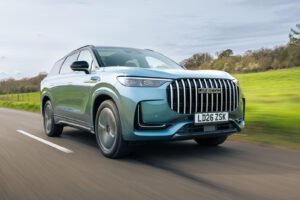






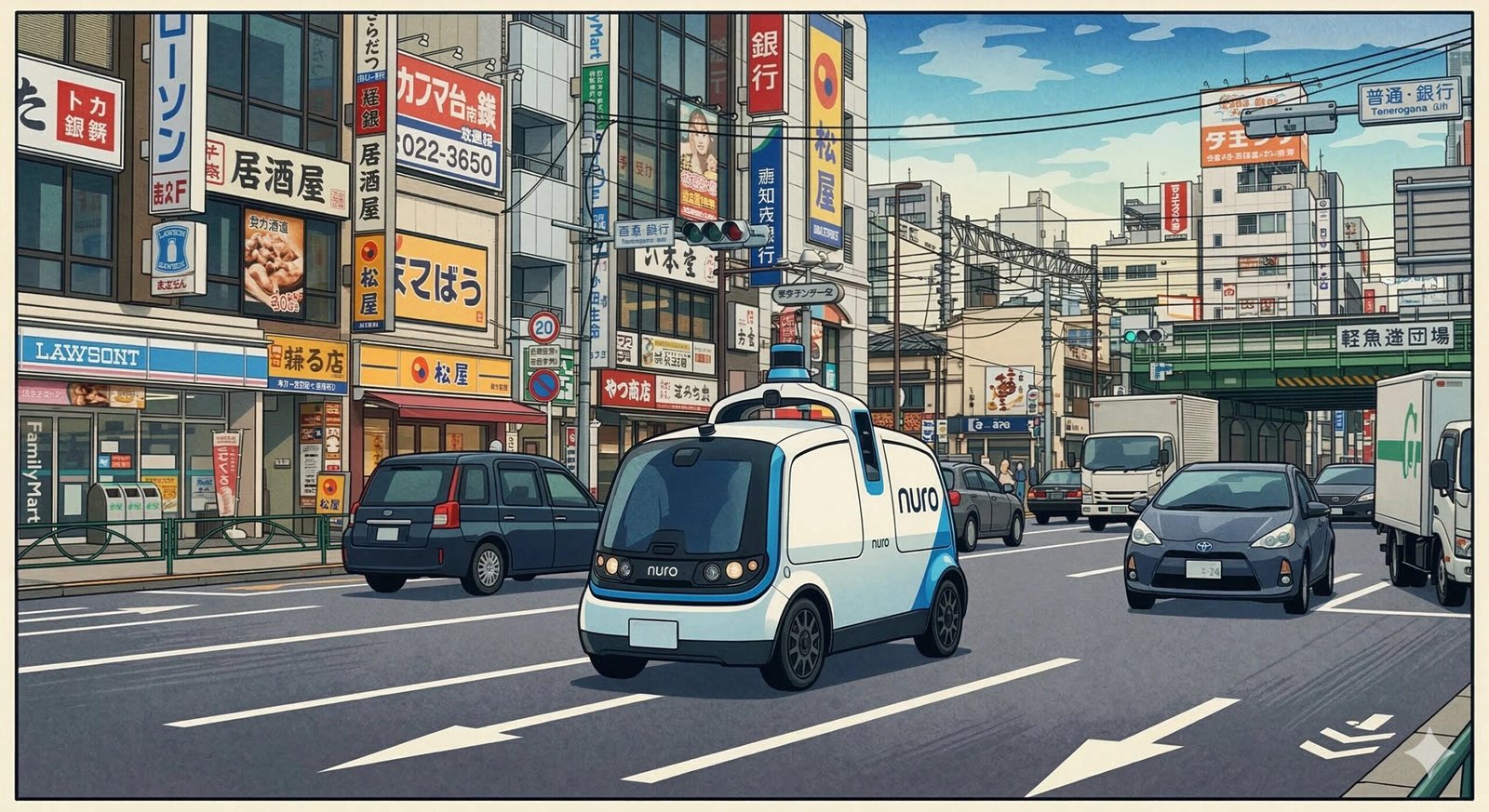
Nuro has begun testing its autonomous vehicle technology on Tokyo streets, marking the company’s first public-road expansion outside the US. The move is notable not because it proves self-driving cars can suddenly work anywhere, but because Nuro is using Tokyo to test how well its system adapts in a new driving environment.
Tokyo is a hard place to make this case; dense urban traffic, different road conventions, and unfamiliar signage make it a meaningful test for any company claiming its software can travel across markets with less location-specific tuning.
For now, the Tokyo rollout is best viewed as an early proof point, not a verdict on whether autonomous vehicles are ready to scale globally overnight.
Why Tokyo
According to Bloomberg Law’s report on the Tokyo test, the California startup has started testing in Japan’s capital after partnering with Uber and Lucid. In a separate March 11 post, Nuro described the effort as “zero-shot autonomy in Tokyo”, signaling that its system is meant to adapt to a new environment without city-by-city rewrites.
Zero-shot autonomy, as Nuro is using the term here, suggests the company is testing whether one driving model can handle a new city without a ground-up local rebuild. In practice, Nuro is trying to reduce the amount of local tuning usually needed before entering a new market.
What it means
If autonomous systems need less market-specific tuning, companies may be able to expand faster and at lower cost. But a Tokyo test is still a test, not proof that robotaxis can drop into any city overnight.
The company has moved beyond its delivery-bot roots and now licenses the Nuro Driver to automakers and mobility partners. Its Series E financing announcement said it closed a $203 million round with participation from Uber and Nvidia. Nuro also says its system is trained and validated through a mix of simulation, closed-course testing, and real-world trials.
That leaves Tokyo as an important signal, not a final verdict. Nuro may be closer to portable autonomy than many rivals, but the harder question is whether the same model can keep performing as conditions, regulations, and edge cases multiply across markets.
The broader robotaxi conversation is already shifting from futuristic demos to questions about rollout, cost, and scale. Tokyo also fits into the bigger push toward physical AI, where machine learning models must operate safely in messy, real-world environments rather than controlled digital ones.
Also read: Tesla’s Cybercab pricing and launch timeline show how fast the robotaxi market is moving.


