









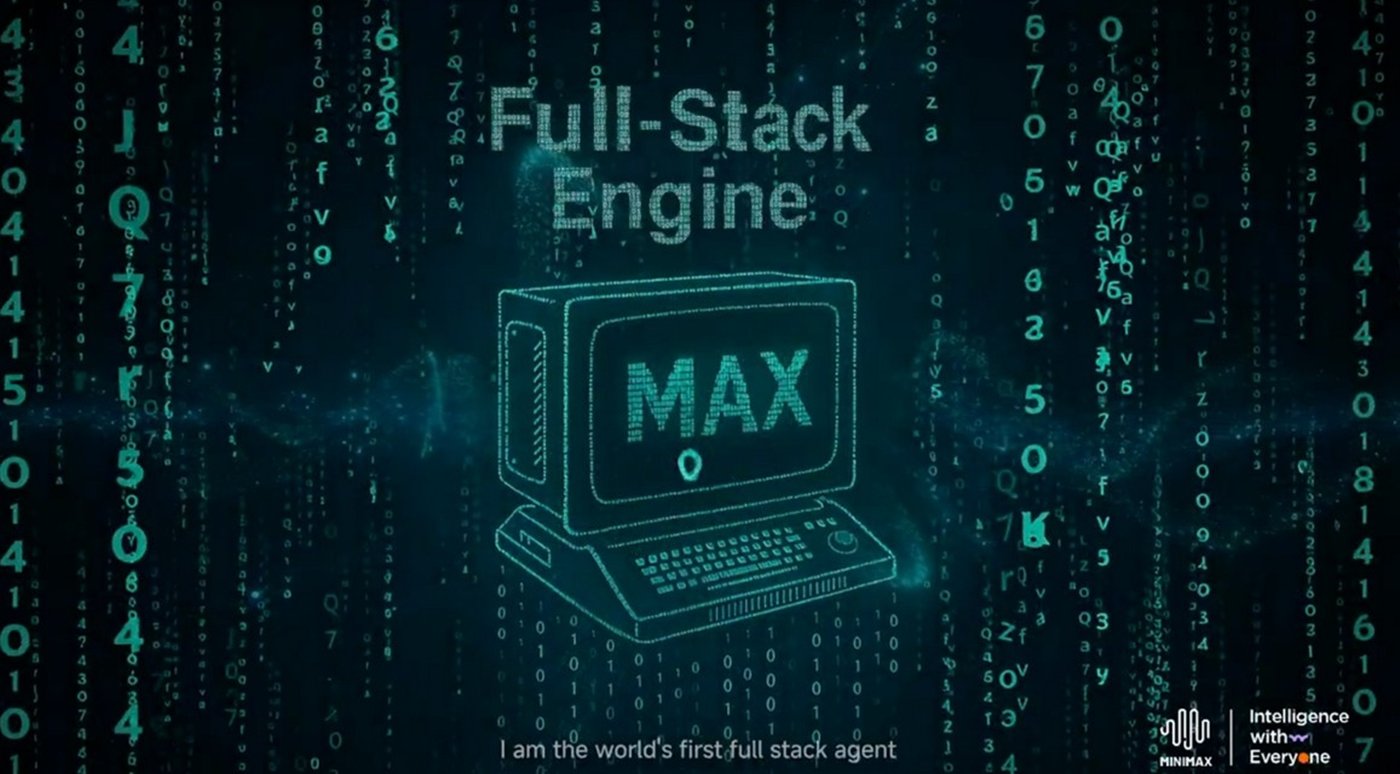
MiniMax is betting that the future of work belongs to AI that can actually ship products, not just write snippets.
On Tuesday (Dec. 23), the Chinese AI startup released MiniMax M2.1, a major update to its open-source model series, aimed at real-world, multi-language programming and everyday office automation.
According to MiniMax, M2.1 marks a clear change in focus from its predecessor. While M2 concentrated on cost control and access, M2.1 is designed to handle complex, production-level tasks across software development and office workflows.
In its release note, MiniMax said the update is meant to help “more enterprises and individuals find more AI-native ways of working (and living) sooner.” The company described models, agent scaffolding, and organizational design as the core drivers behind the upgrade.
Stronger coding across many languages
One of the headline improvements in M2.1 is its support for multiple programming languages. MiniMax said many AI models still lean heavily toward Python, even though real systems are usually built with several languages working together.
With M2.1, the company says it has “systematically enhanced” performance in Rust, Java, Golang, C++, Kotlin, Objective-C, TypeScript, and JavaScript, covering everything from low-level systems to application development.
This focus shows up in benchmarks. On multilingual software engineering tests, MiniMax reports that M2.1 outperforms Claude Sonnet 4.5 and comes close to Claude Opus 4.5, a much larger closed-source model.
To measure full-stack development skills, MiniMax introduced a new benchmark called VIBE — short for Visual & Interactive Benchmark for Execution. Unlike traditional tests, VIBE checks whether generated applications actually work and look right in a real runtime environment.
On the VIBE benchmark, MiniMax reported an average score of 88.6 for M2.1, with especially strong results in VIBE-Web (91.5) and VIBE-Android (89.7).
Web, mobile, and design get a boost
MiniMax also targeted a long-standing weak spot in the industry: mobile app development. The company says M2.1 significantly improves native Android and iOS coding, while also raising its understanding of design and visual structure in web and app projects. The company argues these improvements make vibe coding more realistic for production use.
MiniMax also emphasizes M2.1’s ability to follow composite instruction constraints, a common challenge in real office environments where tasks come with layered rules and exceptions.
The model builds on MiniMax’s earlier work with “Interleaved Thinking,” aiming to improve systematic problem-solving beyond just writing correct code. MiniMax says this makes M2.1 more reliable for everyday work like documentation, data handling, and multi-step automation.
MiniMax M2.1 is available via API and as an open-weight model for local deployment, with recommended support through frameworks such as SGLang and vLLM. The company says this approach is meant to give developers and enterprises more control, flexibility, and lower costs.
After months of uncertainty, Nvidia is edging closer to restarting high-end AI chip sales to China, but government approval remains a hurdle.


