











Meta is significantly expanding its anti-scam arsenal across Facebook, Messenger, and WhatsApp, introducing a suite of AI-powered detection systems and user alerts to stop fraud before it starts.
The announcement, made on Wednesday, comes as the company reports that it removed more than 159 million scam ads in 2025 alone.
“Scammers are constantly evolving their tactics — and so are we,” Meta said in a statement. “Every day, criminals use increasingly sophisticated measures to defraud people on our platforms and across the internet.”
What’s new on each platform
Facebook: Second-guessing that friend request
If you’ve ever felt pressured to accept a friend request from a stranger, Facebook’s latest test might permit you to click “delete.”
The company is testing new warnings that pop up when users send or receive requests from accounts displaying suspicious behavior patterns. According to Meta, red flags include accounts with very few mutual friends or profiles indicating a different country location than yours.

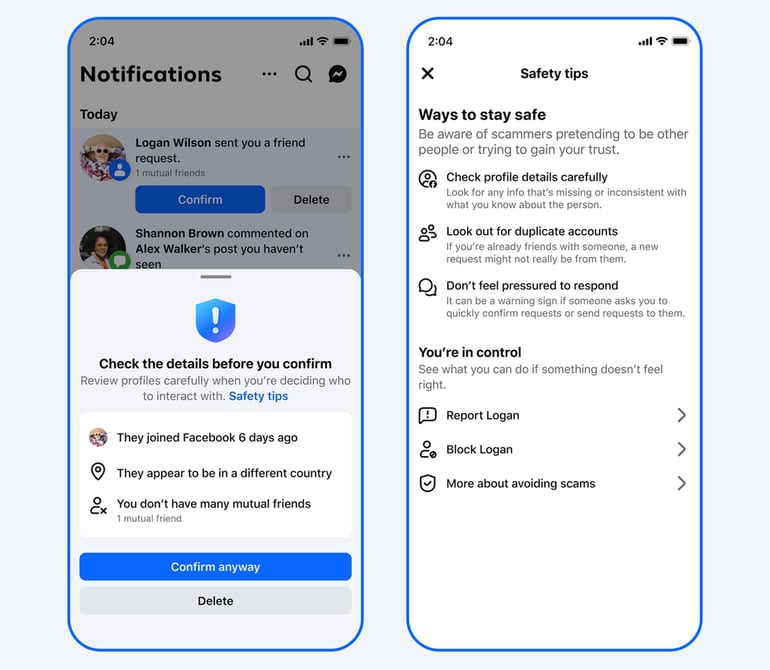
“When you send or receive a request from an account that shows certain signs of suspicious activity… you’ll see an alert to help you make an informed decision to block or reject suspicious requests,” the company explained.
WhatsApp: Don’t scan that strange QR code
WhatsApp users are increasingly being targeted by a clever scam: fraudsters posing as talent competition organizers asking people to “vote” by entering a phone number and device-linking code. Once the victim complies, the scammer’s device gets linked to their account.

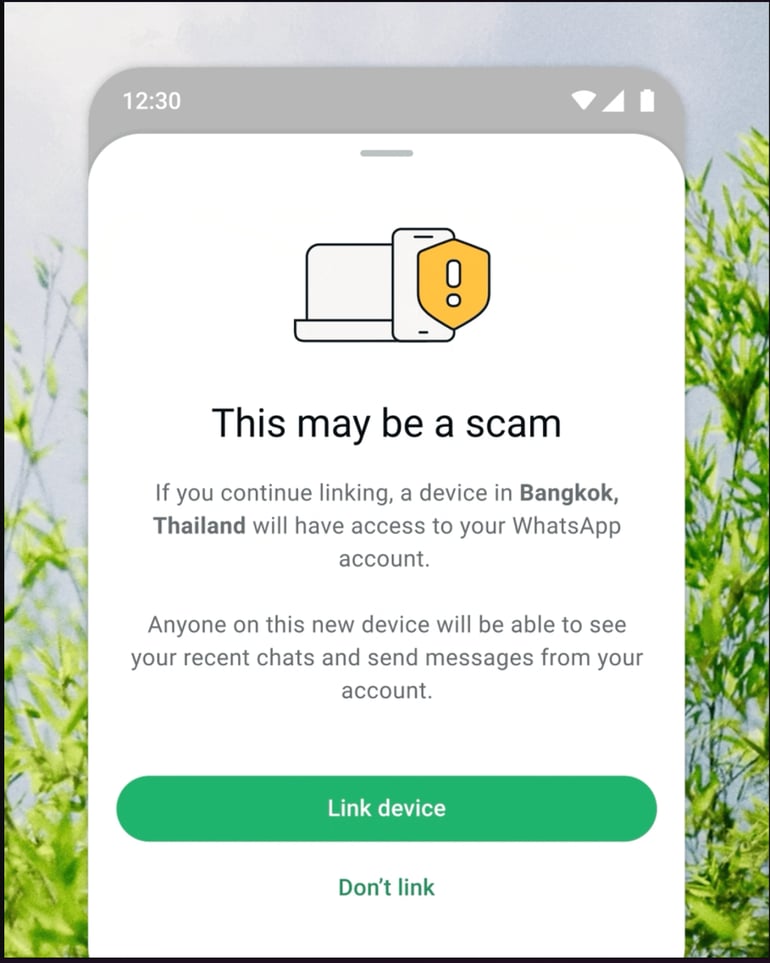
“To stay ahead of these tactics, WhatsApp will now alert you when behavioral signals suggest a linking request might be suspicious,” Meta announced. “These alerts will show you where the request is coming from and warn that it could be a scam, giving you the chance to pause and reconsider before it happens.”
Messenger: AI scam detection expands
Meta is rolling out its advanced scam detection feature on Messenger to additional countries this month. The tool identifies conversation patterns consistent with common fraud schemes, particularly suspicious job offers.

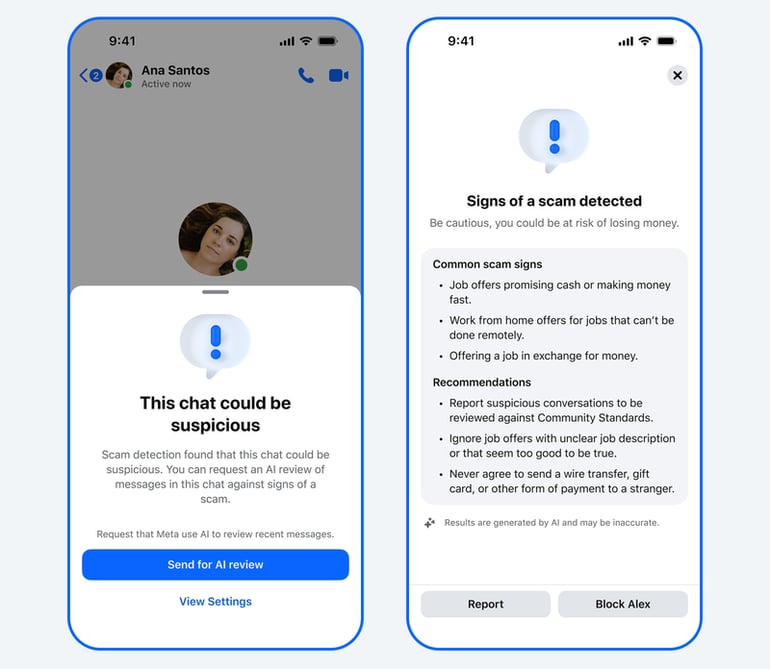
When potential scam patterns are detected, users receive a warning and are asked if they’d like to share recent chat messages for an AI scam review. If the system detects suspicious activity, users receive information on common scams and suggested actions, including blocking or reporting the account.
Advertiser verification expansion
Meta also announced it is expanding its advertiser verification program, aiming to have verified advertisers drive 90% of the company’s ad revenue by the end of 2026, up from 70% today.
“The verification process helps promote greater transparency, limiting attempts to misrepresent advertiser identity,” Meta explained. “It is an important part of our multi-layered approach to help protect people on our apps from scams.”
Going after the scammers themselves
Beyond user-facing tools, Meta highlighted its work with global law enforcement to disrupt scam operations at their source.
In a recent coordinated effort involving the FBI, the DOJ Scam Center Strike Force, the Royal Thai Police Anti-Cyber Scam Center, and other international agencies, Meta investigators disabled more than 150,000 accounts associated with scam center networks. The operation also contributed to 21 arrests made by the Royal Thai Police.
This marks the second Joint Disruption Week with the Royal Thai Police since December 2025, following an earlier operation that led to the removal of over 59,000 Facebook pages and accounts linked to money laundering and illegal recruitment schemes.
Also read: AI-powered scams helped drive major crypto losses in 2025, showing how fraud tactics are spreading across digital platforms.


