








Japanese company now sells no electric cars in the UK as it struggles with electrification globally
Take a look at Honda’s UK website and you will notice a big omission: no electric car.
Given that car makers here are legally bound by the ZEV mandate to hit an EV sales ratio of 33% this year, how does the Japanese company avoid fines?
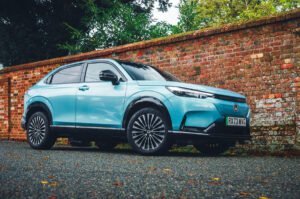
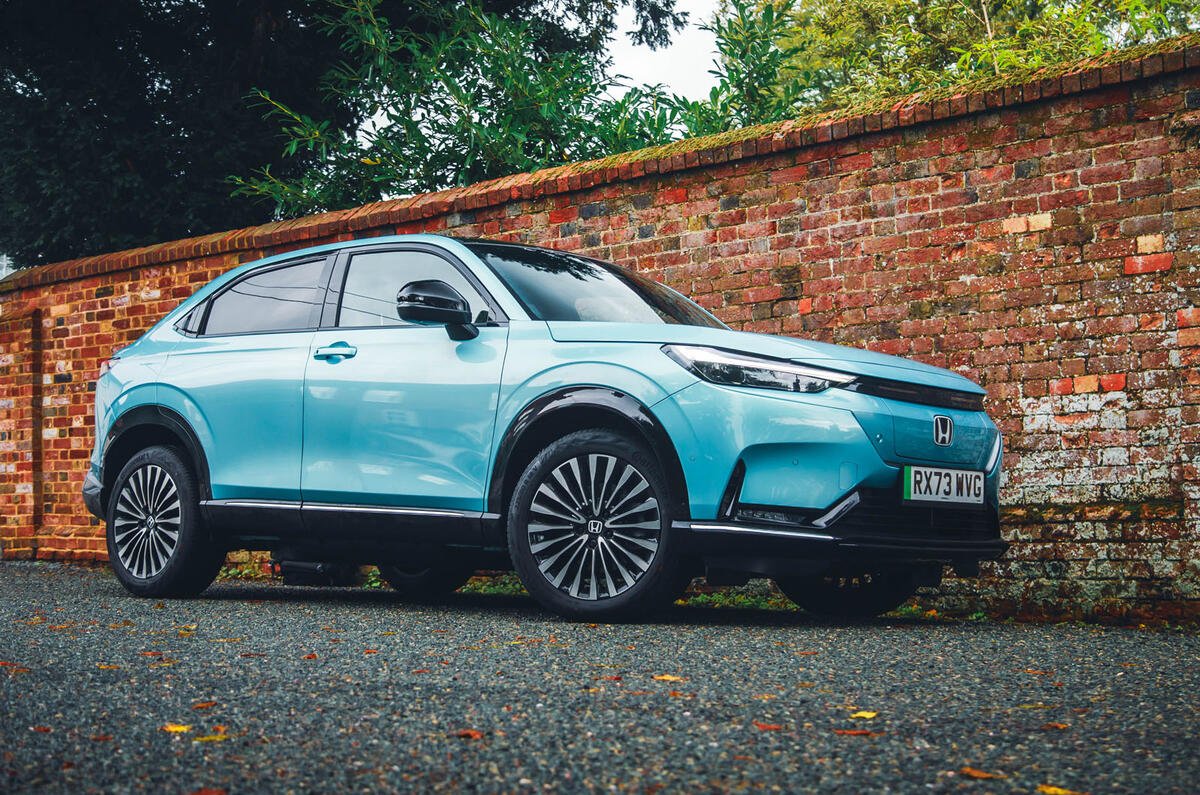
The EV paucity comes after Honda decided to axe the Chinese-built e:Ny1 after less than three years on sale in the UK. It struggled to generate organic sales without the help of discounts, selling just 7122 examples here.
Honda has told Autocar that the SUV has “reached the end of its life cycle in the UK and there are currently no plans for it to return to our line‑up”.
The e:Ny1 is also now missing from configurators in other European markets, including Germany and Spain.
Honda will in July launch the sub-£20,000 Super-N city car to take over electric duties, but its range is limited to just 128 miles.
Honda has been buffeted by global market shocks, leaving its EV strategy severely wanting. In March it cancelled its 0 Series SUV and saloon mere months before production was to start, citing the US government’s U-turn on climate-change obligations. It subsequently killed the Afeela electric premium brand developed with Sony, as its two cars were due to use 0 Series underpinnings.
After years preparing for an electric future that Honda believed was inevitable in its key markets of the US and China, circumstances got in the way.
“During the past few years, our business environment has drastically changed at a speed far exceeding our projection,” president and CEO Toshihiro Mibe said in March.
Meanwhile, Honda’s strategy in China of producing EVs with Chinese partners Dongfeng and GAC has run into the brick wall erected by fierce local competition. There it has the opposite problem to that in the US, Mibe acknowledged: “Competitors have launched products and deployed electrification and intelligent technology faster than expected.”
Honda’s European sales meanwhile have shrunk to such a level that it can’t really afford to maintain a separate EV strategy for the region. Last year it registered 71,825 cars across Europe for a market share of just 0.4%, according to figures from industry body the ACEA. Of those, just 2.6% were electric as e:Ny1 sales plummeted.
Honda isn’t the only Japanese player struggling with electrification. They have all been slow out of the gate with the technology, perhaps because EVs play such a small part in Japan’s car market, accounting for just 1.6% of the 3.8 million sales there last year.
Indeed, Honda’s sales focus is now on markets with only marginal EV growth, including the US, Japan and India, the company said in its March presentation.
Suzuki and Subaru have joined forces to collaborate on EVs in regions where they’re needed but are relying on partnerships with the dominant force that is Toyota.
Nissan meanwhile has maintained enough of a European presence with its Sunderland facility to be able to create EVs with local buyers in mind, first with the Leaf (now hitting the sweet spot in its third generation) and now also the Juke.
Local production is becoming almost de rigeur for any car maker selling EVs in Europe, as the UK and the EU reward those models connected to the local supply chain and exclude those that aren’t.
Honda’s decision to close its Swindon plant in 2021 means it can’t localise an EV to access the UK’s generous Electric Car Grant, leaving it to rely on sourcing from China – the one country that the UK and EU are looking to protect local manufacturers from. Competing with companies with access to the ECG scheme is becoming very difficult without offering discounts to match it.
With the Super-N, Honda is switching EV production from China to Japan. That’s unlikely to unlock the ECG, but the car’s promised low entry price will at least give Honda some room to generate sales to customers looking for a local runabout with a bit of kei character, a low kerb weight (of around 1300kg) and a sporty demeanour, with its artificial manual gearbox. Honda is also targeting European markets with this car, for example Spain.
The Super-N will definitely fill a gap but history has shown the limitations of kei car sales in Europe. What will come after Super-N is an open question.
Honda in Japan has shown the Insight, a 4.8m-long electric crossover that reworks the Chinese-market Honda e:NS2 made by Dongfeng. The car recently appeared at the Bangkok motor show as the e:N2, suggesting it’s ready for right-hand-drive export sales.
Not all Honda’s homegrown EV development is dead. In the March presentation, it confirmed that it’s still working on the 0 Alpha SUV concept, with its “thin, light and wise” design philosophy, first shown in 2025 ahead of planned sales in 2027. It’s primarily aimed at Japan and India, which has relaxed its fearsome new-car tax burden for EVs.
“We can see profitability in the future in these regions. That’s why we decided to keep this model,” Mibe said.
The global strategy for the 0 Alpha (which will roughly match the e:Ny1 for size) has yet to be revealed, but selling it in Japan at least overcomes the right-hand-drive hurdle.
As far as hitting the ZEV mandate target goes, Honda managed to ramp up e:Ny1 sales in the first three months of this year to hit an impressive electric share of 17.3%, according to figures from EV-focused transport research organisation New Automotive.
That doesn’t leave Honda too far adrift of its ‘real’ target of 22.7% EV sales, according to New Automotive’s calculations, which takes into account the various flexibilities allowed by the system, including CO2 emissions reduction from electrified vehicles. (Honda’s all-hybrid line-up helps on that score, with an extra boost coming from its sole plug-in hybrid, the CR-V e:PHEV.)
However, a dramatic 65% drop in sales of Honda’s best-selling Jazz supermini across the first three months suggests the company is having to limit sales of some ICE models to avoid fines inflicted by missing its EV target.
“Japanese brands essentially won the hybrid battle but risk losing the electric war,” New Automotive CEO Ben Nelmes told Autocar. “By doubling down on hybrid technology, they successfully trimmed emissions in the short term, but it has left them in a high-speed chase to catch competitors who went all-in on battery-electric from the start.”
Mibe admitted in March that Honda had struggled to stay flexible enough to keep pace with changes to global legislation on electrification but said the company hadn’t abandoned EVs and promised to say more in May.
“As of today, EV demand is declining in North America and other regions. However, this trend will not be permanent,” he said. “To achieve carbon neutrality when EV demand resumes, Honda will be ready to fulfill customer expectations.”


