







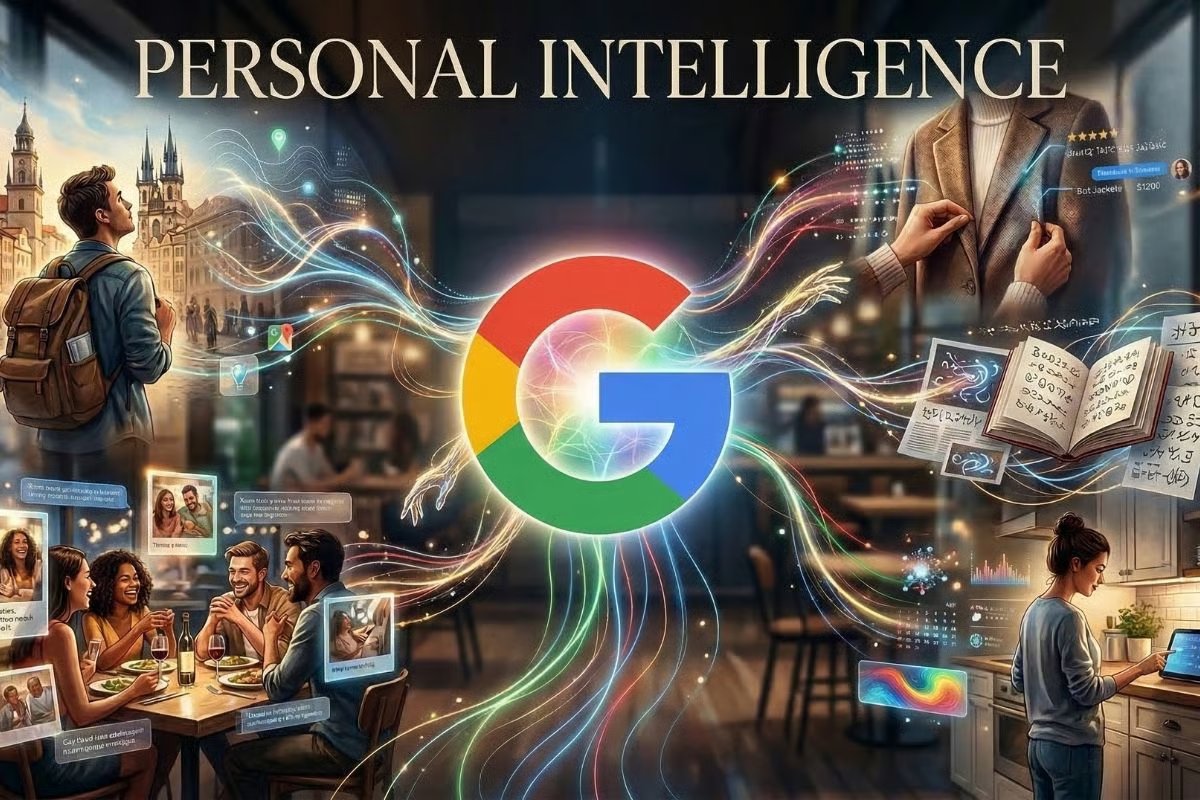
Google is giving its AI a more personal edge. Its Personal Intelligence is expanding in the US, widening the feature’s reach across some of its most visible consumer products.
That expansion now touches AI Mode in Search, the Gemini app, and Gemini in Chrome, as Google pushes further into AI experiences built around a user’s own context rather than one-size-fits-all answers.
A more personal kind of AI assistant
What Google is really selling here is a different kind of relationship between user and assistant.
Personal Intelligence pulls together the information you choose to share and the activity across the products you use, so the AI can respond with a fuller sense of your preferences, history, and habits.
The tech titan calls Personal Intelligence “the shift to AI that can truly understand your personal context,” and describes it as a step beyond the piecemeal personalization users have seen before, where one app might remember a past chat or retrieve a flight detail, but the experience still stops short of feeling fully connected.
What Personal Intelligence can actually do for you
Instead of asking users to restate their preferences and history every time, Personal Intelligence draws on context already sitting across Google’s products and uses it to produce more relevant answers.
For instance, a shopping prompt can lead to recommendations shaped by past purchases, preferred brands, and personal tastes. A support question can surface help tied to a specific product from a receipt, rather than general troubleshooting steps.
The same idea extends to planning and discovery. Travel suggestions can take timing, bookings, and user preferences into account, while hobby recommendations can be guided by patterns in what someone has been reading, watching, or exploring.
Personal Intelligence is meant to cut down on repetition. It lets Google’s assistant pull together details it already has permission to access, so answers can reflect a user’s preferences, history, and situation with less back-and-forth.
The controls behind the rollout
Nothing is connected by default. Users choose which apps to link, and those connections can be turned on or off later in AI Mode in Search and the Gemini app.
That setup puts the user in charge of how much personal context the feature can use. More tailored answers depend on which services someone chooses to connect to, including apps like Photos, Search, YouTube, and others in Google’s ecosystem.
There is also a limit on how that data is handled. Gmail inboxes and Google Photos libraries are not used directly to train Gemini or AI Mode, though prompts, responses, and some supporting summaries or excerpts may still be used to improve the systems over time.
Not a finished product just yet
This is still an early-stage rollout, not a fully settled system. Google acknowledges there are known limitations and that the feature can still make mistakes as it expands.
Some of those weak spots include leaning too hard on one interest, mixing up another person’s preferences with your own, or missing pieces of relevant context. It can also get timelines wrong, misunderstand relationships, and treat a receipt or confirmation email as proof that something actually happened.
Additionally, Personal Intelligence can struggle to keep up with real-life changes. A major shift in someone’s circumstances may not be reflected right away, and even user corrections may not always stick.
So while the rollout is growing… the system itself is still being refined.
Google Translate is making its Android tools easier to reach with new one-tap widgets for faster everyday use.


