A wreath is the cheapest change you can make to the outside of a house, and the one people actually notice. Pinterest shopping clicks for wreaths and garlands are up around 55% month on month, which is roughly six weeks ahead of when most people start looking.
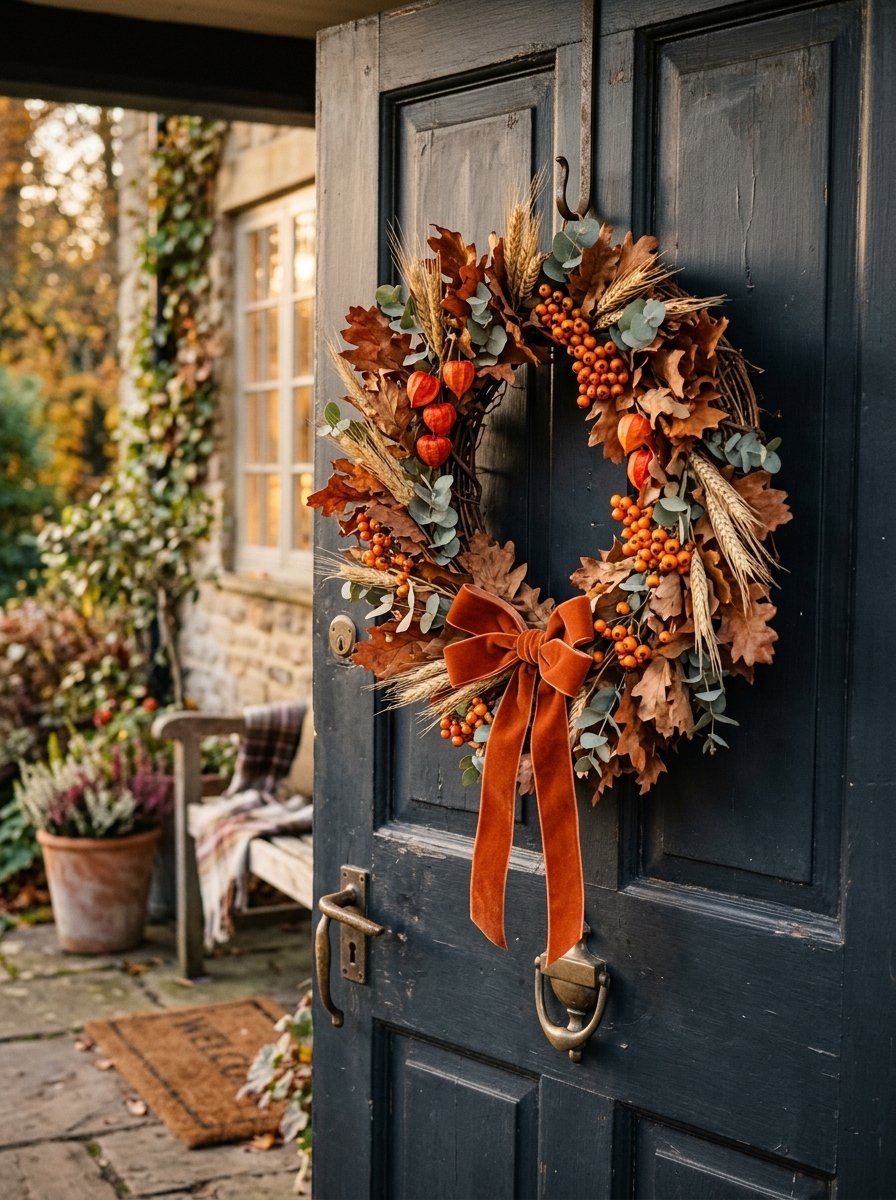
This covers what to make one from, the colours that read as autumn without looking like a supermarket display, and how to build one that survives being outdoors from September to January.
Dried Beats Fresh, for Three Reasons
Fresh foliage wreaths photograph beautifully and then die. For a door wreath that has to last a whole season, dried wins:
- Longevity. A dried wreath holds from September through to the New Year. Fresh eucalyptus browns in two to three weeks outdoors.
- It stores. Boxed somewhere dry, a dried wreath comes back next year. You are buying once, not annually.
- Weather. Dried materials don’t wilt in rain or collapse in frost. They fade, which usually looks fine.
The one exception is a Christmas wreath made from real pine, which holds well in cold weather and smells like the season. Make that one fresh, in December, and accept it is temporary.
The Colour Rule: Skip the Bright Orange
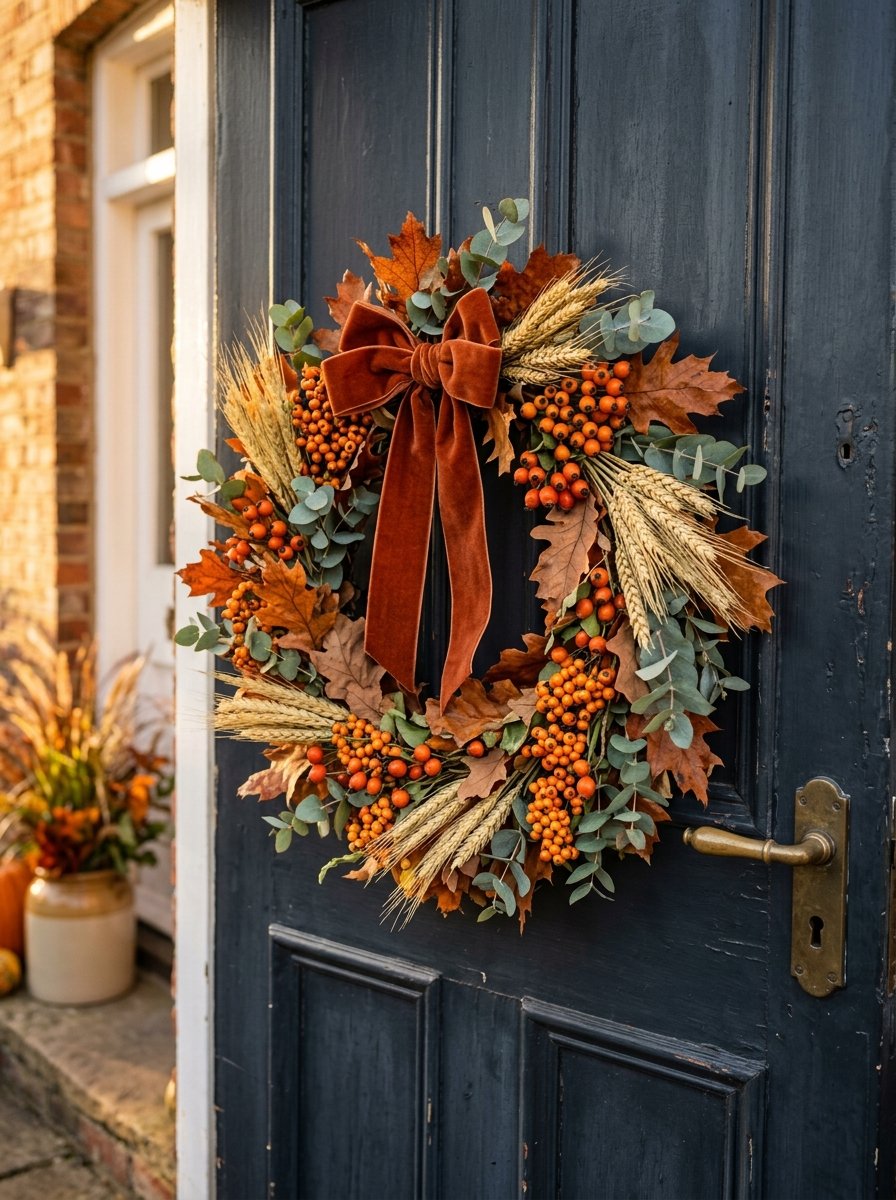
The single thing that separates an expensive-looking autumn wreath from a cheap one is the orange. Supermarket wreaths lean on bright pumpkin orange and synthetic maple leaves; the ones that look good use rust, russet, wheat, sage and deep berry instead.
A working palette, and you need no more than four:
- Rust and russet — dried oak, beech, preserved maple
- Wheat and straw — dried wheat, pampas, bunny tails
- Sage and grey-green — preserved eucalyptus, olive, ruscus
- Deep berry — hypericum, rosehip, dried rose
It is the same restraint that governs the season’s nail and knitwear palettes: muted, warm, and two or three tones rather than five.
What You Need to Build One
- A base. Grapevine for a rustic look, wire for a fuller one, straw if you want to pin rather than wire. Grapevine is the most forgiving for a first attempt because gaps read as intentional.
- Floral wire in a colour close to your stems, plus wire cutters.
- Three to five materials in the palette above, in varying textures — one leafy, one grassy, one berry, one structural.
- A ribbon in velvet or grosgrain. Rust, chocolate or forest green.
How to Build It So It Doesn’t Look Homemade
- Work in small bundles, not single stems. Three to five stems wired together, then wired onto the base. Single stems look sparse and take four times as long.
- All bundles face the same direction. This is the step amateurs skip, and it is the most visible difference. Every bundle angled the same way around the circle.
- Overlap each bundle over the stems of the last. The heads of one cover the wired ends of the one before, so no mechanics show.
- Leave a third of the base bare if you want the asymmetric look, or go all the way round for a full one. Half-covered reads as unfinished; a deliberate third does not.
- Bow last, and oversized. A small bow on a large wreath looks like an afterthought. Long tails, loosely tied.
Hanging It So It Survives
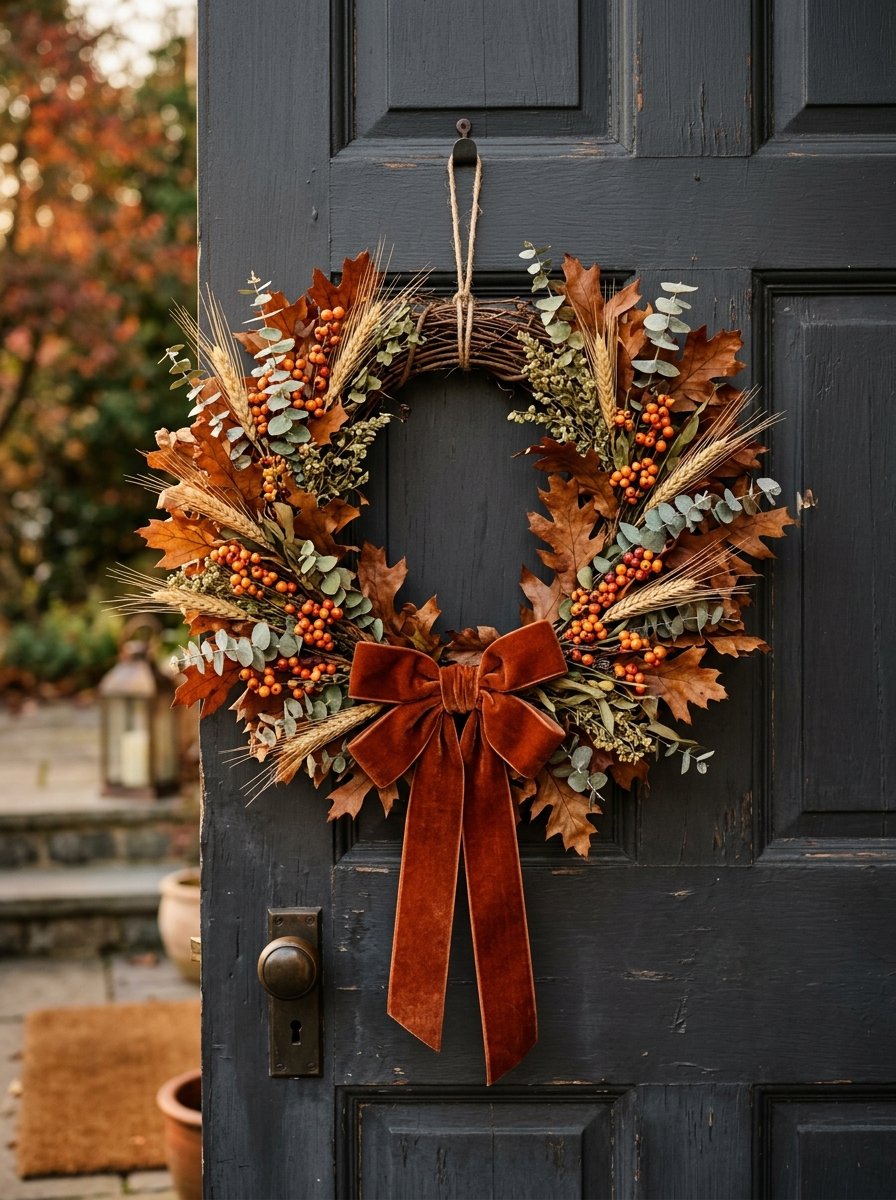
- Dark doors flatter warm wreaths. Rust and gold read far stronger against navy, forest green or black than against white, where they can look washed out.
- Use an over-door hanger, not a nail. Cheaper than repainting a door.
- Under a porch if you have one. Direct rain shortens a dried wreath’s life more than cold does.
- Turn it a quarter every few weeks if it gets direct sun, so it fades evenly rather than on one side.
Taking It Into Christmas
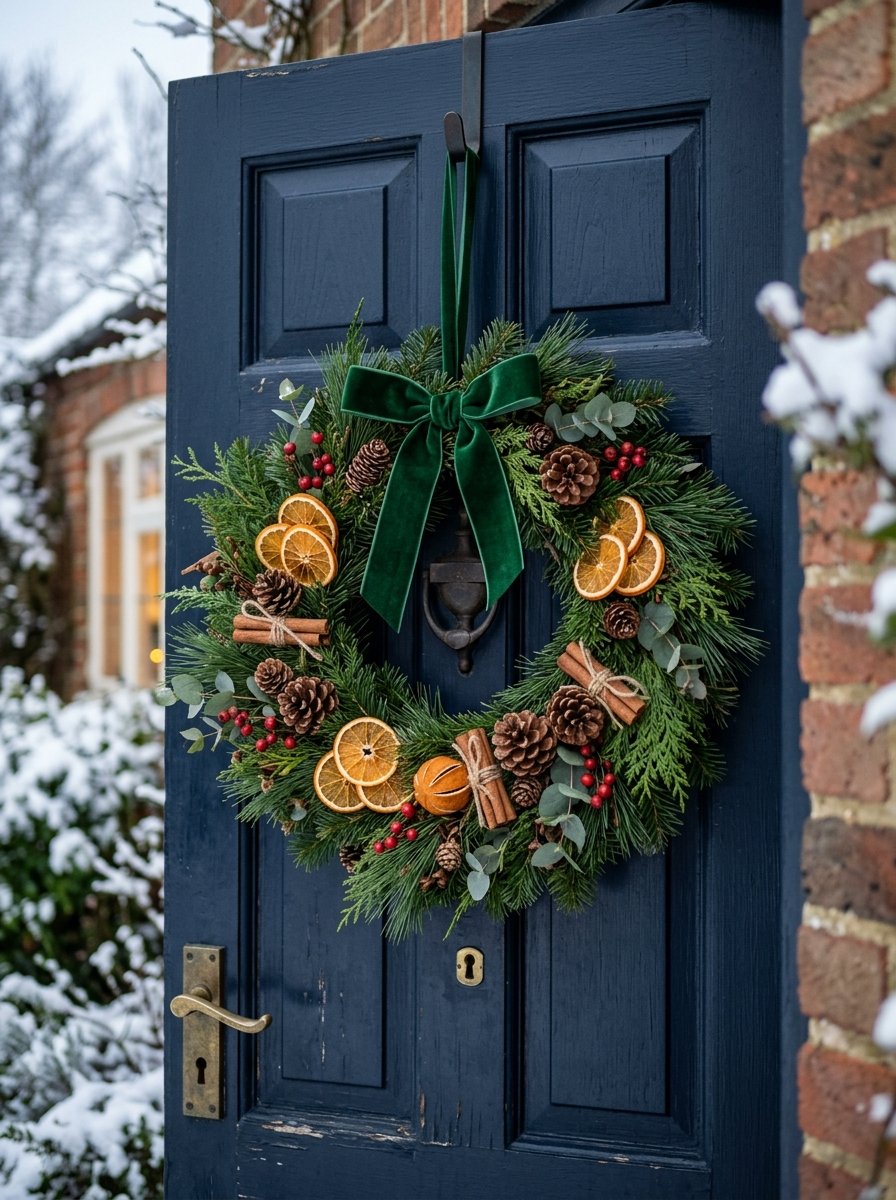
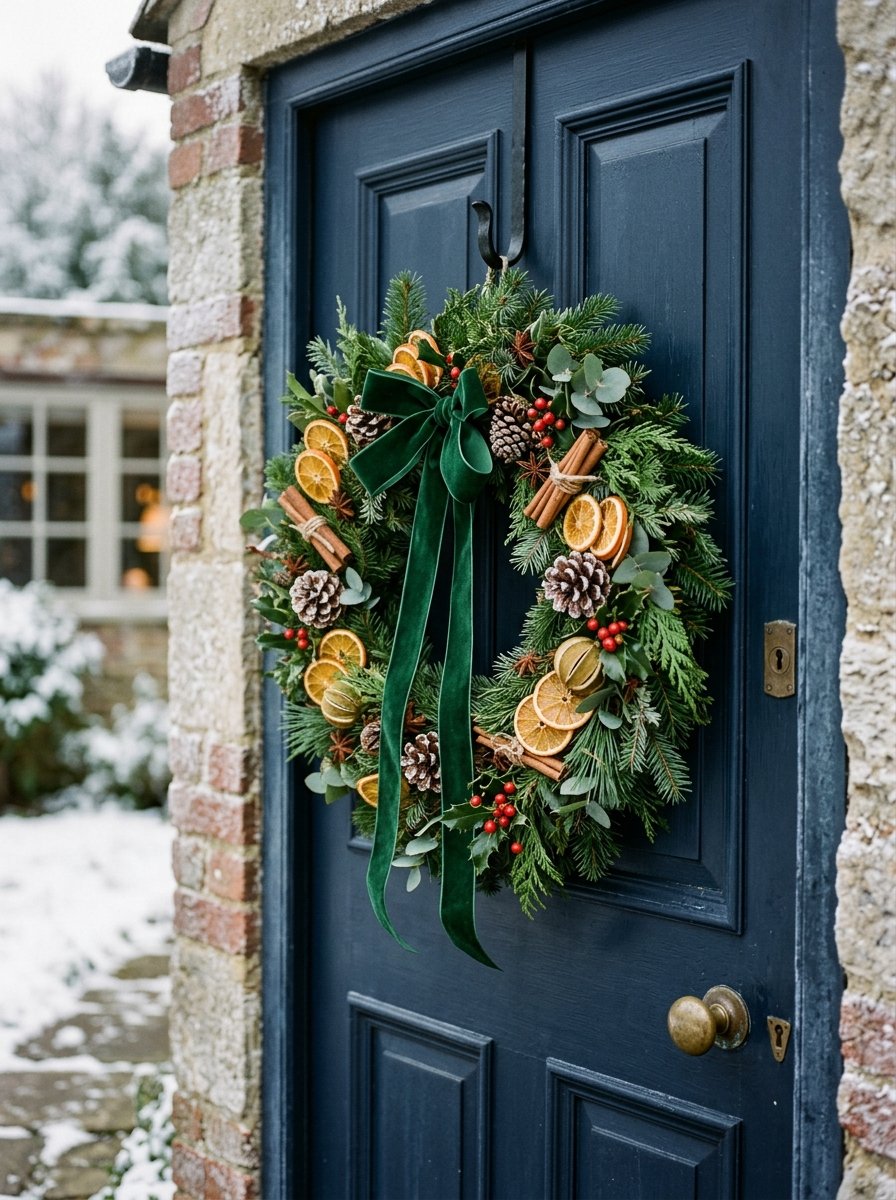
You do not need two wreaths. An autumn wreath converts by swapping the ribbon and adding two or three elements:
- Swap the rust ribbon for forest green or tartan
- Wire in a few sprigs of real pine or preserved cedar
- Add dried orange slices, cinnamon bundles or small pinecones
- Remove anything that reads specifically as harvest — wheat especially
The same warm, muted palette carries straight through. It is the bright orange that has to go, not the wreath.
Frequently Asked Questions
How long does a dried autumn wreath last?
Outdoors under cover, a full season — September to January. Indoors, several years. Direct rain is what shortens it, not cold.
When should I put up an autumn wreath?
Early to mid September. Pinterest search interest starts climbing six weeks before people actually decorate, so if you are making them to sell, earlier again.
What size wreath for a front door?
Between 45cm and 60cm for a standard door. Smaller than 40cm looks lost on a full-size door; larger than 65cm crowds the glass.
Can I make a wreath without a glue gun?
Yes, and wire is better. Glue fails in cold and damp; wired bundles hold through the season and can be taken apart and reused.
What is the cheapest way to make an autumn wreath?
Forage the bulk of it. Oak, beech, rosehip, pampas and seed heads cost nothing, and a grapevine base plus wire is a few pounds. Buy only the ribbon.
More Seasonal Ideas
For indoor seasonal styling in the same palette, see our celebrations and hosting guides.