







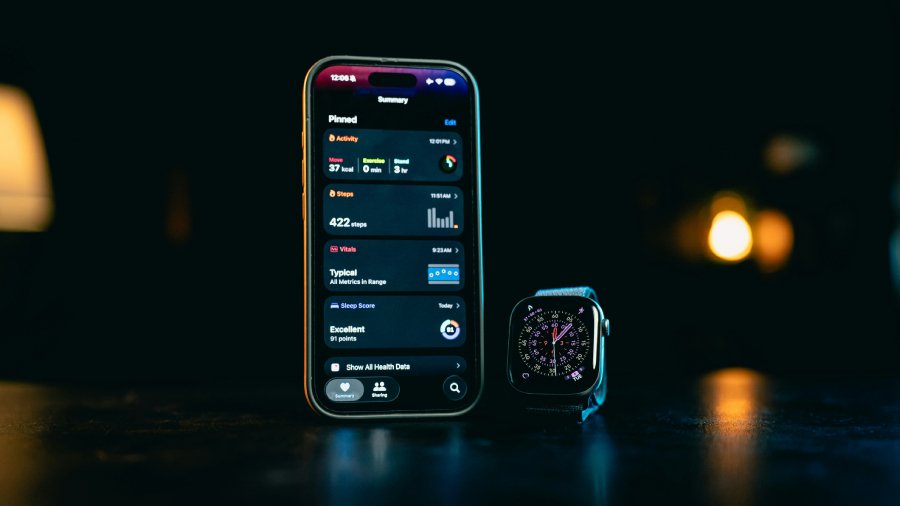
Apple is rolling out watchOS 26.2, an update that brings a handful of practical improvements most Apple Watch users will notice right away.
If you track your sleep every night, you may see your Sleep Score shift a bit because Apple adjusted how those scores are calculated. The company also fixed an issue affecting how Wi-Fi networks are shared between iPhone and Apple Watch in the European Union (EU).
Along with that, the update includes the usual performance and reliability tweaks. Apple also refined how certain background processes run on the Watch, which should help apps load more consistently. While none of the latest updates are flashy, watchOS 26.2 quietly improves what matters most to daily users, making the Apple Watch feel steadier and more helpful in everyday use.
Sleep score gets recalibrated
According to 9to5Mac, Apple debuted the release candidate version of watchOS 26.2. This update includes refinements to sleep score classifications with new ranges that better reflect how users actually slept.
Additionally, the update fixed a Music app bug that prevented songs from advancing and improved alerts to inform US users about imminent threats, such as floods and natural disasters, with maps of affected areas and links to additional safety guidance.
9to5Mac previously reported that Sleep Score, introduced in watchOS 26, assigns a nightly score based on three categories: duration, bedtime consistency, and interruptions. The combined totals were classified into tiers, such as Very Low, Low, OK, High, and Excellent.
With the first beta of watchOS 26.2, Apple updated these tiers and renamed the top classification from “Excellent” to “Very High.” According to Apple, as shared by 9to5Mac, “It feels Very High” is a more objective term than “Excellent” and should help users avoid confusion when their sleep score doesn’t match how they feel on a particular day.
Apple also added that the revised thresholds were based on the Apple Heart and Movement Study and aligned with the guidance from the American Academy of Sleep Medicine, the National Sleep Foundation, and the World Sleep Society.
MacRumors reported that Apple rolled out the release candidate (RC) version of watchOS 26.2, tvOS 26.2, and visionOS 26.2 to developers and public beta testers yesterday. These RC builds are intended to be the final versions before the public rollout next week, assuming no additional issues are found.
The update didn’t change how the Apple Watch measures or calculates Sleep Score data, but the classifications were recalibrated to provide more objective, research-based information for users checking their nightly results.
EU Wi-Fi sharing adjusted for compliance
9to5Mac noted that Apple changed how Wi-Fi network sharing works between iPhone and Apple Watch for EU users.
Beyond the other updates in this release, Apple said the change is tied to the EU’s Digital Markets Act (DMA). The adjustment takes effect with iOS 26.2 and watchOS 26.2 and modifies how the two devices exchange Wi-Fi information to meet DMA requirements.
The DMA is the EU’s law designed to make digital markets fairer and more contestable. According to the European Commission’s official website, the DMA is one of the first regulatory tools aimed at regulating the power of major digital companies.
The update ensures that devices share credentials in a way that aligns with EU rules. The change affects how connections are managed behind the scenes, especially when moving between networks, but most users will not need to take any action.
What it means for Apple Watch users
Alongside the Sleep Score and connectivity changes, Apple’s release notes stated that watchOS 26.2 includes general performance improvements, background process refinements, and bug fixes across core components.
While watchOS 26.2 focused on system fixes, Apple added support in tvOS 26.2 for creating profiles without an Apple Account and introduced a kids mode in the Apple TV app for child-only profiles.
Apple also detailed developer-focused improvements in the watchOS 26.2 RC. The watchOS 26.2 SDK fixed issues in Apple’s testing tools, including a problem that affected memory reporting and another that caused subscription tests to show outdated information. Apple also added a new StoreKit option that helps developers check whether an app’s age rating has changed.
Most Apple Watch users will see the biggest impact in Sleep Score reporting, which may appear different than before due to Apple’s recalibrated thresholds. EU users benefit from updated Wi-Fi handling, and all users receive stability and reliability improvements that make the Watch feel smoother in daily use.
To learn how Apple’s broader platform policies are evolving, read TechRepublic’s latest coverage of its App Review guidelines and AI data rules.


