







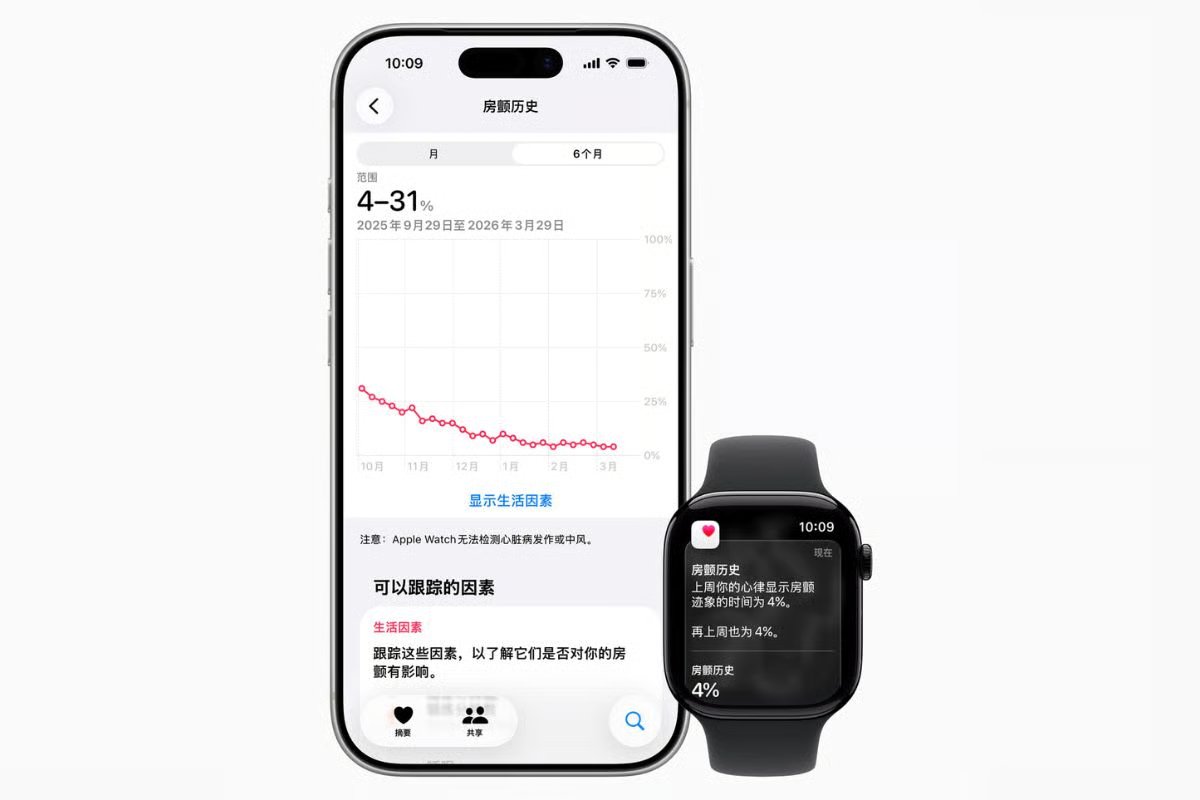
Apple has officially rolled out its Atrial Fibrillation (AFib) History feature to Apple Watch users in mainland China.
This launch brings a critical heart health tool to one of Apple’s largest markets, allowing people diagnosed with AFib to keep a much closer eye on their condition directly from their wrist. While the Apple Watch has long been able to detect irregular rhythms, this specific feature is designed to give users a long-term view of their heart health rather than just a single snapshot.
The feature uses the watch’s photoplethysmography (PPG) sensor to regularly check the user’s pulse. By analyzing this data, the watch can estimate how often the heart shows signs of AFib, a measurement often called “AFib burden.”
“Users diagnosed with atrial fibrillation (AF) can enable the AF history feature to access important information such as the estimated frequency of AF signs in their heart rhythm, gaining a deeper understanding of their health,” the company said.
The tool is intended for users who are at least 22 years old and have already received a formal diagnosis from a doctor. It isn’t meant to diagnose the condition itself, but rather to help those living with it manage their daily lives better.
Lifestyle and sharing with doctors
One of the most helpful parts of this update is how it connects heart rhythm to daily habits. Within the Health app, users can see how lifestyle factors like how much they sleep, their exercise frequency, and even alcohol consumption might be impacting their AFib episodes.
To make doctor visits more productive, the system allows users to download a detailed PDF of their AFib history. This document can be shared directly with healthcare providers, moving the conversation from “I feel like my heart is racing” to “Here is exactly what my heart did over the last month.”
The regulatory road to launch
If you’re wondering why this took a bit of time to arrive in China, it comes down to paperwork. Because features like ECG and AFib tracking are considered medical or “quasi-medical” functions, they require approval from China’s National Medical Products Administration (NMPA).
With that approval now in hand, the feature joins a suite of other health tools already available to Apple Watch owners in the region, including blood oxygen monitoring and sleep tracking. This launch brings China in line with over 150 other countries, where the feature has been helping users since it debuted in the US in 2022.
Also read: Apple Watch glucose monitoring is advancing, with new tools giving users more ways to track long-term health data from the wrist.


