







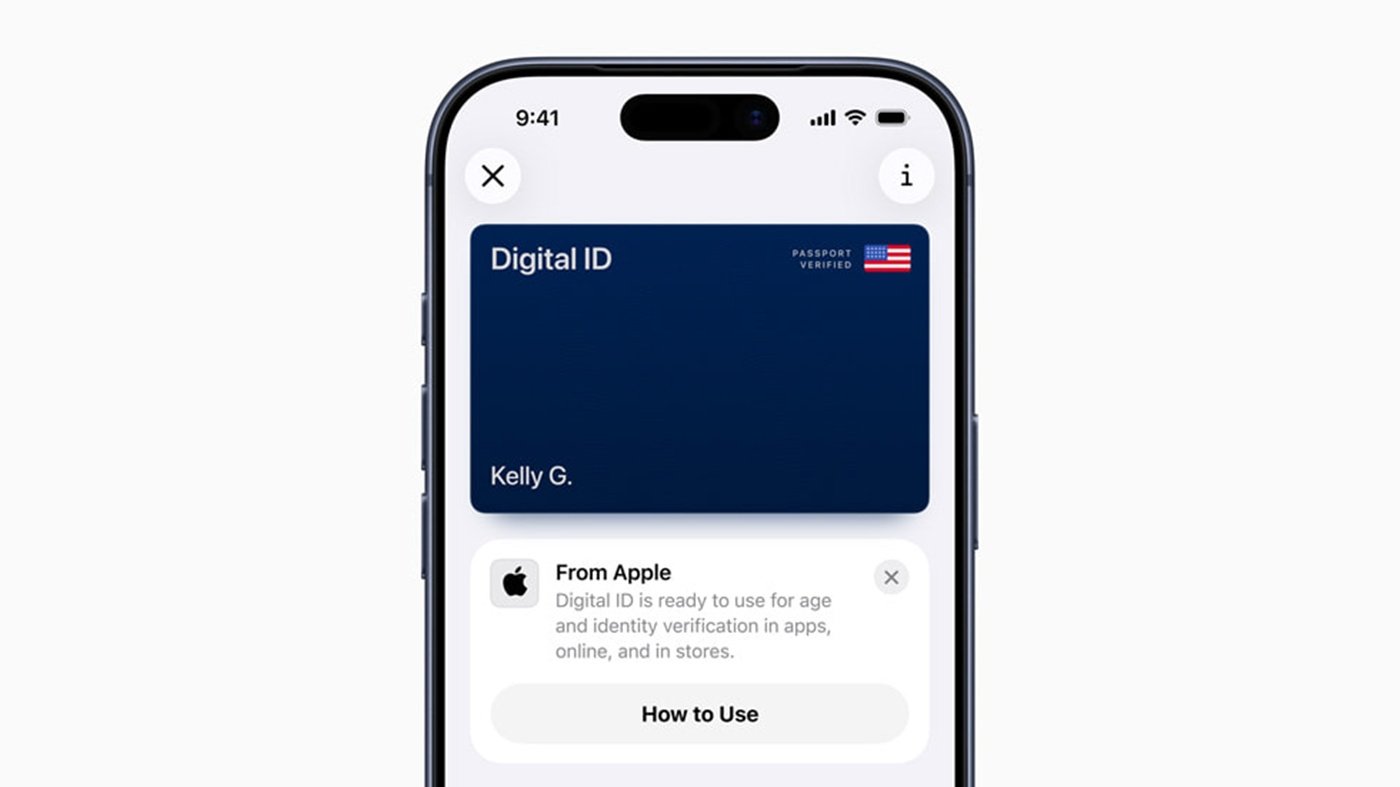
Apple has announced the debut of Digital ID, a new capability that allows iPhone and Apple Watch users to create a mobile identification card in Apple Wallet using information extracted directly from their US passport.
The feature represents one of the most significant shifts yet toward mobile-first identity verification in the United States.
According to the announcement, the rollout begins in beta at Transportation Security Administration (TSA) checkpoints in more than 250 airports nationwide, where Digital ID will be accepted for identity verification during domestic travel. Apple says more use cases will expand over time, including age verification and identity authentication for select businesses, apps, and online services.
This development follows on from last month, when Apple Pay and Wallet VP Jennifer Bailey dropped this news during her keynote at the Money 20/20 USA conference in Las Vegas.
A new path for mobile ID adoption
Digital ID addresses a key barrier facing millions of Americans: not everyone possesses a REAL ID-compliant driver’s license, which will become a requirement for domestic air travel once REAL ID enforcement begins. By allowing users to derive their identity from a US passport instead, Apple is enabling broader access to secure mobile identification—even for those without state-issued cards that meet federal REAL ID standards.
However, Apple emphasizes that Digital ID is not a replacement for a physical passport. It cannot be used for international travel or border crossings. Instead, the feature is positioned as a supplement that enhances convenience for domestic scenarios.
How Digital ID is created
To add a Digital ID, users open the Wallet app, tap the Add (+) button, and select Digital ID under Driver’s License or ID Cards. The system guides them through a multi-step verification process designed to match the physical passport to its digital counterpart.
The setup includes:
- Scanning the passport’s photo page.
- Reading the embedded chip via the iPhone’s NFC capabilities.
- Taking a selfie.
- Completing a brief set of facial and head movements to confirm liveliness and authenticity
Only after these checks are validated does the Digital ID appear in the user’s Wallet.
This process mirrors biometric and anti-spoofing protocols used by mobile immigration apps and global digital identity systems, signaling Apple’s push toward internationally aligned security standards — even if Digital ID itself cannot yet be used outside the United States.
Airports and beyond
At TSA checkpoints that support mobile IDs, travelers can present their Digital ID by double-clicking the side button on their iPhone or Apple Watch, selecting Digital ID, and holding the device near a reader. Crucially, users must authenticate with Face ID or Touch ID before any data is shared.
Only the specific information required for the transaction — such as name or date of birth — is transmitted. Users can review and approve each request, ensuring that no excess information is exposed.
This selective-disclosure approach represents a significant privacy improvement over traditional ID checks, where individuals must hand over a full physical document containing far more data than necessary.
Apple expects Digital ID to expand to additional physical and digital environments, including retail age checks, workplace badges, event access, and secure digital onboarding processes.
Privacy and security
Digital ID is built to function entirely on-device. Apple does not collect identity data, track where users present their Digital ID, or store usage logs.
Key privacy and security protections include end-to-end encryption of stored ID data, device-only storage of passport-derived information, and mandatory biometric authentication for every use.
These design choices mirror Apple’s broader approach to Wallet, where financial and health-related information is isolated from Apple’s servers and protected by hardware-level security features.
Apple Wallet
Before Digital ID, Apple allowed users to upload eligible state-issued driver’s licenses and IDs, a capability now supported in 12 states and Puerto Rico. Over the past six months, states including Montana, North Dakota, and West Virginia have joined the program. Internationally, Japan recently enabled its My Number Card system to work with iPhone, marking Apple’s first non-US expansion of digital identity credentials.
By enabling Digital ID through passports, Apple may accelerate the pace of adoption, especially among states that have not yet partnered with the company or for residents who lack REAL ID-compliant documents.
Broader implications
The introduction of Digital ID marks a major milestone in the shift toward digital identity infrastructure in the United States. While many countries have national ID systems that enable mobile credentials, the US has long depended on state-managed identification and physical passports. Apple’s Digital ID offers a pathway toward more unified mobile identity without federalizing ID issuance.
Key implications include reduced friction for domestic air travel, improved security compared to physical cards, and a potential model for future federal digital identity standards.
If widely adopted, Digital ID could significantly reduce reliance on physical wallets, streamline identity verification processes, and enhance privacy controls in everyday transactions.
New warning for iPhone owners: Switzerland’s National Cyber Security Centre says thieves are now hijacking Apple ID credentials from stolen devices — and they’re doing it through search results.


