


From Meta’s AI talent grab and Google’s Gemini expansion to major cyberattacks, billion-dollar infrastructure bets, and fresh industry upheaval, this week in tech showed how rapidly AI, security, and corporate strategy are colliding across the industry.
Top news
AI tools and platform integrations take center stage
Meta has acquired Moltbook, a social network for AI agents, integrating its team into Meta’s Superintelligence Labs. The move underscores Meta’s growing investment in AI infrastructure and intensifying competition with OpenAI, Google, and Anthropic.
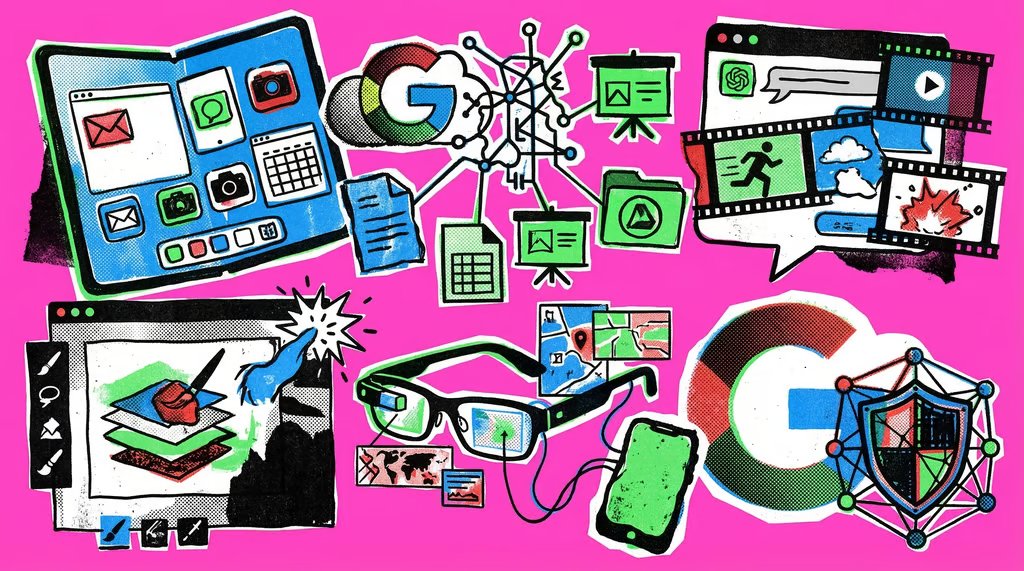
Apple is reportedly developing a foldable iPhone that will feature an iPad-style interface for enhanced multitasking. The device will include an internal display similar to an iPad mini and redesigned iOS apps optimized for larger screens.
Google is expanding its Gemini AI assistant within Chrome to India, Canada, and New Zealand. The rollout adds support for over 50 languages and deeper integration with Gmail, Maps, and YouTube to enhance productivity directly within the browser.
In parallel, Google Workspace introduced new Gemini AI tools across Docs, Sheets, Slides, and Drive. These include a “Help me create” panel that drafts content using data from Gmail, Chat, and the web, as well as an “Ask Gemini” mode in Drive for file insights. The beta is rolling out to AI Pro and Ultra subscribers.
OpenAI plans to integrate its Sora text-to-video generator directly into ChatGPT, allowing users to create short clips within the chatbot. The move follows waning engagement with the standalone Sora app and aims to boost usage while addressing deepfake and misinformation concerns.
Adobe launched a new AI Assistant in Photoshop, now in public beta for web and mobile users. The assistant supports natural-language and voice-driven edits, integrates with an AI Markup tool, and offers unlimited AI generations for paid users through April 9. Firefly’s Image Editor also gains expanded generative features and access to over 25 AI models.
Infrastructure and funding booms
Nscale, a UK-based data center startup, raised $2 billion in Series C funding led by Aker ASA and 8090 Industries, with participation from Nvidia and Dell. Valued at $14.6 billion, Nscale will use the funds to expand AI-optimized, liquid-cooled data centers globally, including a Microsoft partnership and a 100,000-GPU facility for OpenAI.
OpenAI also acquired security startup Promptfoo to strengthen its Frontier enterprise platform. Promptfoo’s automated red-teaming tools test for prompt injections, jailbreaks, and data leaks, improving the safety of AI agents in production environments.
Microsoft launched Copilot Cowork for Microsoft 365, an AI agent powered by Anthropic’s Claude models and Microsoft’s Work IQ layer. The tool automates multistep tasks across Outlook, Teams, and Excel, turning prompts into workflows. It’s currently in research preview for select enterprises.
Consumer tech and ethical AI
Grammarly faced backlash over its new “Expert Review” feature, which labels AI writing suggestions with names of real authors and academics — some deceased — without consent. Critics warn of legal and ethical issues surrounding likeness and attribution.
Samsung unveiled its first AI-powered smart glasses, “Galaxy Glasses,” at MWC Barcelona. The lightweight frames tether to Galaxy smartphones and use Qualcomm chips with Android XR for processing, aiming to challenge Meta’s dominance in the wearable tech space.
Insider intel
Anthropic released an “observed exposure” index ranking jobs by their vulnerability to AI automation. The data shows AI could automate 94% of computer and math tasks, though adoption remains at 33%. Programmers, customer service, and data entry roles are most exposed, while manual labor remains largely unaffected. The company warns that full adoption could trigger a “Great Recession for white-collar workers.”
Security alerts
Major breaches and cyber incidents
Iran-linked hackers known as Handala Team attacked US medtech firm Stryker, exploiting Microsoft Intune to remotely wipe employee devices. The breach marks a significant escalation in Iran-linked cyber activity.
A former government engineer allegedly stole databases containing over 500 million US citizen records from the Social Security Administration, prompting urgent calls for tighter access controls.
Ericsson disclosed a US data breach caused by a service provider hack, exposing sensitive employee and customer data, including Social Security numbers and banking details.
The FBI confirmed a breach in its Digital Collection System Network, which tracks wiretap and FISA warrants. Analysts suspect China-based Salt Typhoon, raising concerns about surveillance data exposure.
AI and malware threats
Flashpoint’s 2026 Global Threat Intelligence Report revealed a 1,500% surge in AI-driven cybercrime discussions, with attackers automating phishing and credential theft using agentic AI systems.
Hackers are impersonating IT staff on Microsoft Teams to deploy A0Backdoor malware. The campaign uses signed installers and DNS-based obfuscation, targeting financial and healthcare firms.
Malicious ads for fake Claude Code installers are spreading the Amatera Stealer malware. The “InstallFix” campaign tricks developers into running malicious curl commands, highlighting the risks of sponsored search results.
Microsoft also warned that fake AI extensions for Chrome and Edge have stolen ChatGPT and DeepSeek chat data from 900,000 users across 20,000 enterprises, urging organizations to audit browser extensions.
Patch and defense updates
Microsoft issued patches for 83 vulnerabilities across Windows, Office, SQL Server, and Azure. Two Office flaws allow code execution via the Preview Pane, with two zero-days publicly disclosed.
OpenAI’s Codex Security Agent, powered by GPT-5.4, detected over 11,000 vulnerabilities across 1.2 million code commits in a month. The tool integrates with GitHub and offers a free version for open-source developers.
Industry shakeups
Big deals and strategic realignments
Google completed its $32 billion acquisition of cybersecurity firm Wiz, integrating its 1,800 employees into Google Cloud while maintaining the Wiz brand. The deal enhances Google’s multicloud security capabilities and marks Israel’s largest-ever tech acquisition.
Meta formed a new “applied AI engineering” organization under its Superintelligence Labs, led by Maher Saba. The team will develop data pipelines and evaluation tools for models like Avocado and Mango, alongside a $50 million annual data deal with News Corp.
Economic pressures and workforce changes
The US tech sector shed 11,000 jobs in February amid economic slowdown and AI-driven restructuring. Companies like Block and Oracle are making deep cuts to redirect resources toward AI initiatives.
