







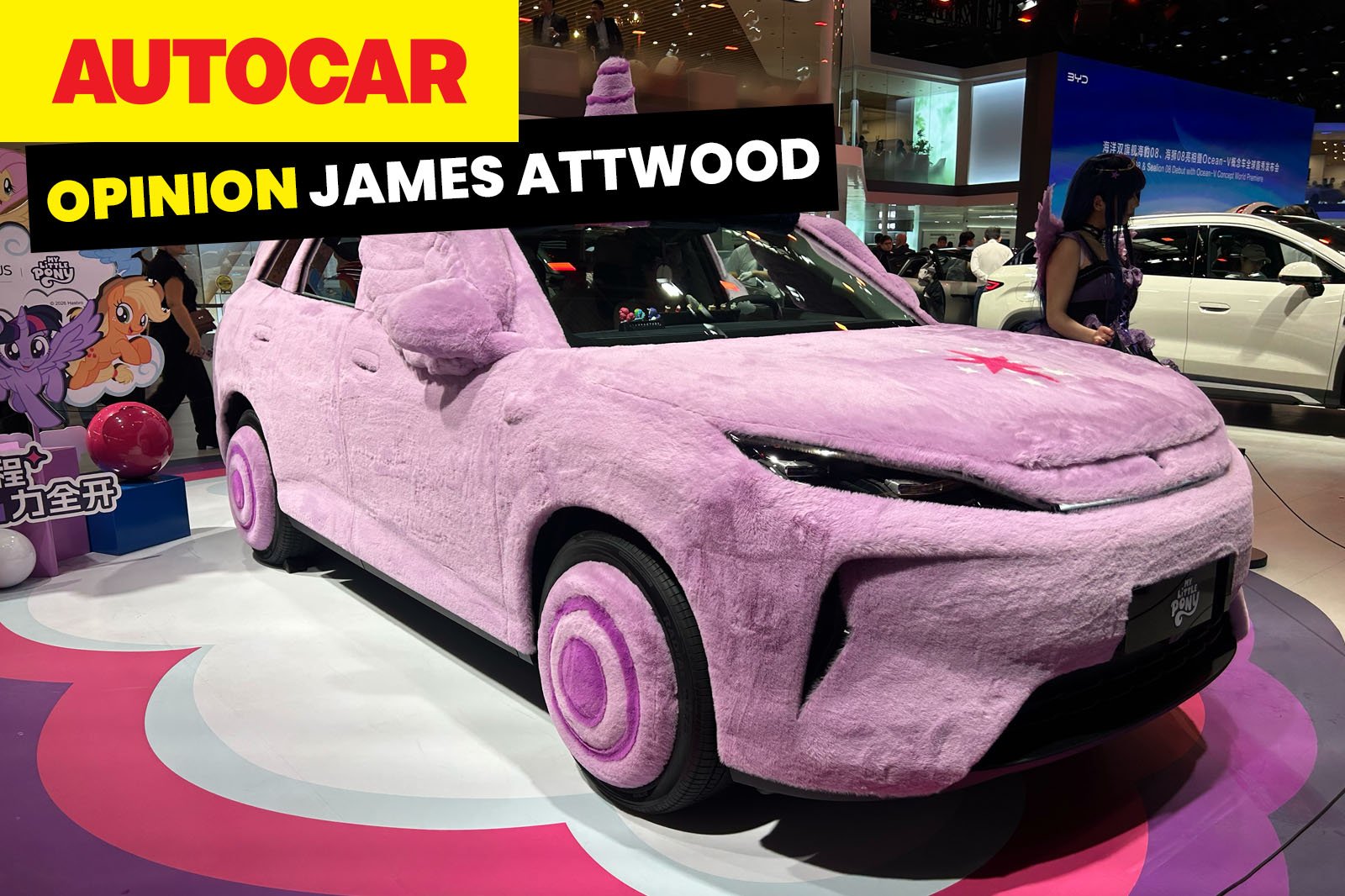
BYD’s rapidly growing roster of brands – which also includes luxury Yangwang and ride-hailing firm Linghui – exemplifies one of the big trends of the Chinese industry in the last few years. As the market continues to grow and develop, so the big firms have started expanding their roster of brands, meeting the growing segments created as the Chinese car market grows and matures.
Western car giants have done that for decades, of course, but the likes of General Motors, the Volkswagen Group and Stellantis grew their brand rosters from acquisitions, mergers and consolidations over decades. The Chinese are trying to build their own families at record speed through imagination and willpower. So while some firms have bought up established brands (such as Geely with Volvo, Lotus and Proton or SAIC with MG and Roewe, which grew out of Rover), many – such as BYD’s growing family – are simply being created to service every conceivable niche.
But for a visitor from the UK admiring a vast number of similarly styled machines, it’s hard to really know which segment any particular brand is aiming for. What’s the relationship between Nio, Onvo and Firefly? Which markets are Zeekr and Lynk&Co targeting? Is an Aito as posh as a Luxeed? Their designs offer little clue.
Clearly, as Chinese brands continue to enter the UK market, brands such as BYD, Leapmotor, Geely, Jaecoo and others become recognisable. But even that isn’t simple: Deepal is a standalone brand in China, but its cars are sold in the UK with parent firm Changan’s badge on. Denza’s UK line-up will include rebadged Fangchengbao models. And there remain brands that are just plain mysteries. Dreame or Voyah, anyone?
Since you were wondering, Dreame is a vacuum cleaner manufacturer that has branched out into cars with the 1903bhp Next 01 saloon because, sure, why not? Meanwhile, Voyah is Dongfeng’s premium brand and has just launched the 5.2m-long X8 SUV.
Trying to identify all these brands is made harder because many of their logos and models remain somewhat indistinct. The days of blatant rip-offs of Western models are long gone (although you’ll find more than a few electric saloons that owe a nod to the Porsche Taycan), but China’s saloons, SUVs and MPVs all tend to coalesce around fairly familiar and somewhat amorphous designs.


