


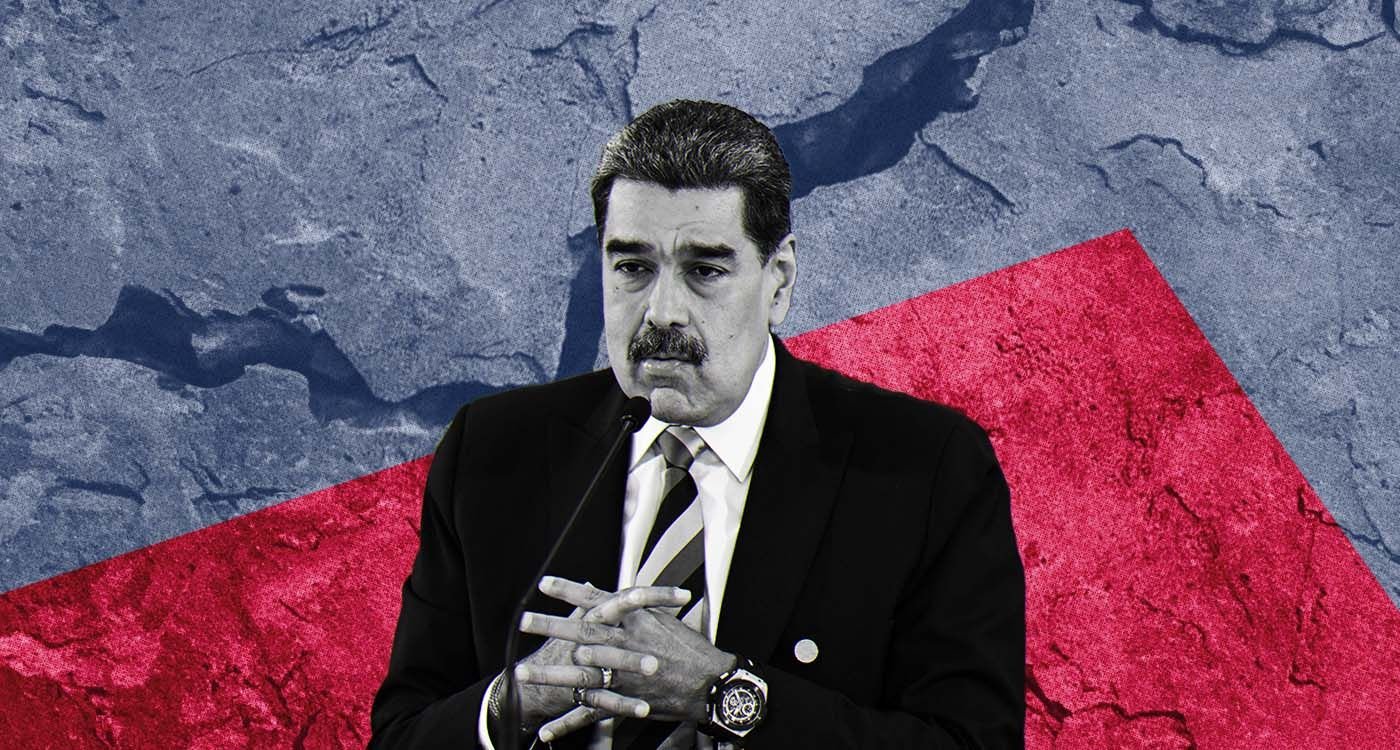
US Military Operation Captures Venezuelan President
The United States conducted a large-scale military strike on Venezuela early Saturday morning, January 3, 2026, and successfully captured President Nicolás Maduro along with his wife, Cilia Flores. President Donald Trump announced the operation via social media, declaring that Maduro was flown out of the country aboard the USS Iwo Jima and would face narco-terrorism charges in New York.
The Delta Force, the US military’s elite special mission unit, executed the capture operation at Maduro’s presidential palace in Caracas, which Trump described as a “fortress”. Explosions were reported throughout the Venezuelan capital, including strikes on the Fuerte Tiuna military complex, the country’s largest, and the La Carlota air base.
Trump Announces US Will Temporarily Run Venezuela
During a Saturday press conference, President Trump stated that the United States would “run the country until such time as we can do a safe, proper and judicious transition”. He emphasized that “very large US oil corporations” would enter Venezuela to “repair the severely damaged oil infrastructure and begin generating revenue for the nation”.
Trump revealed that US Secretary of State Marco Rubio had communicated with Venezuelan Vice President Delcy Rodriguez, who was sworn in as interim president following Maduro’s capture. The administration justified the operation by citing a 2020 narco-terrorism indictment against Maduro from Trump’s first term.
Venezuela’s Response and International Reaction
The Venezuelan government condemned what it called “extremely serious military aggression” by the United States. Defense Minister Vladimir Padrino López claimed that the strikes impacted civilian areas and vowed that Venezuela would resist foreign military presence. Vice President Delcy Rodríguez demanded “immediate proof of life” for both Maduro and First Lady Cilia Flores, stating the government was unaware of their whereabouts.
International reactions have been swift and divided. Brazilian President Luiz Inácio Lula da Silva remarked that “attacking nations, in blatant violation of international law, is the initial step towards a world filled with violence, disorder, and instability”. The United Nations expressed concern that US actions “constitute a dangerous precedent”.
Background to the Military Operation
The military action culminated months of escalating pressure on Maduro’s government. The Trump administration had increased the bounty for Maduro’s arrest to $50 million, positioned naval forces within striking distance of Venezuela, and conducted lethal assaults on suspected drug-trafficking vessels in the Caribbean.
According to reports, Trump issued Maduro an ultimatum during a November 21, 2025 phone conversation, giving him one week to leave Venezuela with his immediate family. When Maduro declined the offer, Trump announced the closure of Venezuelan airspace. The military buildup in the Caribbean included multiple warships, fighter jets on alert, and remotely piloted drones.
Legal Charges and Justice Department Actions
US Attorney General Pam Bondi announced that Maduro and his wife would face “the full wrath of American justice on American soil, in American courts”. The charges stem from accusations of narco-terrorism, cocaine importation, possession of machine guns and destructive devices, and conspiracy against the United States.
Washington has long accused Maduro of having connections to drug trafficking organizations—claims Maduro has consistently denied, asserting that the US aims to oust him to seize control of Venezuela’s extensive oil reserves. The 2020 indictment charged Maduro with leading the “Cartel de Los Soles,” allegedly using cocaine trafficking to flood the United States with drugs while enriching himself and his associates.
The Operation’s Execution
The nighttime operation involved sophisticated military planning and intelligence gathering. Delta Force operatives, the same unit responsible for the 2019 mission that killed ISIS leader Abu Bakr al-Baghdadi, conducted the raid on Maduro’s heavily fortified presidential compound. The operation included precision strikes on military installations to neutralize Venezuela’s defensive capabilities before the extraction.
Explosions rocked Caracas beginning in the early morning hours, with residents reporting multiple detonations at the Fuerte Tiuna complex and other military sites. The strikes were designed to disable Venezuela’s military response capabilities while special forces conducted the capture operation. Maduro was then transported to the USS Iwo Jima, an amphibious assault ship positioned in the Caribbean.
Venezuela Declares National Emergency
In response to the attacks, Venezuela declared a state of national emergency and mobilized its military forces. However, with many senior military installations damaged and Maduro removed from power, the country’s defensive posture has been severely compromised. Vice President Rodríguez assumed interim leadership and initiated communications with the Trump administration.
Defense Minister Padrino López stated the government was gathering information regarding casualties and injuries from the strikes. The full extent of damage to civilian infrastructure remains unclear, though Venezuelan officials claim civilian areas were impacted. The government accused the United States of threatening global peace and stability while attempting to seize Venezuela’s strategic resources, including oil and minerals.
Historical Context and Comparison
This operation marks the first time the United States has forcibly removed a sitting Latin American leader since the 1990 invasion of Panama, which led to the surrender and seizure of Manuel Antonio Noriega—exactly 36 years prior to this operation. The Panama parallel is significant, as Noriega, like Maduro, faced drug trafficking charges in US courts.
The legal authority for the strike and whether Trump consulted Congress beforehand was not immediately clear. Legal scholars and Democratic lawmakers have criticized the administration’s actions as breaches of international law. The operation represents an extraordinary exercise of American military power in the Western Hemisphere, raising questions about sovereignty and international legal norms.
What Happens Next
The specifics of how the United States intends to “run” Venezuela remain ambiguous, as does the duration of the proposed transitional phase. Trump indicated that the goal is to ensure a “safe, appropriate, and thoughtful transition” to new Venezuelan leadership. The role of interim President Delcy Rodríguez and her cooperation with the Trump administration will be crucial in determining Venezuela’s immediate future.
The entry of major US oil corporations into Venezuela could reshape the country’s oil industry, which has been crippled by years of mismanagement, corruption, and international sanctions. Venezuela possesses the world’s largest proven oil reserves, making control of its petroleum sector a significant geopolitical and economic prize. How the Venezuelan people and remaining government officials respond to this dramatic shift will determine whether the transition proceeds smoothly or faces resistance
