










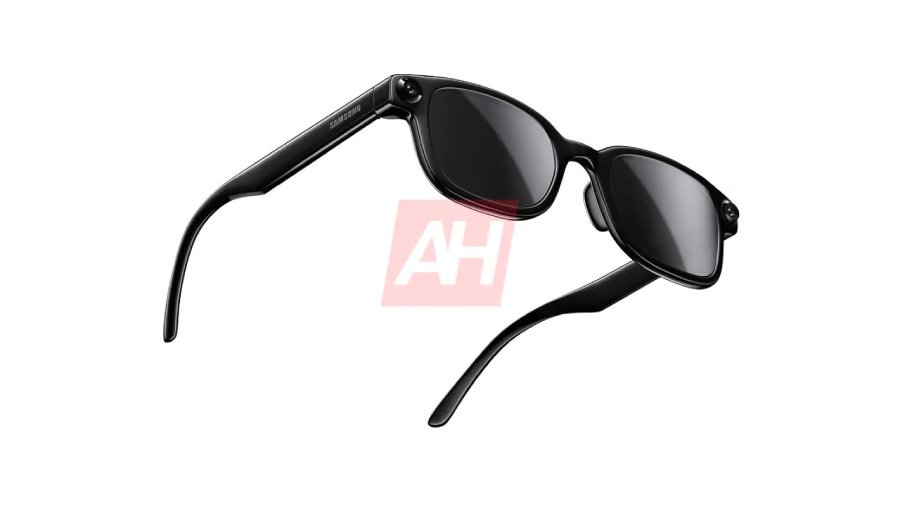
Samsung’s long-rumored smart glasses may finally be coming into focus, with a new leak revealing both the design direction and a strategy that stretches into the next few years.
Newly surfaced images and details, reported by Android Headlines, suggest Samsung’s first smart glasses, internally codenamed “Jinju,” will lean heavily on simplicity. The frames resemble everyday eyewear, with only small camera elements at the edges hinting at their smart capabilities. It’s a deliberate move, aligning with the industry’s shift toward wearable tech that blends in rather than stands out.
Unlike more advanced augmented reality headsets, this first version is not expected to include a display. Instead, the focus appears to be on building an AI-powered companion that users can wear throughout the day without friction.
Two generations already in the pipeline
The leak also points to a longer-term roadmap. While Jinju is set to lead Samsung’s entry into the category, a second model, codenamed “Haean,” is already in development. That version is expected to arrive in 2027 and introduce a micro-LED display embedded in the lenses.
Samsung seems to be taking a staged approach, starting with accessible, display-free smart glasses and then moving toward more advanced hardware as the market matures.
Pricing signals a direct challenge to Meta
Early pricing estimates put the Jinju glasses at $379 to $499, positioning them squarely against Meta’s Ray-Ban smart glasses. The future Haean model, with its built-in display, is expected to command a significantly higher price, reportedly in the $600 to $900 range, according to Android Headlines.
This pricing strategy suggests Samsung is aiming to compete head-on at the entry level before expanding upward into premium territory.
Hardware built for AI
While still unconfirmed, the leaked specifications indicate a device designed around AI functionality rather than visual overlays.
The glasses are said to run on Qualcomm’s Snapdragon AR1 platform and include a 12-megapixel camera using Sony’s IMX681 sensor. A small 155mAh battery, Bluetooth 5.3, and Wi-Fi support are also expected, along with directional audio that may rely on bone-conduction technology.
Weighing around 50 grams, the glasses are being engineered for extended wear, with photochromic lenses that adapt to changing light conditions, adding a practical, everyday touch. The glasses are expected to run on Android XR, the company’s dedicated platform for extended reality devices, and will integrate Gemini AI as a primary interface.
That combination could allow users to interact with the glasses in a conversational way, asking for directions, translating text in real time, capturing images, or retrieving information on demand. It’s a model that mirrors existing smart glasses, but with Google’s AI ecosystem positioned as the key differentiator.
A likely tease before a full launch
Timing remains uncertain, but multiple reports point to Samsung’s July Unpacked event as a likely stage for the glasses’ first official appearance. If that happens, it may follow the same pattern as the company’s earlier XR headset reveal, an early preview rather than an immediate release. A full launch is expected to come later, potentially before the end of the year or in 2027.
You can also explore how Samsung is expanding its ecosystem beyond wearables in this look at its Galaxy Connect integration with Windows 11.


