










NTT Research just flipped the switch from idea factory to product engine… and there’s no hiding behind prototypes anymore.
For most of its seven-year life, NTT Research has proudly defined itself as a basic research shop with no obligation to ship products within a three- to five-year horizon. That academic posture attracted top scientists and produced marquee results in cryptography, photonics, and medical informatics, but it also created a familiar problem: a warehouse of patents with no clear path to market.
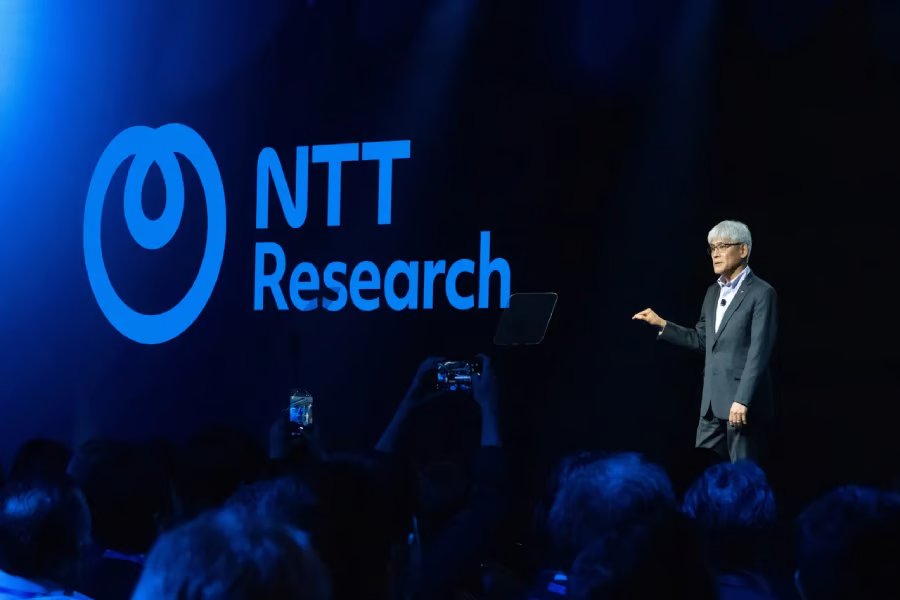
At its recent Upgrade event, the company launched Scale Academy, a startup incubator by NTT Research, designed to commercialize innovations from NTT labs and R&D divisions. Led by SVP Bennett Indart, Scale Academy bridges the gap between fundamental research and market-ready products, with SaltGrain — a zero-trust data security suite — as its first product.
Scale Academy is a formal admission that the pure research model is no longer sufficient in an AI-first, security-obsessed market. The unit is chartered with its own governance, funding gates, and timelines, and is tasked with identifying commercially viable technology within NTT’s labs and turning it into real businesses or spin-outs.
In a press briefing, Indart explicitly framed it as a shift from “interesting” research to products customers will actually buy, with milestones and a “fail-fast” discipline rather than endless proofs of concept.
Why this matters for the industry
First, Scale Academy is another data point in a broader industry shift: deep-R&D organizations can’t afford to sit on core IP while cloud providers and security startups race ahead. NTT claims that more than 30% of its profits go back into R&D. Channeling even a slice of that through a structured incubator could materially increase the volume of market-ready innovation.
Second, choosing SaltGrain as the inaugural project signals where security is headed. SaltGrain wraps attribute-based encryption (ABE) in a zero-trust framework, so the access policy is embedded in the ciphertext itself, not in a perimeter or a particular application. That model is tailor-made for a world of AI agents and cross-organizational data sharing, where data constantly moves between clouds, partners, and models.
Security that travels with the data — rather than guarding a network boundary — is quickly becoming table stakes, and SaltGrain positions NTT squarely in that debate.
What’s different about NTT this time
Historically, NTT has been insular in how it funded and consumed innovation.
Most commercialization occurred through internal channels, such as NTT DATA, and never reached the broader market. At the briefing, Indart made it clear that Scale Academy breaks that pattern: the group is explicitly chartered to seek outside partners and capital when appropriate and to consider spin-outs when a technology does not fit cleanly within the NTT portfolio.
Equally important, NTT is committing to product-style rigor. Indart described a pipeline with discovery, incubation, launch, and scale phases, each with its own timeline and funding. He emphasized that projects that miss their milestones will be cut rather than allowed to drift from one Upgrade conference to the next. That’s a marked departure from the academic culture, where promising concepts like ABE resurfaced annually as demos rather than as products.
SaltGrain and the AI data-protection gap
SaltGrain is the first test of whether this new model can deliver.
The suite uses ABE — originally proposed in a 2004 paper by Amit Sahai and Brent Waters — to embed fine-grained access control directly into encrypted data, enabling selective disclosure of specific fields or sections within documents, images, or video. NTT’s researchers have recently optimized this ABE core for post-quantum resistance, positioning SaltGrain as “quantum-secure” in anticipation of future attacks.
For enterprises, timing is critical. CISOs are grappling with two intersecting trends: the rapid deployment of generative and agentic AI and escalating regulatory scrutiny of sensitive data. At the briefing, Fang Wu, VP of Business Development at NTT Research, underscored that many enterprises do not even know where their sensitive data resides.
To address this, SaltGrain includes an AI-driven data classification engine that automatically locates and tags high-value information before applying ABE-based controls. If this works at scale, it could reduce the operational friction that has historically made strong encryption unattractive in day-to-day workflows.
Implications for NTT customers
For existing NTT customers — especially in financial services, healthcare, and global tech — Scale Academy and SaltGrain mean three things:
- They may finally see commercial products that reflect the sophistication of NTT’s research labs, rather than merely consulting projects and proofs of concept.
- SaltGrain offers a way to share data with partners, regulators, and AI models without surrendering full visibility or control, because ABE lets organizations reveal only the fields or sections needed for a specific use case.
- The post-quantum angle gives long-lived data (medical records, financial histories, IP repositories) a plausible path to survive future advances in cryptanalysis, something many compliance teams are just now beginning to factor into their planning.
The broader strategic implication is that NTT DATA and other group units finally have an internal “test kitchen” they can treat as a pipeline of differentiated offerings, rather than relying solely on third-party ISVs or one-off custom builds.
For NTT, it’s ‘prove-it’ time
Since NTT formed the research division, I’ve found the group’s approach overly academic.
While all innovation starts with basic research, for technology vendors, it should lead to commercial products. Based on past behavior, one might conclude that ABE and similar technologies will still be stuck in the lab five Upgrades from now. This was raised in the Q&A, and Indart emphasized structured milestones and a willingness to shut down projects that cannot quickly validate product-market fit — language more common in venture circles than in traditional telco R&D.
Based on conversations with NTT Research leadership, it appears Scale Academy is closer to Intel Ignite or Telefonica Wayra than to something like Bell Labs, in that its goal is to deliver useful products customers can use, rather than doing research for research’s sake. Given that, there are still several open questions.
Will there be cohorts of external startups? Is there a dedicated fund? How many people and how much capital are being committed? Indart acknowledged that he has internal targets for 2028–2029 but expects them to evolve as the team learns from early projects. That flexibility is healthy, but it also means outside observers will have limited visibility into success metrics for the next couple of years.
For customers and partners, the practical measure will be straightforward: do they see products that have actually shipped — beyond SaltGrain — that solve real problems and are supported like mainstream offerings, not science experiments?
What to watch next
For the broader market, the significance of Scale Academy lies less in this week’s announcement and more in whether NTT Research can sustain a repeatable path from “research to reality,” the theme of this year’s Upgrade. Over the next 18–24 months, the key signals to watch will be:
- Whether SaltGrain lands paying reference customers in regulated industries, not just pilots.
- How transparent NTT is in communicating milestones, roadmaps, and timelines for incubated projects.
- Whether external partners and investors start to participate, validating the incubator beyond NTT’s internal ecosystem.
Given NTT’s massive resources, if NTT executes, Scale Academy could become one of the industry’s most prolific research organizations and a more visible source of differentiated security and AI infrastructure products. If not, SaltGrain risks becoming just another impressive demo in a long line of them — the market already has plenty.
For more on evolving data security risks, check out this report on how malicious Chrome extensions are quietly stealing user data.


