










Microsoft has announced partnerships with ASUS and Dell to expand its Windows 365 Cloud PC hardware lineup, with both companies set to release dedicated thin-client devices later this year.
The tech giant has been the only vendor making dedicated Windows 365 hardware since it introduced the Windows 365 Link in 2024, a device that skips local processing entirely and routes everything through the cloud. Now, two major PC makers are joining that effort.
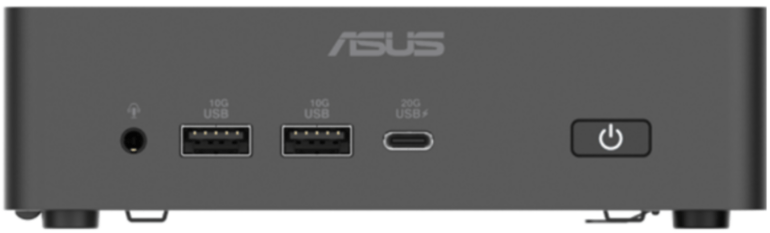
The ASUS NUC 16 for Windows 365 is a mini-PC with a footprint of roughly 0.7 liters, small enough to mount behind a monitor. It runs on Intel’s latest processor, features DDR5 memory, Wi-Fi 6E, 2.5 GbE LAN, Bluetooth 5.3, and can drive up to three displays via HDMI and USB-Type-C.
ASUS is positioning it as a hot-desking solution for modern offices.

“We’re thrilled to collaborate with Microsoft to launch the NUC 16 for Windows 365, a powerful and compact Cloud PC device designed for the modern workplace,” said KuoWei Chao, general manager of NUC Business Unit at ASUS, in the Microsoft blog post. “We provide a secure, responsive environment that eliminates the need for local data storage.”
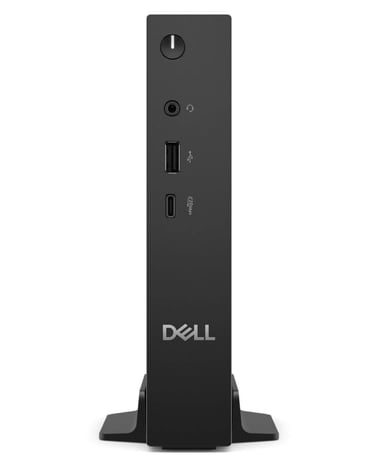
The Dell Pro Desktop for Windows 365, meanwhile, is a compact, fanless desktop with Intel N-series processors aimed at regulated industries, such as healthcare, finance, and government. It also supports up to three displays and comes with flexible mounting options. Dell is touting its passwordless authentication support through Microsoft Entra as a key security feature.

“We’re excited to see the Cloud PC category continue to evolve and give organizations new, streamlined ways to create productive and secure digital workspaces,” said Elavarasu Krishnan, vice president of Dell Software Engineering.
Both devices are targeting general availability in Q3 2026. The ASUS model will launch in the US and Europe, while Dell’s version is set to roll out across 58 countries, a significant jump from the 20 countries where Microsoft’s own Windows 365 Link is currently available.
Why this matters beyond the hardware
The appeal of Cloud PC devices is less about raw specs and more about what they eliminate. Because everything runs in Microsoft’s cloud, there’s no local data for a thief to steal. If a device gets lost or stolen, the data stays in Azure. Security features are locked on by default, there’s no local admin access, and no one can turn protections off.
For IT departments, that simplicity is the selling point. Devices are managed through Microsoft Intune, the same tool many organizations already use.
The market context also helps explain Microsoft’s timing. Analyst firm Gartner estimates that around ten percent of business PCs are currently virtual, and that number could double by 2027, according to The Register. Additionally, Broadcom’s acquisition of VMware has disrupted the virtual desktop market, prompting some organizations to seek alternatives, potentially putting them in Microsoft’s hands.
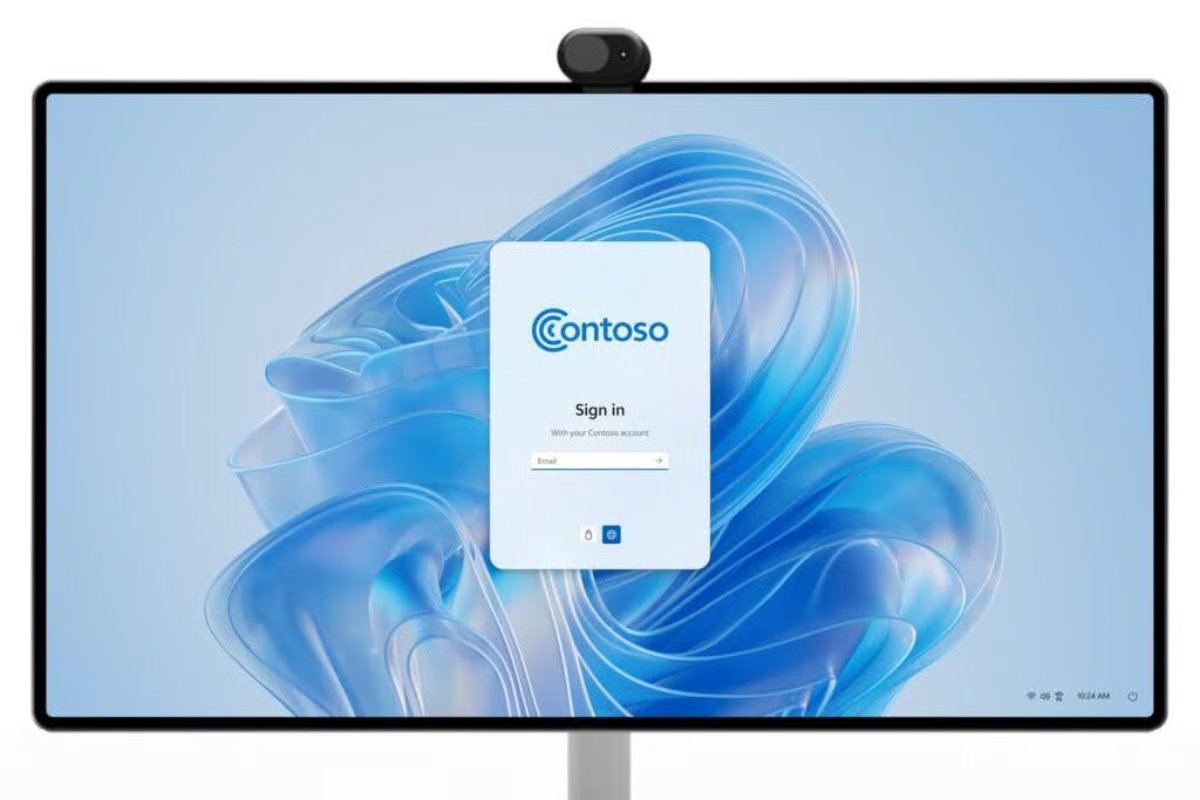
Alongside the hardware announcements, Microsoft said the underlying Windows CPC operating system is getting two notable updates in Q2 2026: support for pairing Bluetooth devices during initial setup, and the ability for companies to add custom branding (logo, name, and wallpaper) to the sign-in screen.
Small updates, but they signal Microsoft is actively iterating on this platform, not just using it as a marketing talking point.
For more on Microsoft’s latest Windows evolution, check out our coverage of Windows 11 26H2 and its new AI-powered File Explorer features.


