







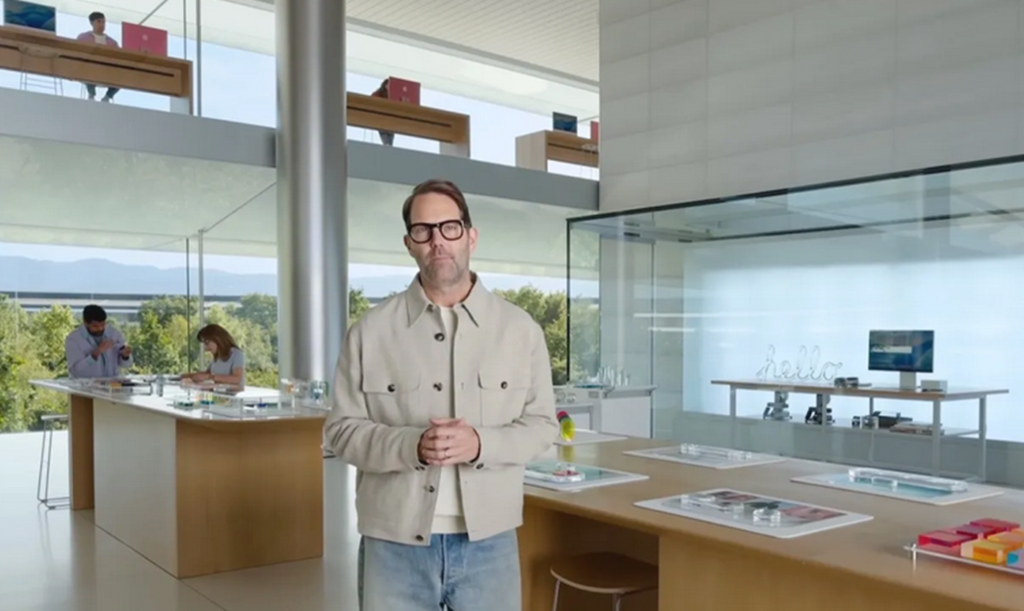
Never say Dye? In this case, Meta says yes, and has revealed its designs on an Apple legend.
Meta has secured one of Apple’s most influential design architects, and the ripple effects could reshape how billions of people experience virtual reality, smart glasses, and AI.
Alan Dye, the mastermind behind Apple’s user interface evolution for over a decade, officially joined Meta to spearhead a revolutionary new creative studio within Reality Labs. Dye personally crafted the visual DNA of iconic products like iPhone, iPad, and Apple Watch, and led the design team behind VisionOS, Apple’s mixed-reality operating system that powers the Vision Pro headset.
This follows on from July, when Meta’s aggressive talent acquisition campaign also netted Ruoming Pang, who previously commanded Apple’s 100-person AI models team responsible for Apple Intelligence features. With a compensation package exceeding $200 million, this dual recruitment represents the most significant brain drain from Apple’s innovation core in recent memory.
Smart glasses and AI integration
Zuckerberg’s master plan becomes crystal clear when examining Meta’s current market dominance and future ambitions. The company’s Reality Labs division already commands 73% of the global VR market share while generating $370 million in Q2 2025 revenue. But the real interest lies in Meta’s smart glasses strategy—Ray-Ban Meta Smart Glasses have sold over two million units since October 2023, with ambitious plans targeting 2-5 million additional units in 2025.
Dye’s expertise becomes invaluable here because he pioneered the Apple Watch’s revolutionary interface design, introducing breakthrough features like the Digital Crown, and haptic feedback that made wearable computing intuitive for mainstream users. His new role focuses specifically on improving AI features across Meta’s device ecosystem while reporting directly to Chief Technology Officer Andrew Bosworth.
The significance extends beyond individual products. Meta has been actively recruiting developers specializing in “Liquid Glass” interface design—an approach that creates digital interfaces so seamless they don’t feel digital at all. Think of it like having computer graphics that blend perfectly with the real world through your glasses, managing visual information across wide displays without overwhelming users.
Billion-dollar battle
Meta’s recruitment strategy reveals a deeper understanding of where technology is heading. The company has invested over $80 billion in AR/VR technologies since acquiring Oculus in 2014, including $20 billion in 2024 alone. But hardware alone won’t win this race—the user experience will determine which platform dominates the next computing paradigm.
Zuckerberg articulated this vision when announcing Dye’s new creative studio, stating it would “bring together design, fashion, and technology to define the next generation of our products and experiences.” Even more revealing, Zuckerberg wrote on Threads that their concept involves treating “intelligence as a new design material” and imagining possibilities when AI becomes “abundant, capable, and human-centered.”
This philosophy directly challenges Apple’s approach to AI integration. While Apple focuses on on-device processing and privacy-first AI features, Meta envisions AI as the foundational layer for all future computing experiences. The company’s Orion prototype already demonstrates a 70-degree field of view in AR glasses, with AI systems that understand what you’re looking at in the physical world and present contextual information through sophisticated interface design.
Apple’s core
Apple responded swiftly to Dye’s departure by promoting Stephen Lemay, a veteran designer involved in nearly every major Apple interface project since 1999. However, this talent exodus signals a fundamental shift in Silicon Valley’s power dynamics.
On top of that, Apple has also seen John Giannandrea, senior vice president for Machine Learning and AI Strategy, preparing to step down and retire in spring 2026. Kate Adams, Apple’s general counsel since 2017, plans to retire at the end of next year. Meanwhile, Lisa Jackson, the company’s vice president for Environment, Policy, and Social Initiatives, will step down in late January 2026.
In better news, Apple is rolling out watchOS 26.2, an update that brings a handful of practical improvements most Apple Watch users will notice right away.


