









Inside, there’s a big 14.6in HD touchscreen and an 8.8in LCD driver display. My test car was in full Chinese spec, and my Mandarin wasn’t good enough to delve through every sub-menu, but through the screen you can set the drive modes (Normal, Eco and Sport) and adjust the brake regen and steering speed.
There aren’t as many buttons as I’d like, although key controls are at least hard-coded to the bottom of the touchscreen. I’d have liked more steering wheel adjustment, especially since the driver display seemed to be mounted unusually close to the wheel.
But it’s otherwise a comfortable place to sit. It’s light, thanks to a panoramic sunroof, and the materials feel hard-wearing, if not exactly premium. There’s plentiful storage, the front and rear seats are comfortable, there’s a 345-litre boot and there’s a notable amount of space in both the front and back of the cabin.
My test car featured a few quirks, such as a fold-out tray table on the passenger side of the dashboard, which probably won’t reach the UK.
It’s worth noting the generous kit list is standard. The only option will be a choice of interior colours – and even then the choice will be light or dark grey.
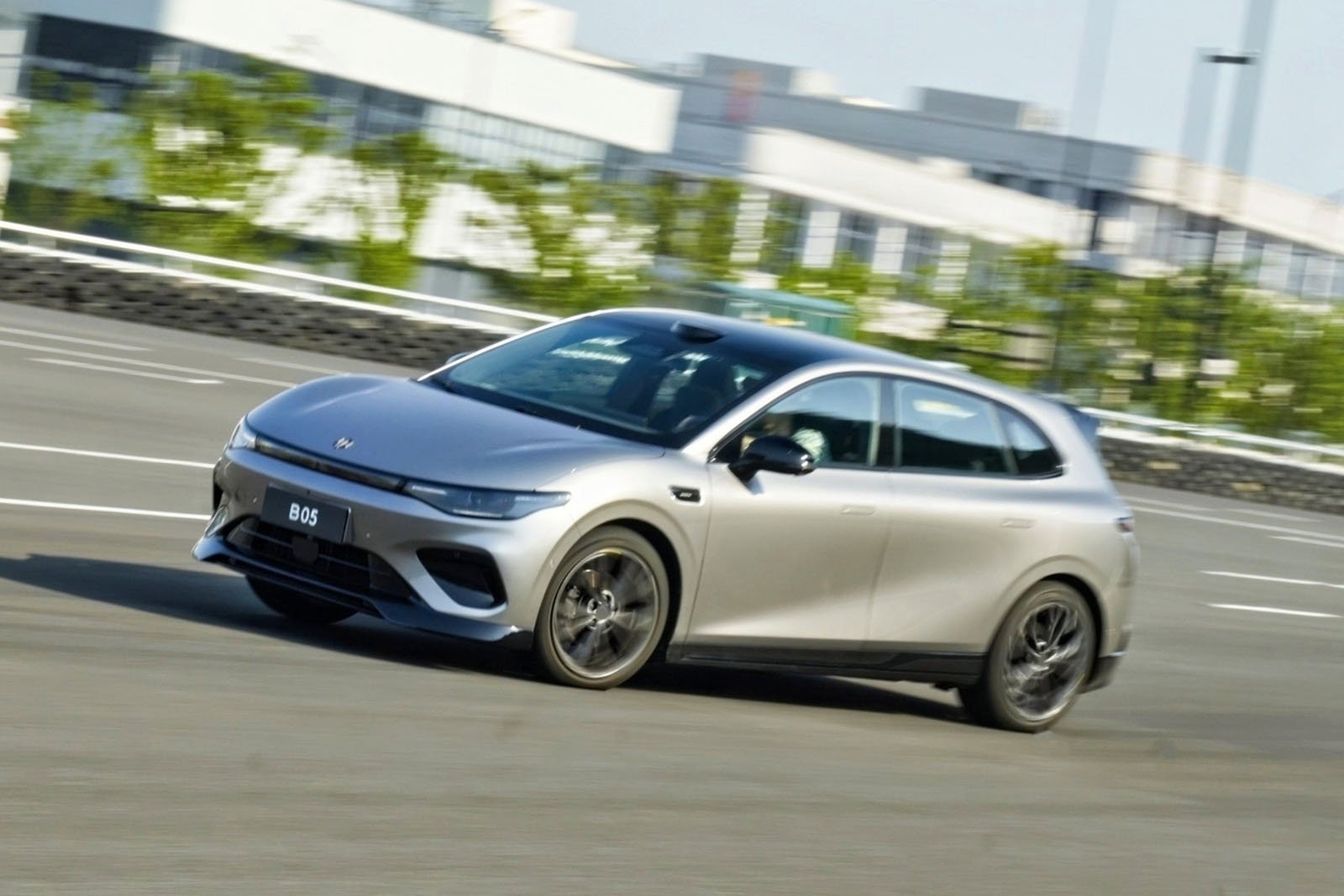
I won’t pretend that a few laps of a short Chinese test track are enough to form any definitive impressions of the B05’s dynamics (or how its ADAS functions might function in the real world), but it’s clear there’s some potential here – if you keep expectations in check.


