


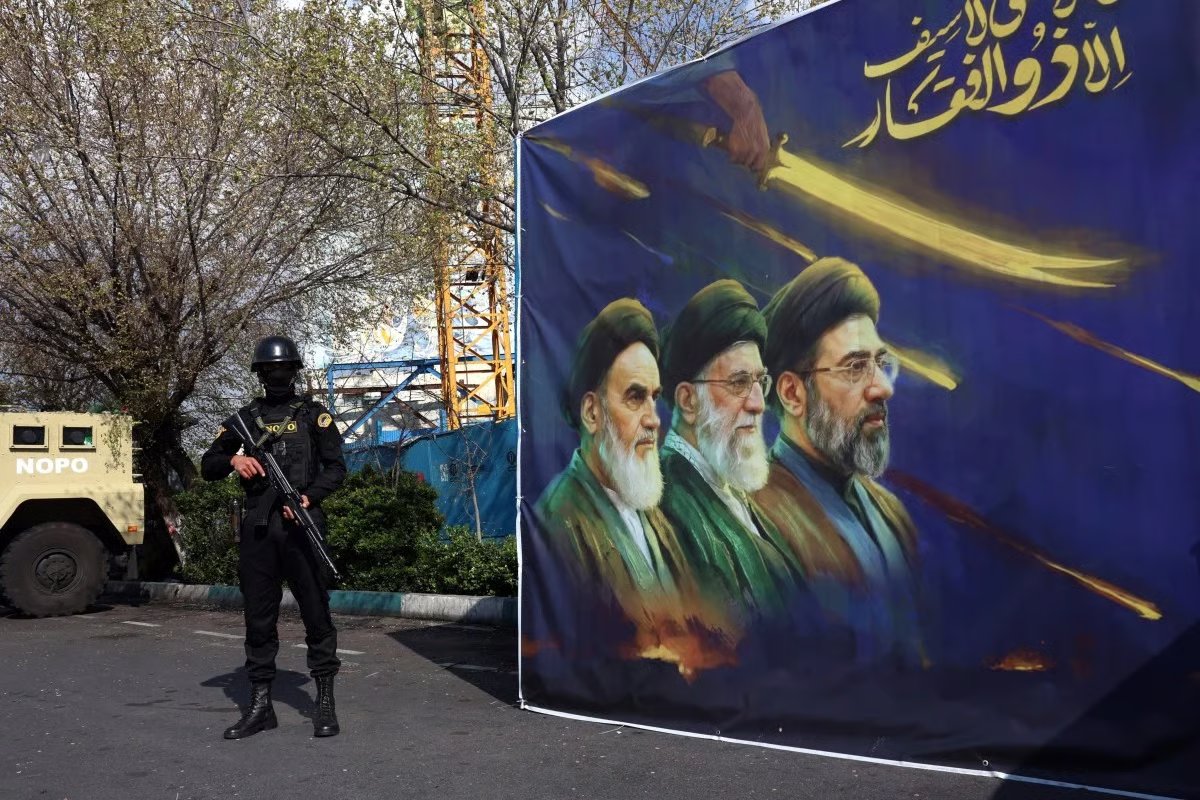
A list of 18 companies, including Apple, Google, and Microsoft, faces a new ultimatum as the conflict between the US, Israel, and Iran escalates further.
Iran’s Islamic Revolutionary Guard Corps (IRGC) has drawn a line in the sand, warning that starting Wednesday, it will begin targeting a roster of American tech giants across the Middle East. The group has accused these companies of being deeply entangled in the high-tech warfare that it claims has contributed to the deaths of Iranian officials.
“These companies, starting from 8:00 pm (1630 GMT) Tehran time on Wednesday, April 1, should expect the destruction of their relevant units in exchange for every assassination in Iran,” the IRGC said in the statement, per NDTV. “We advise the employees of these institutions to immediately leave their workplaces to preserve their lives.”
The IRGC also expanded the warning to civilians living near corporate facilities. Residents were advised to stay at least one kilometer away from these sites and move to safer ground.
The hit list: 18 companies named
Iran is accusing these firms of being the “main element” in tracking and identifying targets for the US and Israeli operations. The list of 18 entities includes nearly every major household name in American technology, as well as aerospace and financial giants.
The companies named by the IRGC include:
- Big tech: Google (Alphabet), Microsoft, Apple, and Meta.
- Chips & AI: Nvidia and Intel.
- Infrastructure & Cloud: Oracle, HP, IBM, Cisco, Dell, and Palantir.
- Transport & Energy: Tesla and Boeing.
- Finance: J.P. Morgan Chase and GE.
- Regional players: The UAE’s AI firm G42 and Dubai-based Spire Solutions.
The IRGC’s reasoning, according to the Times of India, is that these companies are now considered combatants:
“Since the main element in designing and tracking terrorist targets are American and ICT [Information and Communications Technology] and AI companies… from now on, [these] main institutions will be our legitimate targets.”
This escalation follows a brutal month for the Iranian leadership. Since the conflict began on Feb. 28, multiple reports indicate that several high-ranking Iranian officials have been killed, though details and identities vary across sources.
Tehran argues that these “targeted assassinations” were only possible through the high-tech surveillance and AI tools provided by the listed firms. Per WIRED, the IRGC stated:
“These companies should expect the destruction of their respective units in exchange for each terror act in Iran, starting from 8 PM Tehran time on Wednesday, April 1st.”
Reports have suggested that Iranian drones may have targeted Amazon Web Services data centers in the UAE and Bahrain, though details remain unconfirmed and continue to emerge, highlighting concerns about the vulnerability of the region’s digital infrastructure to physical attack.
As tech firms scramble to activate contingency plans, with many asking staff to work remotely, the broader geopolitical landscape is shifting. US President Donald Trump has reportedly been pushing for diplomacy while simultaneously threatening to “obliterate” Iran’s energy sector if a peace deal isn’t reached by April 6.
It remains unclear how imminent or credible the threatened attacks are, though security analysts say the situation is being closely monitored.
For more on how emerging tech threats are reshaping security, check out our coverage of Google’s warning that quantum computing could soon crack modern encryption.
