










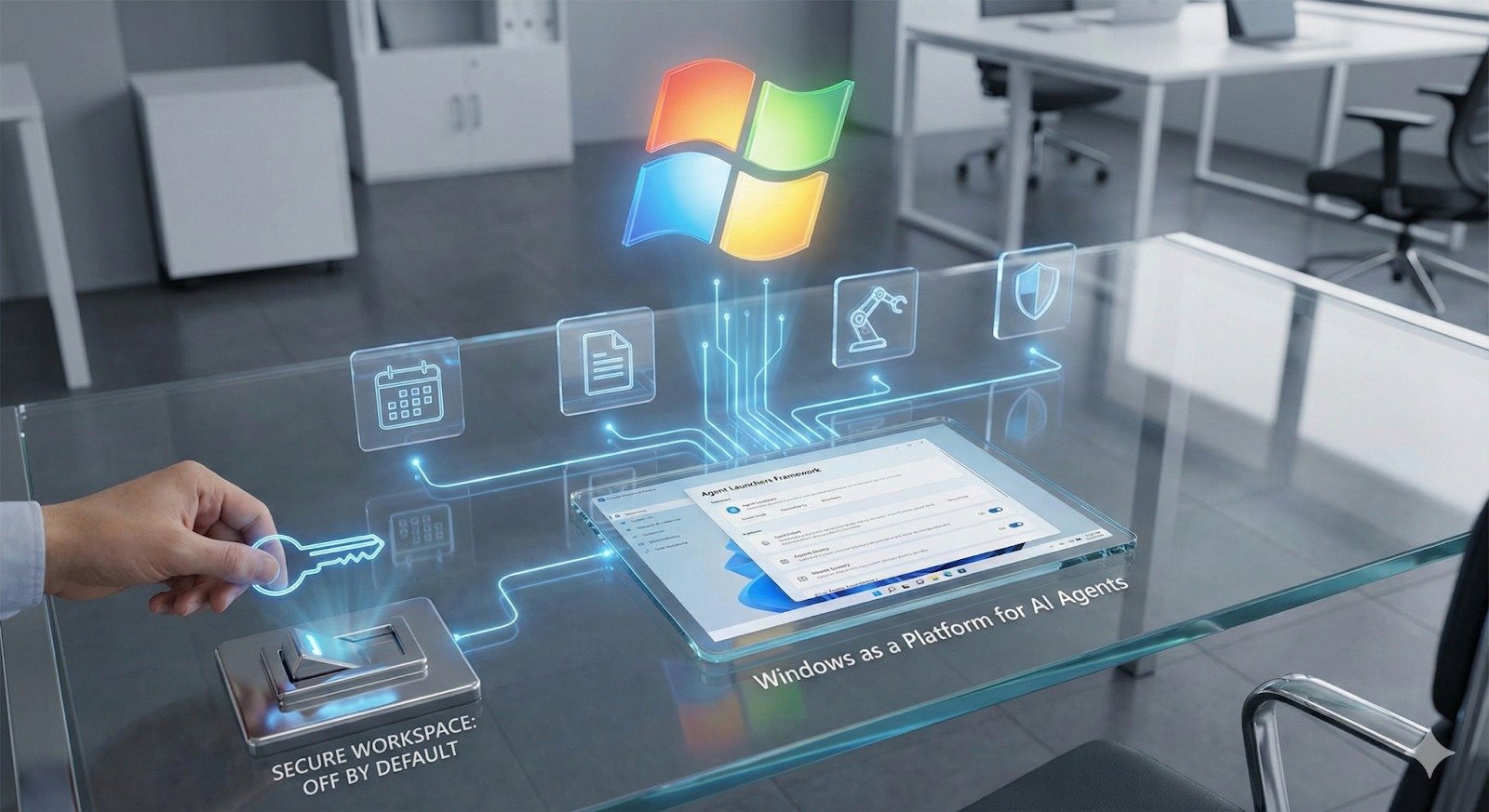
According to a detailed insight by GeekWire, Microsoft is leaning on a strategy that once made Windows dominant: turning the operating system into a platform others build on. The company has done this before. As GeekWire recalled, Microsoft, in its 1990 annual report, famously described the move from MS-DOS to Windows as “like bringing a Porsche into a world of Model Ts.”
What mattered most back then was not just the graphical interface, but Windows’ ability to host third-party software easily. Windows 3.0 gave developers a clear deal: build to Microsoft’s rules, and your apps would become first-class citizens on millions of PCs.
Now, Microsoft believes AI agents could play a similar role.
Earlier this month, Microsoft introduced a preview of a new Windows framework called Agent Launchers through the Windows Insider program, GeekWire reports. The system allows developers to register AI agents directly with Windows using a digital manifest.
Once registered, those agents can appear in places users already work, the taskbar, Microsoft Copilot, and other apps. Over time, Microsoft envisions agents that can do more than simple commands, such as organizing files or assembling PDFs.
The longer-term goal is assistants that can monitor calendars, resolve scheduling conflicts, and pull information from multiple apps to prepare briefings for meetings.
Why Microsoft thinks Windows still matters
Other tech companies are also racing toward agent-based software. Google’s Gemini and Anthropic’s Claude already offer desktop-style agents, while Amazon is developing what it calls “frontier agents” for cloud automation. Startups are building standalone tools that coordinate work across apps.
Microsoft’s bet, as GeekWire explains, is that agents embedded deep inside the operating system will outperform those that merely run on top of it. The company is betting that Windows can once again become the natural home for a new class of software — just as it did when it replaced a patchwork of DOS programs decades ago.
Microsoft 365 Copilot is already using the Agent Launchers framework for its own tools, including Analyst and Researcher, which help users analyze data and build reports. Developers will eventually be able to add their own agents during installation or activate them dynamically based on subscriptions or sign-ins.
Security risks and the ‘off’ switch
Giving an AI agent the keys to your computer isn’t without danger. Microsoft has admitted that these tools introduce new ways for hackers to cause trouble. A support document warns that malicious files could potentially trick an agent into stealing data or installing malware.
Because of these risks, the new agent features are off by default. Microsoft is telling users to “understand the security implications of enabling an agent on your computer” before they flip the switch. To keep things safe, the company is running these agents in a “contained workspace” — essentially a digital sandbox that limits what the AI can touch.
Looking ahead: from tools to true partners
Taken together, Microsoft’s push to make Windows a home for AI agents aligns closely with the company’s vision for the next phase of AI.
In a Microsoft blog published earlier this month, the company stated that 2026 is shaping up to be the year when AI transitions from a helpful tool to a genuine partner in everyday work.
Aparna Chennapragada, Microsoft’s chief product officer for AI experiences, described that shift as one centered on collaboration, not replacement.
“The future isn’t about replacing humans,” she wrote. “It’s about amplifying them.” In that vision, AI agents act more like digital coworkers, helping small teams take on work that once required far larger organizations — with people still firmly in charge of judgment, creativity, and direction.
Seen through that lens, Agent Launchers is less about flashy features and more about laying groundwork. Microsoft is working to prepare Windows for a world in which AI agents help manage work, research, health, and creativity while staying contained, accountable, and secure.
For a broader look at where this is heading, see how Microsoft plans to make AI central to its 2026 product roadmap across Windows, Copilot, and the cloud.


