









Elon Musk is calling an audible on the race to the Red Planet.
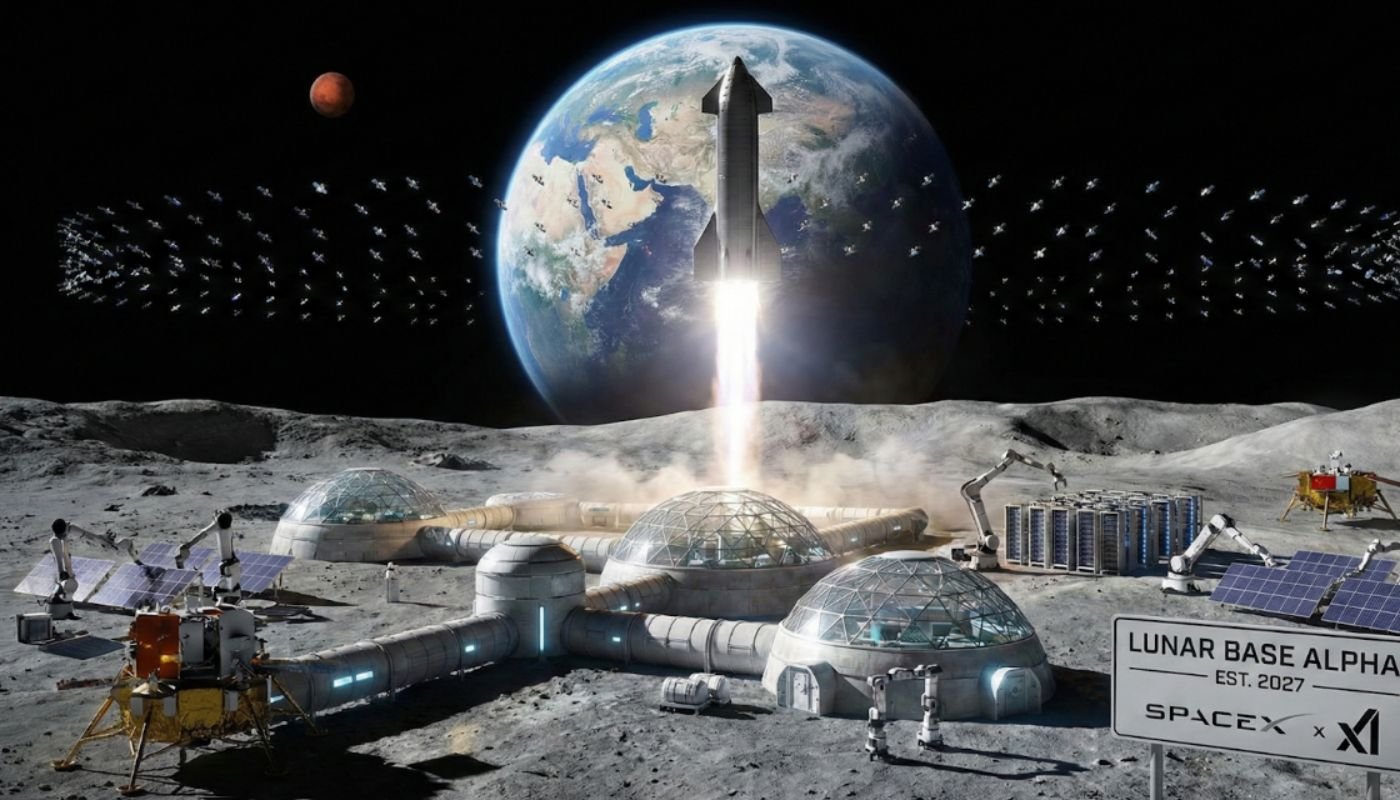
After years of dismissing Earth’s neighbor as a “distraction,” the SpaceX CEO announced on X that the company has officially shifted its primary focus toward building a “self-growing city” on the moon. While Mars remains the ultimate goal, Musk now argues that the lunar surface offers a much faster “backup” for human consciousness.
Musk pointed out that while the stars must align every 26 months for a six-month trek to Mars, the moon is available every 10 days and is only a 48-hour commute away.
“For those unaware, SpaceX has already shifted focus to building a self-growing city on the moon, as we can potentially achieve that in less than 10 years, whereas Mars would take 20+ years,” Musk wrote on X.
He added that the higher frequency of lunar launches allows SpaceX to “iterate much faster to complete a Moon city than a Mars city.” The billionaire emphasized that this isn’t a retreat, but a strategic prioritization: “The overriding priority is securing the future of civilization and the Moon is faster.”
This shift coincides with a massive internal restructuring of Musk’s empire. SpaceX recently merged with his artificial intelligence startup, xAI, in a deal valuing the combined entity at a staggering $1.25 trillion.
Musk’s vision for the moon isn’t just about boots on the ground; it’s about “orbital data centers.” By launching a constellation of up to one million solar-powered AI satellites, SpaceX hopes to bypass Earth’s energy constraints.
The company is reportedly eyeing a public offering (IPO) later this year that could raise as much as $50 billion, potentially making it the largest in history.
The China factor
There’s another clock ticking.
The United States has not placed a human on the lunar surface since Apollo 17 in 1972. China, meanwhile, has accelerated its own lunar program, with ambitions to land taikonauts this decade.
Reuters noted that “the U.S. faces intense competition from China to return humans to the moon this decade.” It is a race NASA is keenly aware of and one that Musk, with his newfound lunar urgency, now appears fully invested in.
What happens to Mars?
Mars hasn’t been scrubbed from the mission manifest entirely. SpaceX still aims to begin work on a Martian city in about five to seven years. However, the immediate target has moved: reports suggest SpaceX is now aiming for an uncrewed lunar landing as early as March 2027.
Meanwhile, Musk is mirroring this pivot at Tesla, committing $20 billion this year to shift from car manufacturing toward autonomous driving and the mass production of “Optimus” humanoid robots.
The recalibration reflects a broader pattern in Musk’s playbook: accelerate where iteration is fastest, then scale. By proving infrastructure, autonomy, and energy systems on the moon first, SpaceX can treat the lunar surface as both a testing ground and a springboard, refining the technologies that would eventually make a Martian settlement viable.
Mars may still be the grand prize, but the moon is shaping up to be the proving arena.
For more on the escalating satellite showdown, read how Amazon just secured approval to deploy 4,500 additional LEO satellites, intensifying its battle with Starlink for control of the space-based internet frontier.


