







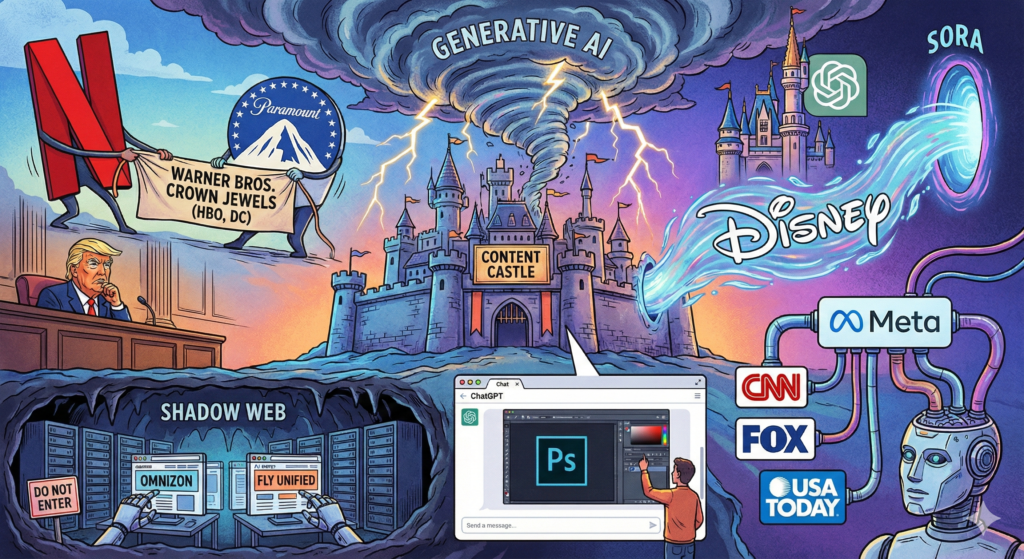
Call it the week generative AI stormed the content castle.
Netflix shocked Hollywood with a $72 billion bid for Warner Bros.’ scripted crown jewels, and Meta quietly inked newsroom deals to pump real‑time headlines into its AI chatbot.
Researchers uncovered a covert “Shadow Web,” where startups clone Amazon, Gmail, and United Airlines so Google and OpenAI can train agentic AIs without crashing the real internet.
And Adobe and Disney each smashed another wall: Adobe dropped Photoshop into ChatGPT, while Disney wrote a $1 billion check so fans can prompt Sora to mash up Mickey with Darth Vader.
Lights, camera, recap — here are the five moves that mattered most.
Quick links:
Netflix-Warner deal could redraw Hollywood
Netflix stunned Tinseltown with a $72 billion ($82.7 billion including debt) pact to scoop up Warner Bros.’ scripted crown jewels — HBO, DC, and WB Studios — while spinning off CNN and Discovery.
Days later, Paramount Skydance crashed the after-party with a $78 billion ($108 billion including debt) all-cash hostile bid for the entire company, offering $30 per share, which beats Netflix’s offer. The offer is bankrolled by Oracle’s Larry Ellison, Middle-East sovereign funds, and Jared Kushner’s Affinity Partners.
Paramount’s tender offer bypasses management and courts shareholders, pitching cash certainty, preservation of cable brands like CNN, and pro-Hollywood job growth as reasons to ditch Netflix’s debt-heavy, carve-out deal. Warner’s board has urged investors to take no action while it reviews the richer proposal.

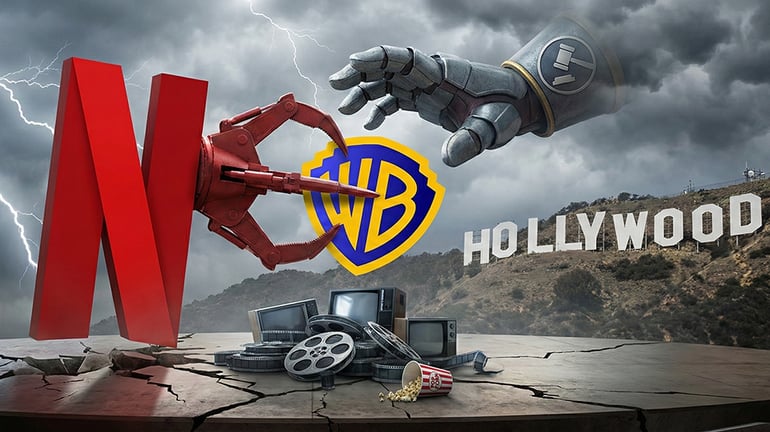
If Warner dumps Netflix for Paramount, it would owe a $2.8 billion breakup fee. If regulators block Netflix later, the streamer would owe Warner $5.8 billion.
Regulators, unions, and antitrust hawks are sharpening knives, and President Trump hints he may weigh in, raising the odds of a drawn-out courtroom sequel.
For viewers, the stakes are just as high: fewer streaming apps if Netflix wins, or a mega-studio mash-up if Paramount prevails. Either way, the fight for Batman, Westeros, and HBO has become Hollywood’s biggest blockbuster.
House of Mouse licenses 200 icons to a bot
Disney will invest $1 billion in OpenAI and license more than 200 Pixar, Marvel, and Star Wars characters to Sora for three years.
Beginning early 2026, users can generate 30‑second clips, provided there are no adult themes or actor voices. Plus, curated creations may even stream on Disney+.

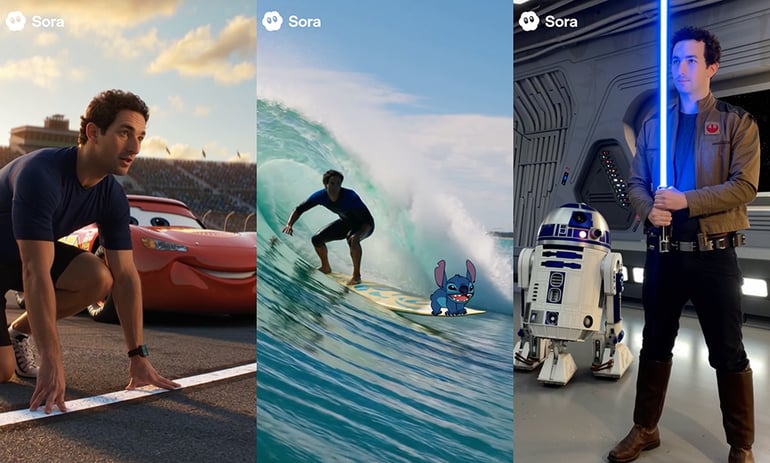
The deal lets Disney weaponize fan creativity while OpenAI gains a copyright-safe edge over unlicensed rivals.
Critics fear a flood of corporate fan fiction; Disney calls it democratized storytelling.
Meta strikes licensing deals with CNN, Fox, and more
After ghosting the news industry for years, Meta reversed its 2024 retreat from publisher payments, signing multiyear deals with CNN, Fox News, Fox Sports, USA Today, People Inc., and Le Monde to pipe real‑time headlines into Meta AI.

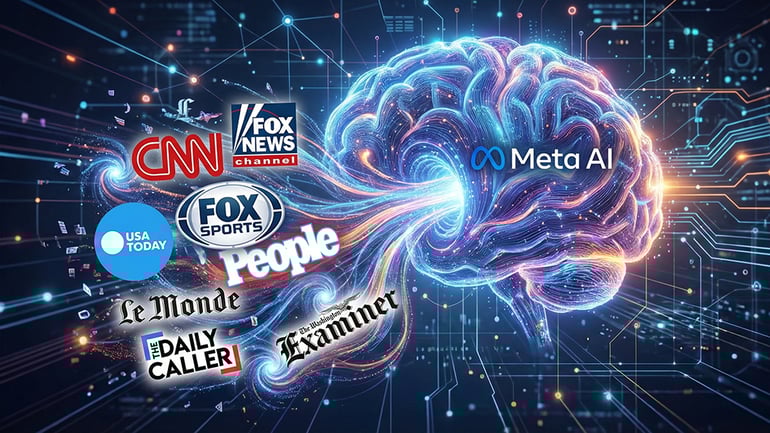
The move tackles Llama 4’s stale data woes, keeps the bot competitive with ChatGPT and Gemini, and hands publishers a lifeline instead of a lawsuit.
With legal cases over unlicensed scraping piling up, Meta decided that buying facts is cheaper than hallucinating them.
Adobe invades ChatGPT with Photoshop, Express, and Acrobat
Adobe dropped stripped‑down versions of Photoshop, Express, and Acrobat directly inside ChatGPT. Type Adobe Photoshop (or Express/Acrobat) plus an instruction, and the bot spins up sliders for one‑click background blurs or PDF redactions for free—assuming you bring your own Adobe sign‑in.
Need more power? Deep‑link buttons hand off to Adobe’s full web apps without losing progress, giving over 800 million ChatGPT users with pro‑grade tools while Adobe scrambles to defend turf against Google’s expanding Gemini toolbox.
Replica sites train AI agents behind the scenes
Silicon Valley startups are quietly duplicating consumer websites, turning Amazon into “Omnizon,” Gmail into “Go Mail,” and United Airlines into “Fly Unified” to create sandboxed playgrounds where models from clients like Google and OpenAI can practice clicking, scrolling, and buying without crashing real services or triggering bot blockers.

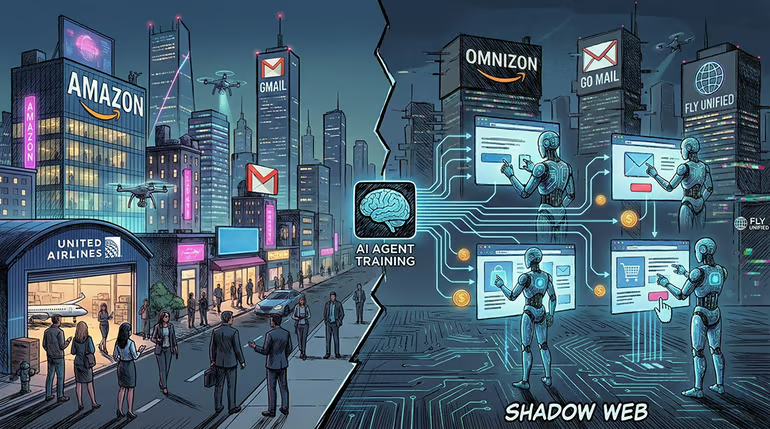
The legally dubious tactic feeds a market rocketing toward $47.1 billion (even as Gartner warns 40% of projects will fail by 2027), letting small models rival giants while cloud providers bet browsers are the next command line.United’s lawyers are already firing off takedown notices, but for AI trainers, faking it till the bots make it has never looked more lucrative.


