









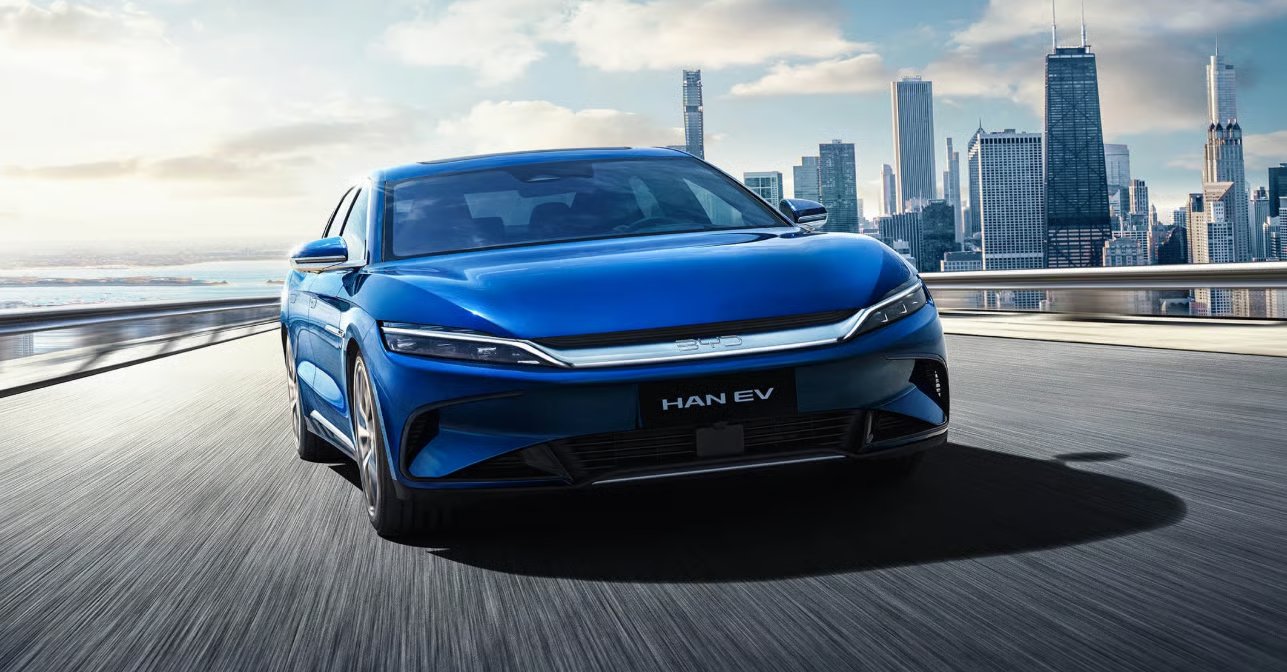
BYD’s promise of five-minute EV charging sounds like the kind of claim that should come with an asterisk the size of a windshield. In this case, though, the headline claim is not the problem.
The bigger issue is access. BYD has shown it can push charging much closer to gas-station timing, but only through a tightly matched setup of compatible vehicles, battery architecture, and ultra-high-power chargers. That makes the development significant, even if it is not yet a market-wide shift.
What BYD is actually promising
BYD’s claim applies to its own hardware stack, not to EVs more broadly.
That distinction matters because this is not a universal leap for every electric vehicle already on the road. It is a BYD-specific system built around BYD vehicles and BYD charging hardware.
In its announcement of the Super e-Platform, BYD said the new system could deliver up to 1 megawatt of charging power and add 400 kilometers of range in five minutes. The company tied that claim to a 1,000V platform, a flash-charging battery, a high-speed motor, silicon carbide power chips, and an initial rollout on the Han L and Tang L in China.
That is a meaningful technical milestone. It suggests the industry is getting closer to solving one of the most stubborn consumer objections to EV ownership: charging that still feels slower and less convenient than filling a gas tank. It also shows that BYD’s claim was always tied to a complete vehicle-and-charger system, not a standalone battery advance that could instantly spread across brands and existing public chargers.
Where the catch comes in
The catch is not that the technology is fake. It is that the charging speed depends on infrastructure most drivers do not have access to yet.
As TechCrunch reported, BYD’s new battery pack can charge from 10% to 70% in five minutes, but only when paired with one of the company’s new Flash Charging chargers, which can deliver up to 1.5 megawatts of power. TechCrunch also reported that the battery pack, called Blade Battery 2.0, is slated to debut in the Yangwang U7 luxury sedan.
That makes this less of an overnight reset for EV charging and more of a vertically integrated BYD play. The company is not saying every EV is about to charge this fast. It is showing that those speeds are possible when the car and charger are engineered as one system.
Why it still matters
Even with that limitation, the development matters. Five-minute charging has often lived in the world of demos and prototypes. BYD is pushing it closer to commercial reality.
The practical impact will depend on how quickly BYD expands both the vehicles and the charging network needed to support those headline speeds. But the signal to the wider market is clear: ultra-fast EV charging is becoming more technically credible, and competitors now have a sharper benchmark to chase.
Also read: Inside China’s $10B plan to accelerate 50+ AI and tech initiatives.


