


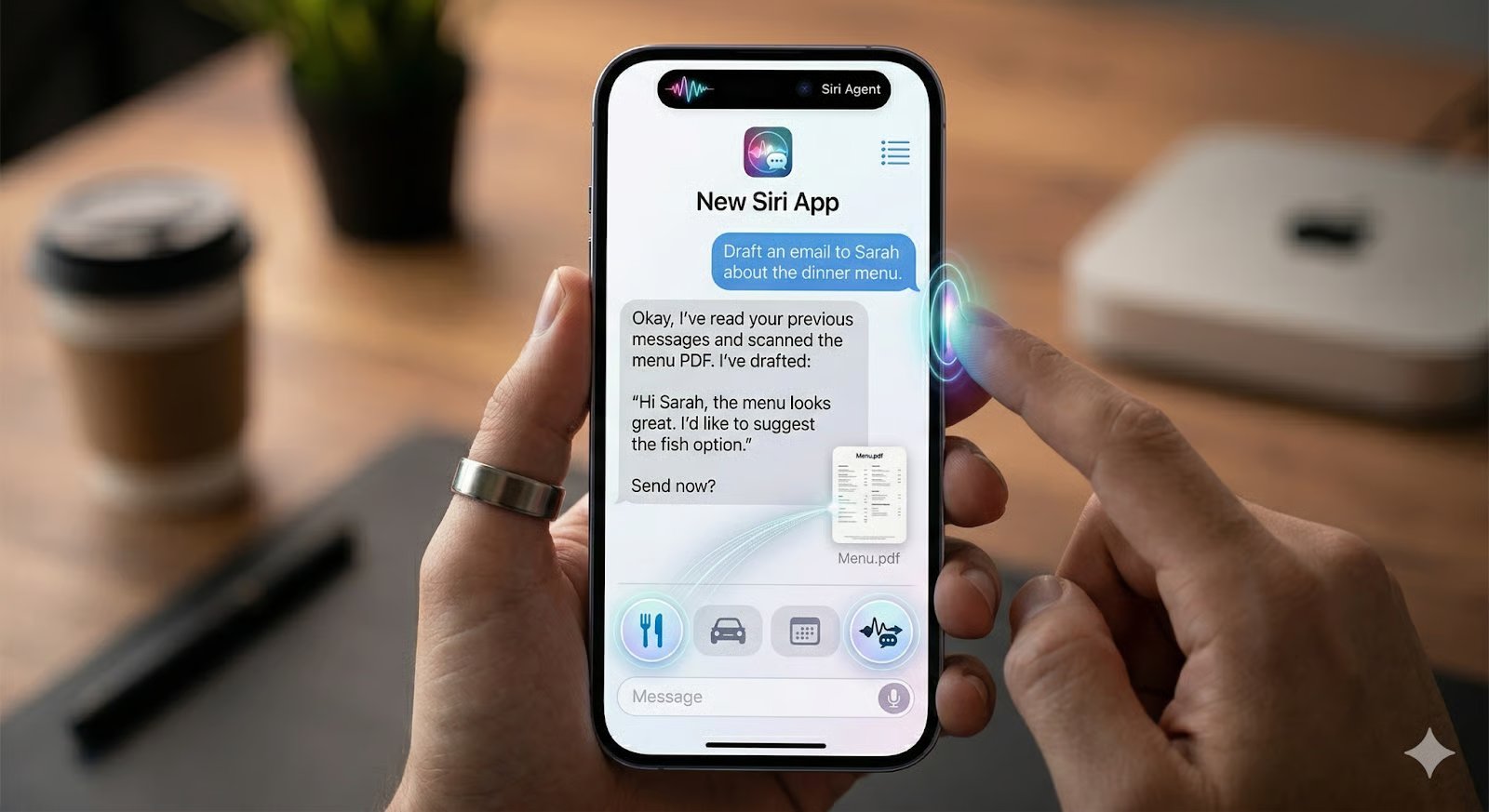
Apple is planning a full reboot of its voice assistant Siri, set to launch at its developer conference in June, complete with a dedicated app and button.
Siri will sit at the center of Apple’s revamped AI strategy, after Apple Intelligence failed to resonate with the iOS community. Not only will Siri function more like a traditional chatbot, such as ChatGPT or Gemini, but it will also reportedly be able to read within other apps and provide personalized responses based on what it sees.
A new interface with ‘chat bubbles’
The iPhone maker has been under pressure to make a bold statement on AI at WWDC 2026, following the seismic growth of ChatGPT and the wider generative AI market over the past 12 months. This has included reversing earlier positions that it did not want a dedicated app solely for interacting with AI, according to reporting by Mark Gurman at Bloomberg.
The rise of agentic AI across both consumer and enterprise markets has led Apple to believe users will be more willing to share personal data with AI systems, and even allow them to pull data from other apps to better fulfill requests. This may take the form of a dedicated button press, voice command, or software control on the Dynamic Island.
Whatever the final implementation, it will open Siri and allow it to read the screen, with users able to interact via text or voice. This could move Siri closer to true agentic behavior, such as sending emails or ordering food on a user’s behalf.
For now, previews have only shown Siri interacting with other Apple apps. Apple may expand this through prompts such as ‘Ask Siri’ and ‘Write with Siri’.
It remains to be seen whether Apple can convince third-party developers to allow this level of agentic functionality within their apps, particularly as large tech companies such as Amazon have resisted similar AI use on their platforms.
Another major change is that Siri will have its own dedicated app, which will store previous conversations. The interface is expected to resemble Apple’s Messages app, with chat bubbles and a toggle for switching between conversation modes.
Apple may use hardware as a gateway to AI software adoption
Even though Apple has been slower to build or integrate AI into its core software, it may be able to leverage its highly successful hardware portfolio to draw users in. iPhone sales reached a new peak in 2025, and if Siri approaches the performance of ChatGPT or Gemini, most users are likely to stick with the default option.
Google is expected to power much of the experience in the early stages, while Apple continues to develop its own models.
There may also be several AI-focused product launches in 2026 to further drive Siri adoption, including an AI pendant similar to what OpenAI is reportedly developing with former Apple designer Jony Ive. Smart AirPods with deeper Siri integration may also debut this year or next.
Alongside this, Apple is looking to strengthen its position with developers by launching a new Mac mini, also reportedly scheduled for this year, with manufacturing potentially returning to the United States. The compact computer is experiencing a resurgence as a relatively affordable and powerful machine capable of running AI software.
Also read: Apple’s iOS 26.4 update added AI playlist creation, keyboard fixes, and 13 new features while the bigger Siri overhaul remained on hold.
