Artificial intelligence had its “we have legs” moment this week… literally. CES demos and corporate shakeups pushed silicon brains out of cloud racks and into bodies that can walk, drive, vacuum, and even accessorize.
We watched Boston Dynamics’ Atlas sort parts at Hyundai, Nvidia promised hands-free reasoning under the hood, and Roborock taught a vacuum to climb stairs without human pity lifts.
Meanwhile, Mobileye dropped nearly a billion dollars on humanoid research, Motorola dangled a necklace that orders your Uber, and Elon Musk plotted a two-gigawatt GPU goliath to win the compute wars. Even Ford’s upcoming AI assistant wants to know exactly how many bags of mulch fit in your bed.
Together, the stories map a single arc: software smarts are continuing to sprout limbs, wheels, and venture-capital wings. Here’s how a week of tech news turned “someday robots” into “coming-soon coworkers.”
Quick links:
Atlas begins on-the-job training
Boston Dynamics’ 5-foot-9-inch Atlas graduated from viral parkour videos to real labor, autonomously sorting roof racks at Hyundai’s new Savannah plant. Fully electric joints now spin 360 degrees, eliminating the spaghetti of hydraulic hoses that once limited showroom acrobatics.
Engineers train thousands of simulated Atlases in VR, beaming perfect moves back into the physical fleet, a feedback loop that shaves months off deployment.
Hyundai, which owns 88% of Boston Dynamics, envisions tens of thousands of humanoids sharing factories within the decade, a market Goldman Sachs pegs at $38 billion. If Atlas keeps its footing, repetitive, back-breaking shifts could disappear before your next car lease expires.
Nvidia’s Alpamayo drives hands-free ambitions
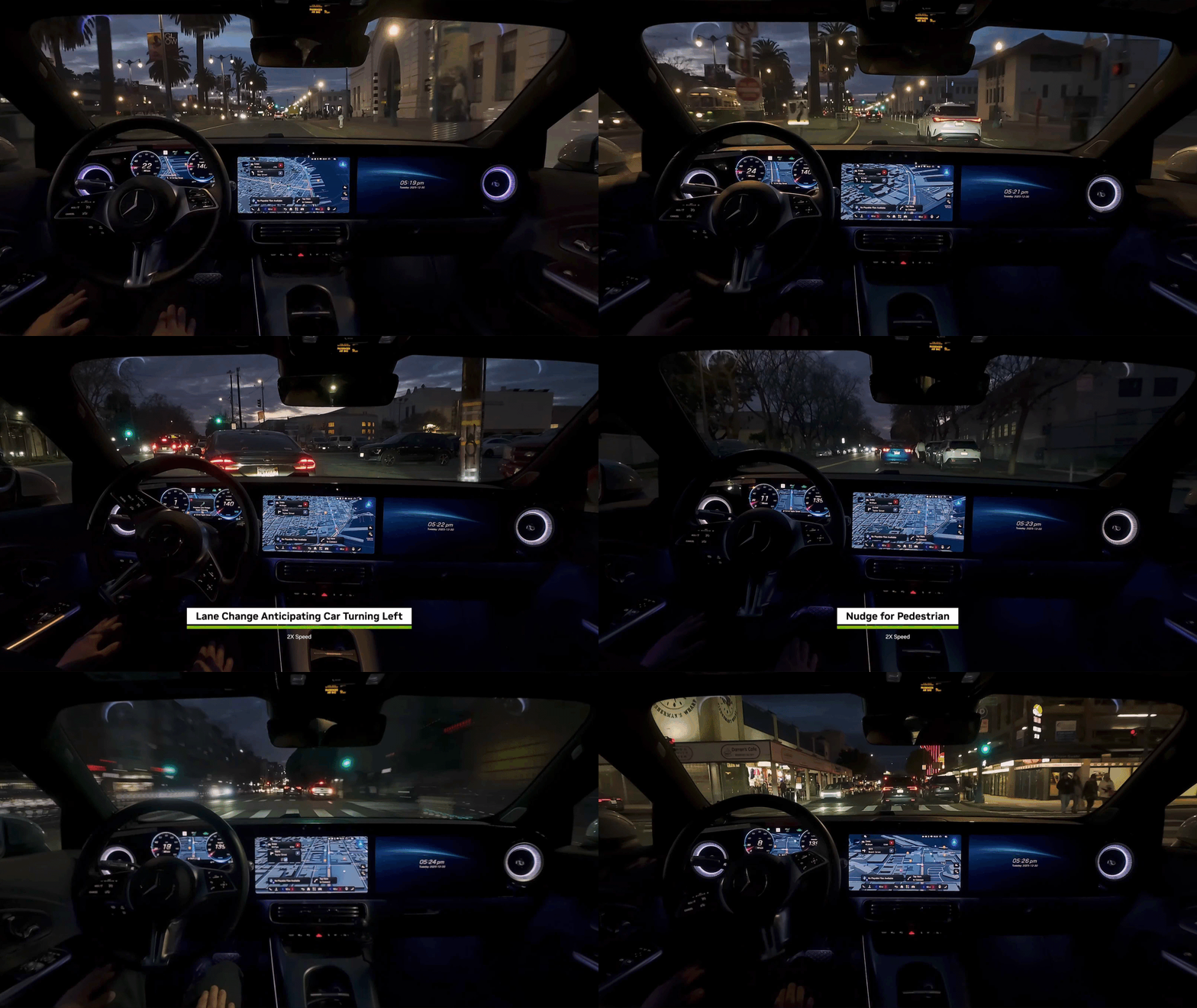
At CES, Nvidia unwrapped Alpamayo, a new reasoning “brain” that runs on the Thor superchip. Mercedes-Benz’s 2026 CLA will ship with the software, promising Level 2++ autonomy that “thinks,” anticipates hazards, and explains decisions like a ChatGPT for asphalt.
Backend training runs on the new Vera Rubin supercomputer, replaying petabytes of sensor footage until every weird edge case is nailed. Crucially, Nvidia is open-sourcing Alpamayo, handing legacy automakers the autonomy keys Tesla guards fiercely.
If successful, over-the-air updates could upgrade your commute as casually as a phone patch — no wrench required.
Roborock’s Rover vacuum conquers stairs autonomously
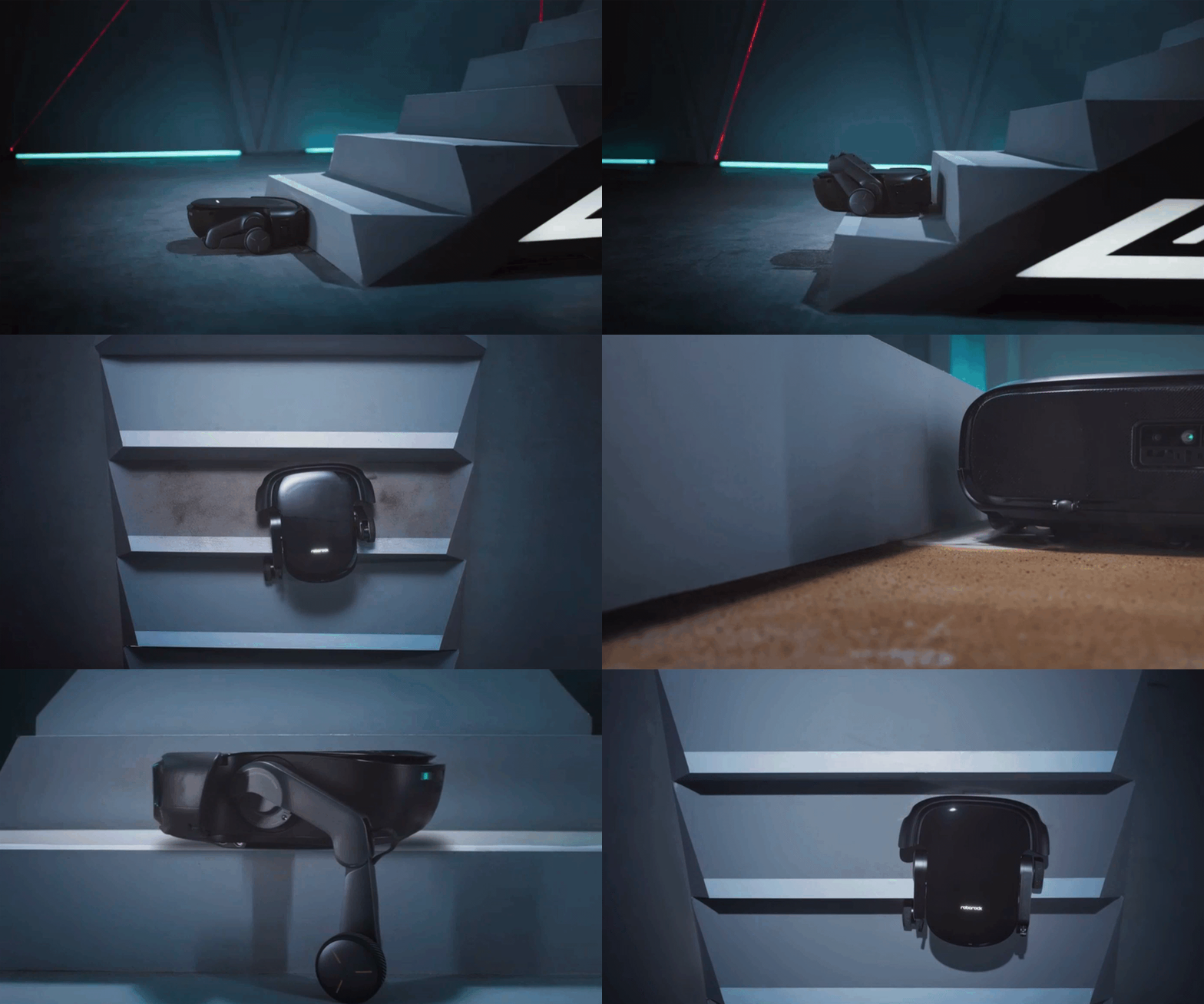
Roborock’s Saros Rover prototype swaps standard wheels for articulated “wheel legs” that climb treads and navigate full flights of stairs.
An AI fusion of sensors and 3D mapping keeps the chassis level on slopes, promising curved and carpeted runs that leave rivals spinning at the landing.
Price and ship date are TBD, but if Rover launches, the carry-me-up ritual is dead — and so are dust bunnies on the second floor.
Motorola’s Project Maxwell hangs an AI butler around your neck
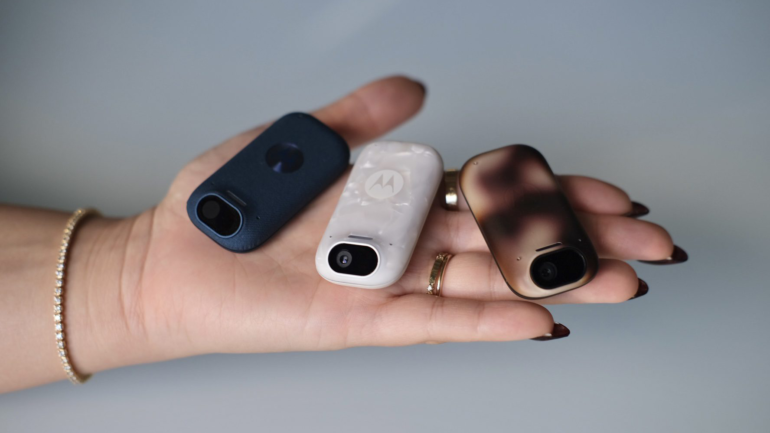
Motorola’s Project Maxwell ditches screens for a necklace-style AI powered by the new Qira assistant. Speak or point, and the charm identifies objects, summarizes flyers, or books a ride, offloading the heavy lifting to your phone to keep costs and battery sane.
It’s experimental, but by piggybacking on existing hardware, Motorola hopes to succeed where Friend and Humane face-planted.
If jewelry is going to eavesdrop, at least it can order the Uber home.
Mobileye buys into humanoids with $900 million Mentee deal
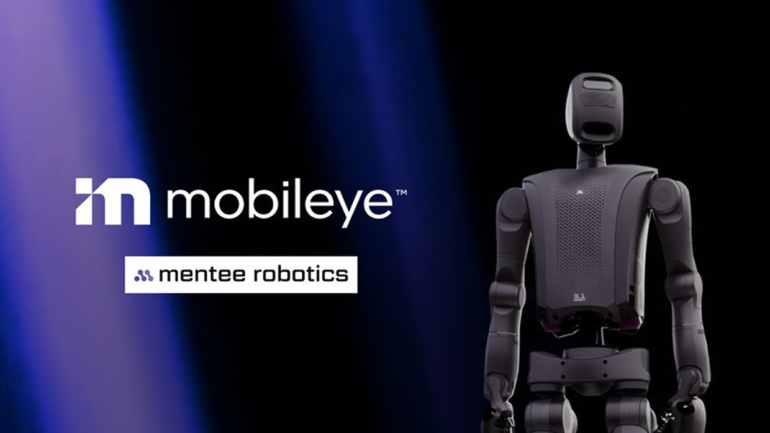
Driver-assist titan Mobileye is acquiring its founder-linked neighbor, Mentee Robotics, for $900 million, wagering its computer-vision stack can guide two-legged warehouse helpers as deftly as it guides cars.
Mentee’s prototype learns tasks from a single human demo in simulation before hitting real floors, trimming costly teleoperation.
The 455% valuation premium raised eyebrows since CEO Amnon Shashua cofounded both firms. Still, the strategy is clear: funnel a projected $24.5 billion in an eight-year ADAS (advanced driver-assistance systems) revenue pipeline into “physical AI” before Tesla Optimus or Figure AI dominate the loading dock.
Proofs-of-concept roll out in 2026, with volume production penciled for 2028.
Musk’s Colossus scales the compute mountain
Elon Musk’s xAI snagged a third warehouse near Southaven, Mississippi — dubbed “MACROHARDRR” — swelling its Colossus project toward nearly two gigawatts (enough juice for 1.5 million homes).
Colossus 2 targets 550,000 Nvidia accelerators, backed by a self-built natural gas plant and an $80 million water-recycling facility.
In 2026, the real bottleneck isn’t chips, but electricity. Whoever controls the megawatts controls the race, whether that means smarter chatbots or humanoid robots.
Ford’s AI copilot learns your cargo
Ford unveiled an AI assistant that jumps from the mobile app in 2026 to dashboards in 2027, backed by in-house compute modules 44% smaller and 30% cheaper than today’s chips. Ask it via photo how many mulch bags fit, and it answers instantly… no tape measure required.
Under the hood, the same silicon powers a cheaper, beefed-up BlueCruise stack that aims to deliver eyes-off Level 3 autonomy by 2028. Ford isn’t training its own LLM but argues deep vehicle data will out-personalize Big Tech.
If successful, AI smarts could become as standard as cup holders, minus the spilled soda.