


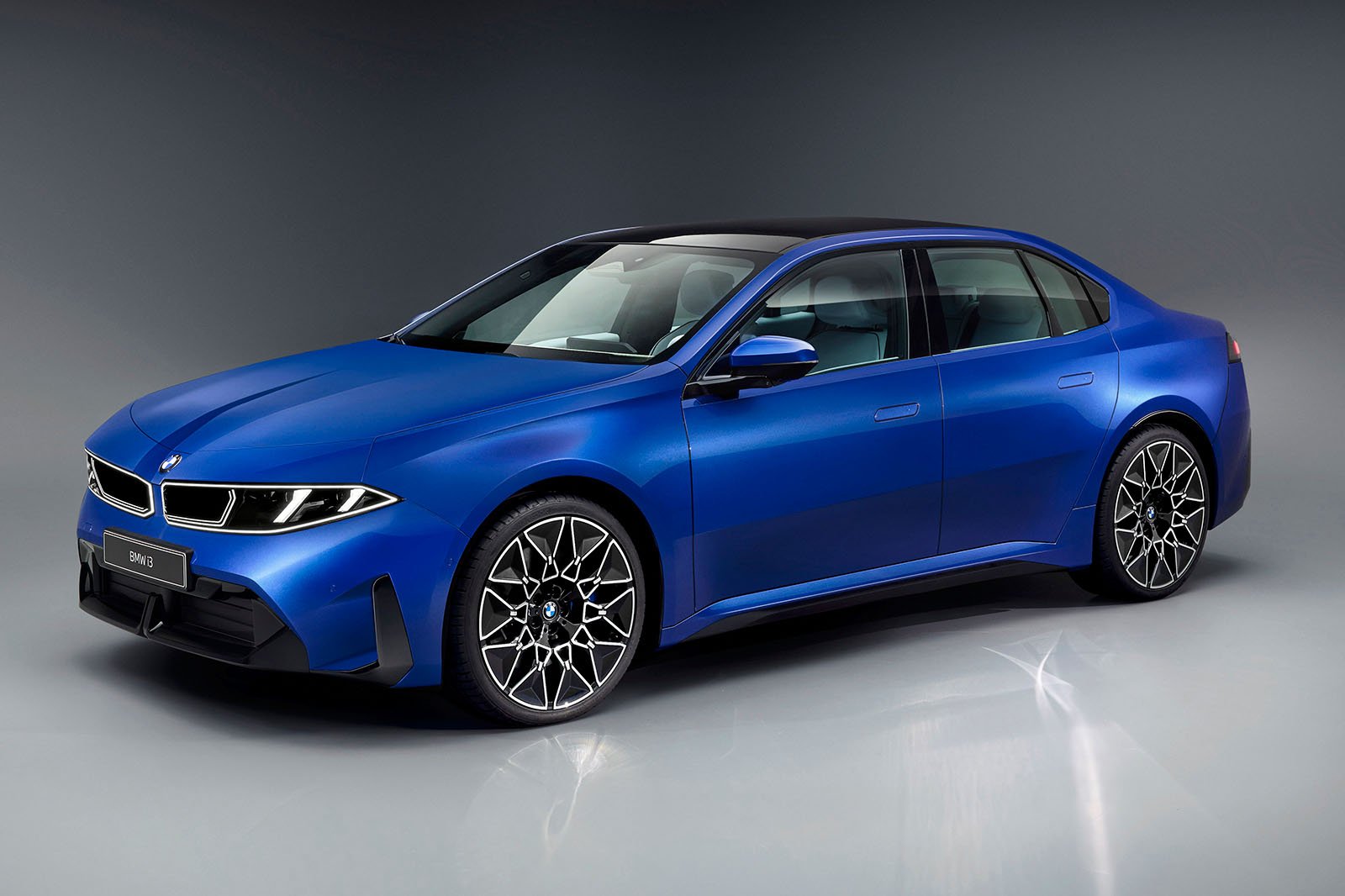
When that range is depleted, the i3 can complete a 249 mile top-up in just 10 minutes when charging at its 400kW maximum DC speed. AC charging is rated at a maximum of 22kW.
Grunt comes from two sources: a 322bhp electrically excited synchronous motor at the rear and a 165bhp asynchronous motor at the front. These combine for 463bhp and 476 lb ft of torque.
BMW hasn’t yet disclosed a 0-62mph sprint time, but it’s expected to be around 4.0sec, despite the car weighing 2.3 tonnes.
While the i3 shares its platform with the iX3, there are significant technical differences. For example, the i3’s springs are softer, the stiffness of the top mount bushings have been reduced and it’s fitted with different anti-roll bars, resulting in less yaw and roll inertia.
“It’s easier to get good rolling behaviour and comfort” from the i3 than the iX3, engineers told Autocar, adding that a quicker steering ratio and a focus on improved aerodynamics at higher speeds creates a “distinctive character of the new 3 Series”.
The i3 also achieves the same 50:50 front-to-rear weight distribution as the SUV.
At 4.76m long, 1.87m wide and 1.48m tall, the i3 is an all-round bigger car than the current ICE 3 Series, but it still offers “typical BMW sedan proportions”, with a long body and short overhangs, BMW’s compact car design chief, Oliver Heilmer, told Autocar.
