


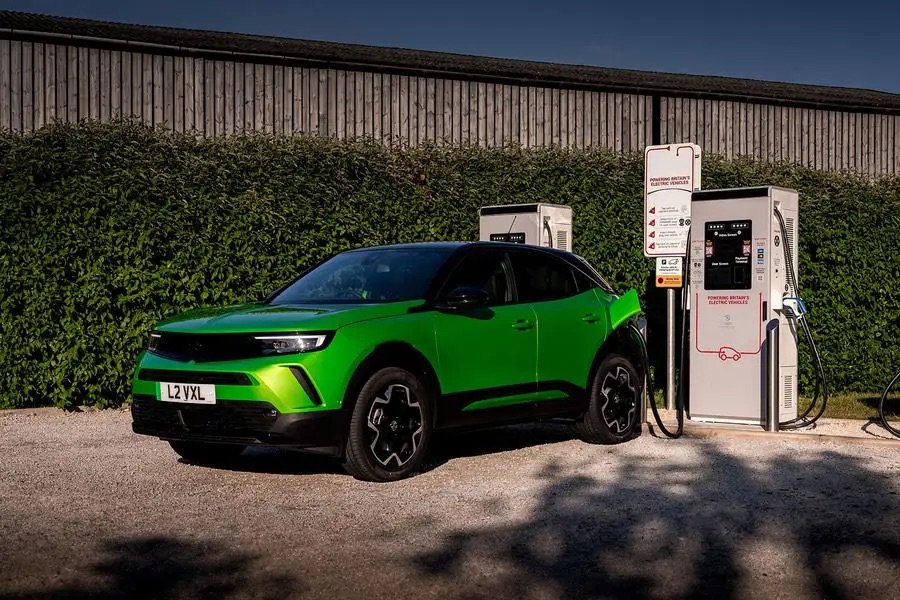
The boss of Stellantis UK has demanded the government begin its planned review into EV targets “now”, as current legislation means the firm doesn’t know what type of vehicles it can sell past 2030.
“At this point in the UK, you don’t know what technology we can use yet [from 2030], let alone whether you’re able to make any money in the UK market,” Eurig Druce told the SMMT’s Electrified conference on Thursday.
Despite the government relaxing its zero-emission vehicle (ZEV) mandate last year to permit the sale of hybrids into the next decade, the mandate’s 80% EV registration target for 2030 effectively ensures that most cars on sale will be electric.
The long-awaited review has the potential to change this, however, particularly if it mirrors the alterations proposed in other markets, such as by the EU earlier this year.
While decarbonisation minister Kier Mather told the conference that the review would begin at some point this year, he confirmed it wouldn’t be published until the beginning of 2027 at the earliest.
“We feel it is the right point to make sure that we can test properly where the pressure points lie in this ZEV mandate,” he said.
However, Vauxhall owner Stellantis and fellow car makers JLR, Ford, and Volvo told the conference that this would be too late.
Druce said: “We are coming up towards a fundamental crossroads in this pathway where we need to make some very quick decisions, and review [published] next year is too late.
“The review needs to happen now in order for us to make the right decisions on investments. We’re not deciding on investments for 2027 now, we’re not deciding on investments for 2028, 2029 or 2030 now; our decisions on investments now are post-2030 and quite a few years in advance of that. This is taking the industry to a position of unsustainability in the UK.”
Ford UK boss Lisa Brankin echoed Druce’s points on the review, telling the same conference that the government needs to “get on with it”. “Start the review, get it completed and make a decision, and make the announcement this year,” she said.
Elaborating on the difficulties the ZEV mandate is having on car makers, Druce said the heavy discounting of EVs by manufacturers in order to boost demand and comply with the mandate means that “you’re not able to profit from making and selling electric vehicles in the UK market today”.
He added that this could have an impact on future investment in the UK: “There will be the odd exception, but the majority [of manufacturers] will be in a situation where they’re investing so heavily that most of the vehicles sold will probably be loss-making.
“We are businesses, and so businesses want to invest, of course, but you decide to invest where you can make a return, and if you cannot make the return in that country, then the ability of the company to invest and create the growth – that the government is looking for in the UK – is absent.”
His comments come days after Stellantis’s European chief Emanuele Cappellano warned that the firm will shrink UK operations without ZEV mandate changes, because it can’t meet future government targets on EVs without losing money.
