


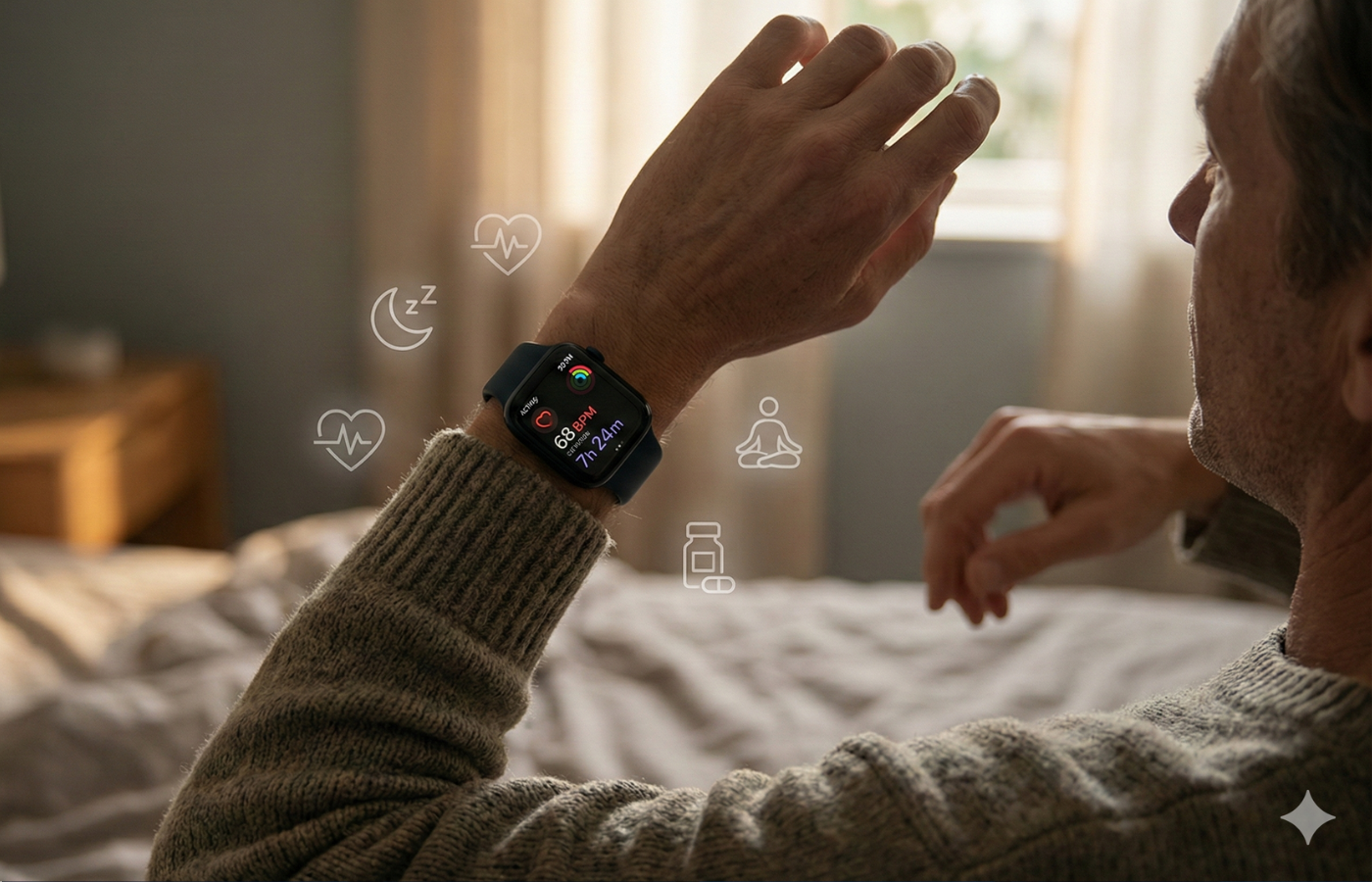
The Apple Watch doesn’t just count steps or nudge you to stand up once an hour. Used well, it builds a picture of your health through sleep, heart activity, movement, stress, and daily habits, then flags when something looks off.
The value isn’t in a single flashy metric, but in the patterns.
Here are five ways the Apple Watch genuinely supports better health, based on what it does today.
1. It turns sleep into a measurable habit
Most people think they sleep “fine” until they see the data. The Apple Watch’s Sleep app tracks duration, consistency, and overnight trends automatically when you wear it to bed. You can set a sleep schedule and goal, then review recent sleep history without manually logging anything.
What makes this useful isn’t just knowing how long you slept; it’s noticing patterns. Late workouts, caffeine, stress, or illness show up quickly in your sleep data. The watch establishes a baseline, so changes stand out rather than blend into guesswork.
2. It keeps an eye on your heart when you’re not thinking about it
Heart health features are one of the Apple Watch’s most mature areas. You can receive notifications for unusually high or low heart rates and irregular rhythms that may suggest atrial fibrillation. If you’ve already been diagnosed with AFib, AFib History estimates how frequently your heart shows signs of that rhythm.
The watch looks for deviations from your normal patterns and alerts you when something persistent appears, including low cardio fitness levels.
3. It connects the dots between multiple health signals overnight
The Vitals app is where the Apple Watch gets more powerful. When you wear your watch to sleep, it tracks overnight heart rate, respiratory rate, wrist temperature deviations, blood oxygen (on supported models), and sleep duration.
Over time, Apple Watch learns your typical range for each metric. If several drift outside that range at once, you’ll get a notification with context, like whether illness, medications, or other factors may be involved. It’s not diagnosing anything, but it’s very good at saying, “This isn’t your normal baseline”.
4. It helps you stay consistent with medications and mental health check-ins
Health isn’t just physical metrics. The Apple Watch supports daily habits that are easy to forget when life gets busy.
The Medications app lets you log prescriptions, vitamins, and supplements added through the Health app on your iPhone, with reminders on your wrist. Meanwhile, the Mindfulness app’s State of Mind feature encourages quick emotional check-ins, helping you track moods and feelings.
Neither feature is dramatic. That’s the point. They lower the friction of staying aware. One tap, no journaling required.
5. It supports health needs that don’t look the same for everyone
Apple Watch health features aren’t one-size-fits-all. Cycle Tracking allows users to log menstrual data and receive period and fertile window predictions, improved by heart rate and wrist temperature data on supported models. With consistent sleepwear, it can also provide retrospective ovulation estimates, where available.
Beyond that, features like noise exposure alerts, handwashing reminders, and breathing disturbance tracking address everyday health risks people often ignore until they become problems. These aren’t headline features, but they’re the ones that reduce long-term strain.
The bigger picture
The Apple Watch works best when you stop treating it like a gadget and start treating it like a long-term observer. It doesn’t replace doctors, sleep labs, or lab tests — and it’s not trying to. What it does well is notice trends early, surface changes you might miss, and encourage small habits that add up.
Instead of reacting to a single bad night or an off day, you start seeing how things connect. A stressful week, a missed workout streak, or a change in routine leaves traces you can actually recognize. That awareness makes health feel more manageable.
Experiments with Apple Watch data and popular chatbots suggest there’s still a gap between polished health summaries and clinical reality.
