


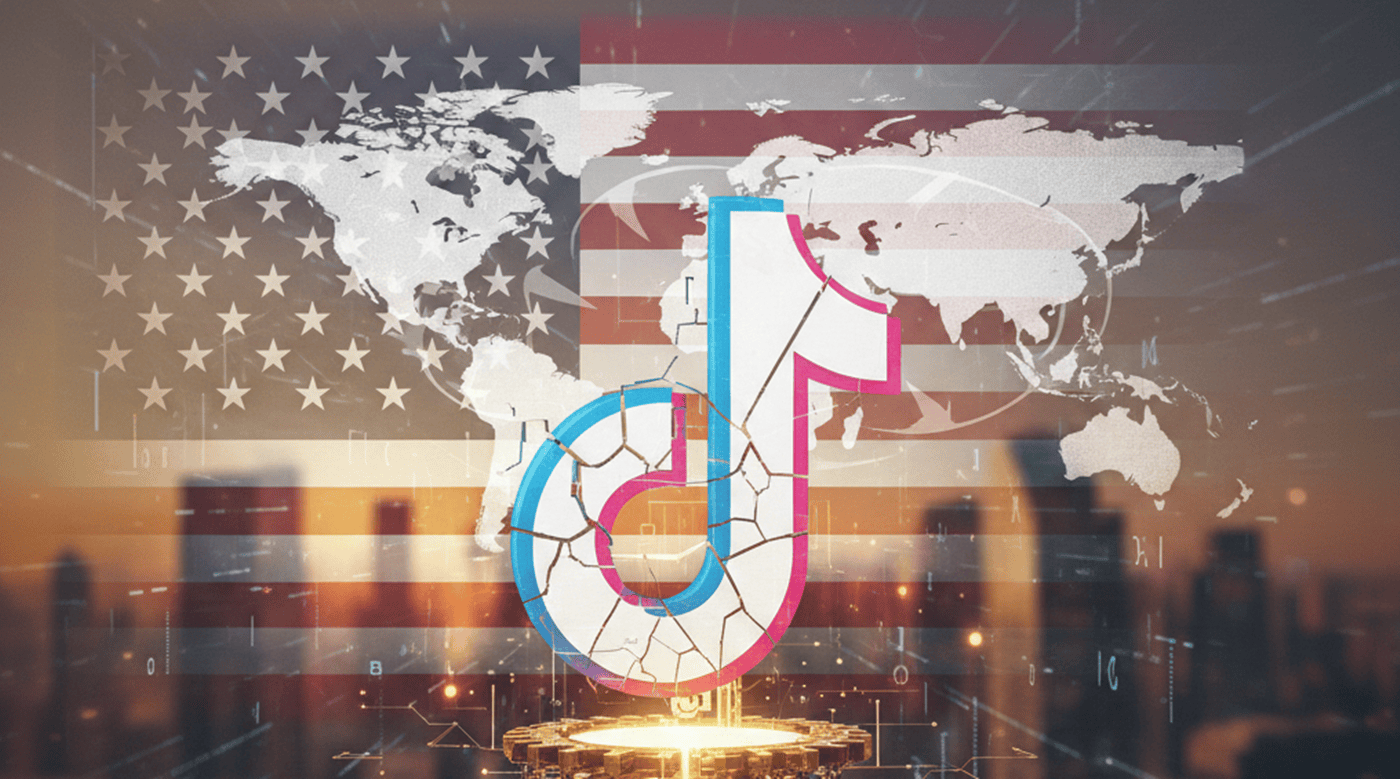
The TikTok ban drama has officially ended, followed by a dramatic weekend of platform issues.
After years of political threats, court battles, and last-minute deadline extensions, TikTok has finally secured a deal that allows it to keep operating in the United States. Last week, the company confirmed it had closed a long-awaited deal to split its US operations from its global business, allowing the video app to continue operating for its more than 200 million American users.
This agreement marks the end of a saga that began during Donald Trump’s first term, when Washington raised national security concerns about TikTok’s Chinese owner, ByteDance. US lawmakers have long argued that Beijing could compel ByteDance to hand over American user data or influence the app’s powerful recommendation system, claims the company has repeatedly denied.
Under legislation signed in 2024, TikTok faced a hard deadline to either sell its US business or face an outright ban. That deadline was postponed several times by Trump, who returned to the White House and ultimately helped broker the compromise now in place. “So happy to have helped in saving TikTok,” he wrote on social media after the deal was announced.
Just days later, the app went down for thousands of users across the country, a reminder that while the politics may have been settled, the deal may still impact our scrolling sessions.
A new, mostly American-owned company
TikTok’s US business will now operate under a new entity, TikTok USDS Joint Venture LLC, which the company says will operate independently of ByteDance. The joint venture is overseen by a seven-member board with a majority of American directors and led by chief executive Adam Presser, a former WarnerMedia executive.
Ownership is split among a group of big-name American and international investors, according to BBC reports. Oracle, Silver Lake, and Emirati investment firm MGX are the three managing investors, each holding a 15% stake. ByteDance retains a 19.9% minority share, which is just below the threshold that would have triggered a full ban, while the rest is held by a mix of firms, including Michael Dell’s family office and affiliates of Susquehanna International Group.
TikTok’s global CEO, Shou Zi Chew, still has a seat on the board, maintaining a formal connection between the US operation and the company’s worldwide operations.
Oracle, meanwhile, plays an outsized role. It is responsible for securing US user data inside its American cloud infrastructure and for overseeing changes to TikTok’s recommendation algorithm, the element of the app that has always triggered the most anxiety in Washington.
About the algorithm
TikTok’s algorithm is widely seen as the app’s “secret sauce,” and the reason it beat competitors like Instagram Reels and YouTube Shorts. It’s fast, eerily accurate, and has an uncanny ability to surface just the right addictive, hyper-personalised content that keeps people scrolling. Of course, it’s also been the one thing ByteDance was most reluctant to give up.
Under the new deal, the algorithm has been licensed to the US joint venture and will be retrained using only US user data. TikTok says the system will be secured entirely within Oracle’s US cloud environment and audited under new cybersecurity and privacy rules designed to meet US standards.
What that means for users is still unclear. Some experts believe the US version of TikTok could feel different from the app we came to know and love, while others warn that even small changes to an algorithm this complex can have unpredictable consequences.
Off to a shaky start
Those uncertainties were amplified almost immediately. I noticed the shift myself when I opened TikTok this weekend and couldn’t access my usual lightning-speed fix of silly internet content. But after reopening the window, reconnecting to my Wi-Fi, and even updating the application, it was of no use. Comments weren’t loading, videos were lagging, and I had to get to the bottom of it.
Unfortunately, I wasn’t the only TikTok user left in the lurch, as Downdetector recorded more than 35,000 reports at the peak early Sunday morning, with complaints ranging from frozen videos to busted “For You” pages. As it turns out, the app suffered a widespread outage across the US, leaving tens of thousands of users unable to log in, refresh their feeds, or post videos.
The timing was interesting, as it occurred just days after TikTok rolled out updated US-specific terms of service and privacy policies reflecting the corporate restructuring. For myself and many others, the event served as a reminder of how much technical complexity supports the app, and how fragile that infrastructure can be during major transitions.
TikTok hasn’t publicly linked the outage to the ownership transition, but industry analysts say that when handing algorithm oversight and data security to a newly structured, investor-led entity, disruptions were always a risk.
The ban is over, but questions remain
Politically, the deal gives the White House a measure of relief. It allows officials to claim they’ve addressed national security risks without banning an app that has become deeply embedded in American culture. For TikTok and its users, it ends years of uncertainty.
However, big questions remain. Lawmakers are already signalling they will scrutinise whether the new structure truly limits ByteDance’s influence. Meanwhile, advertisers and creators are watching closely to see if algorithm changes affect reach and monetisation.
TikTok is still standing, having survived the political war. Only time will tell whether it can survive the resulting transition without breaking along the way.
Also read: The Verizon outage that triggered more than 180,000 Downdetector reports shows how quickly everyday services can buckle.
