








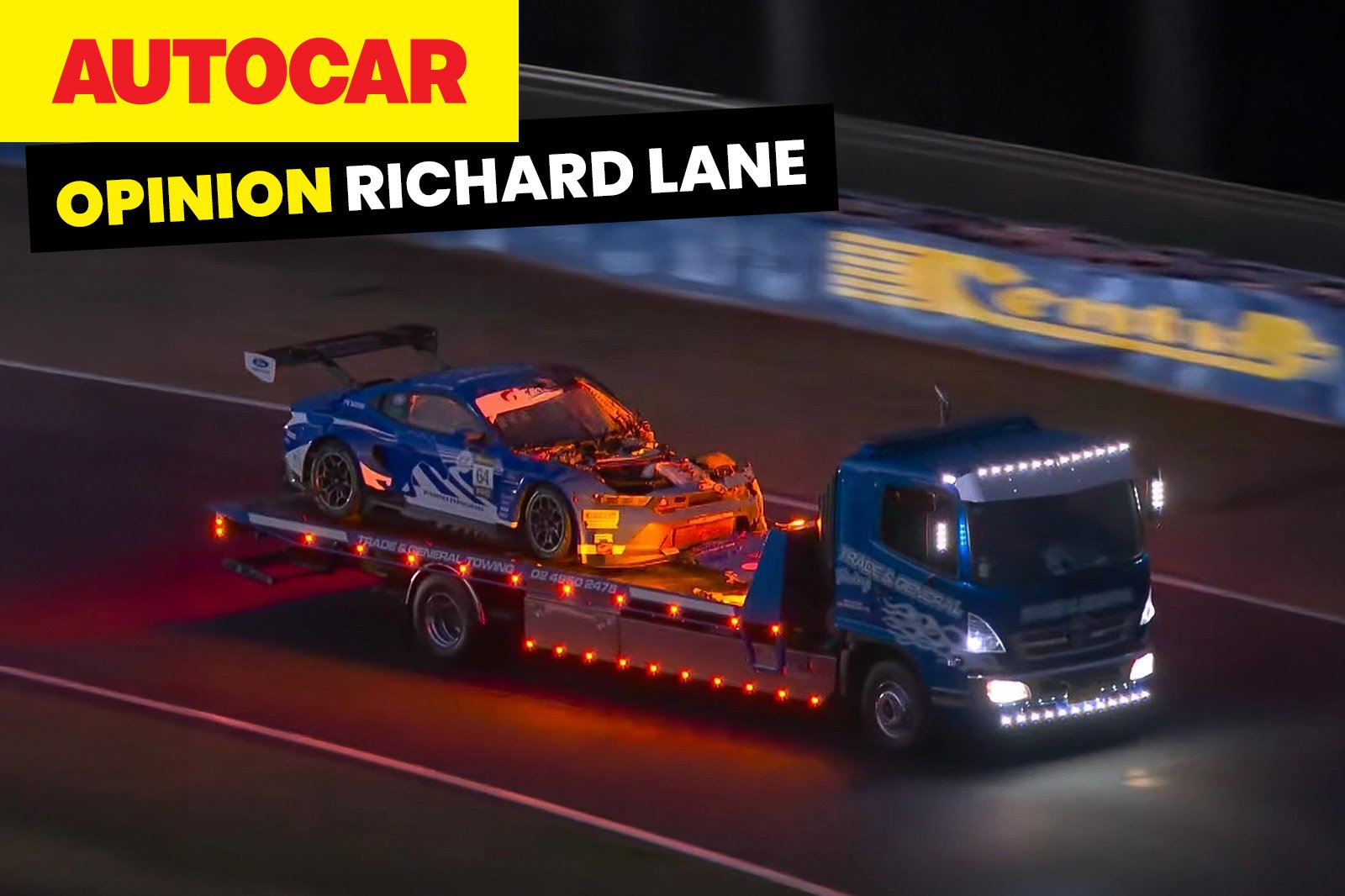
Spare a thought for poor Chris Mies, the man who had assorted pieces of kangaroo hurtle through the windscreen of his Mustang GT3 at the recent Bathurst 12 Hours.
The German driver’s overalls and helmet, never mind the destroyed front end of his car, were covered in viscera. In the murky morning light of the pits he looked like he had stepped off a medieval battlefield.
He had vomited trackside after the lap-three incident and later told an interviewer that even two showers hadn’t fully removed the stink of the animal from his nostrils.
It’s a pretty awful, potentially traumatic thing to hit any animal with a car, let alone something the size of a kangaroo at 152mph in what should be a secure environment. And it could’ve been a lot worse.
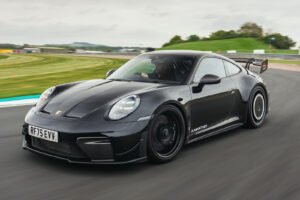
For one thing, if Mies had been driving not a Mustang, with the unending bluffness of its V8-filled snout to absorb the blow, but a Porsche 911 or one of the mid-engined cars, he would have been far more exposed, to horrific effect.
Watching the fallout also reminded me of a chat with a friend who worked in Australia for years. He said the problem with collecting ‘big reds’ weighing 85kg or more was they got lodged in the windscreen and would shred people to ribbons attempting to kick their way to freedom.
I don’t want to single out Bathurst. Even in Formula 1 there was a dog on the track as recently as 2020, in Bahrain. But it should probably do a better job when it comes to separating kangaroos and racing cars, even if it’s very difficult to stop large mammals with powerful legs from going where the hell they want.
Just ask Cristiano da Matta, the 2002 CART champion, who was left in a month-long coma after a deer sprang onto a perfectly clear section of track at Road America during a test session.
A similar thing had happened to Stefan Johansson at the 1987 Austrian Grand Prix. Granted, you can’t do much about birds. Alan Stacey was killed in his Lotus at Spa in 1960 after one flew into his face.
This was the era of open-face helmets, when you couldn’t headbutt the thing, as MotoGP rider Andrea Iannone, in an act of instinctive thuggish virtuosity, once did to a seagull at Phillip Island (seriously, what is it about Australia?).
An animal strike isn’t something we road testers routinely worry about when driving cars on the road in the UK, although for people who cover as much as 60,000 miles annually, perhaps we should.
In the UK each year there are around 70,000 collisions involving deer, and that figure has grown sharply in recent years. Among the reasons cited are our milder winters, leading to greater populations, which then encroach more on urban areas.
They’re mostly roe deer, weighing all of 25kg, but hitting one is still a big shunt. Which puts Mies’ collision into context.


